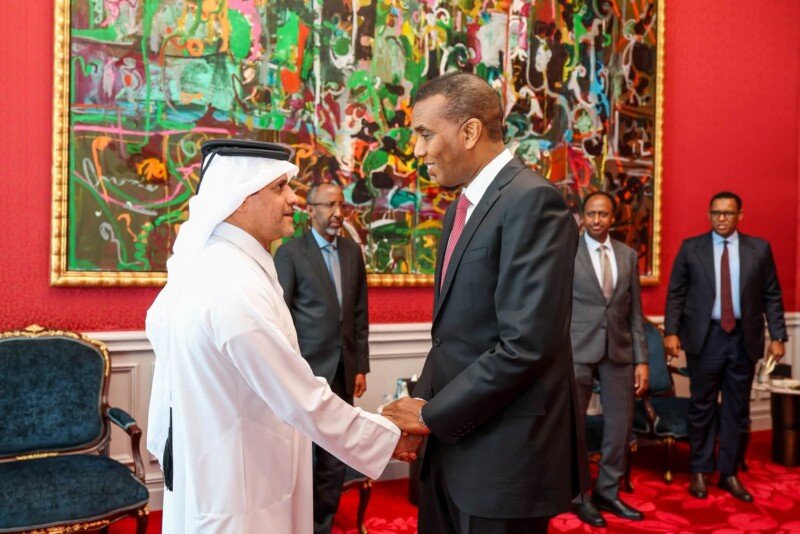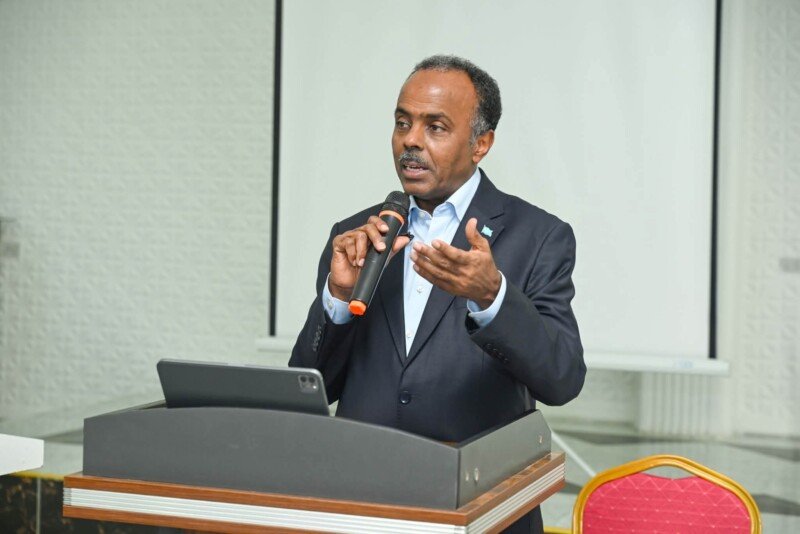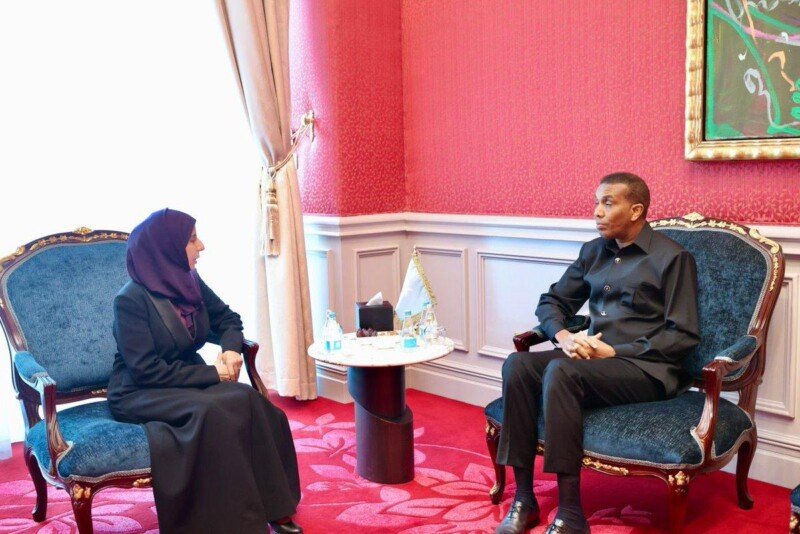

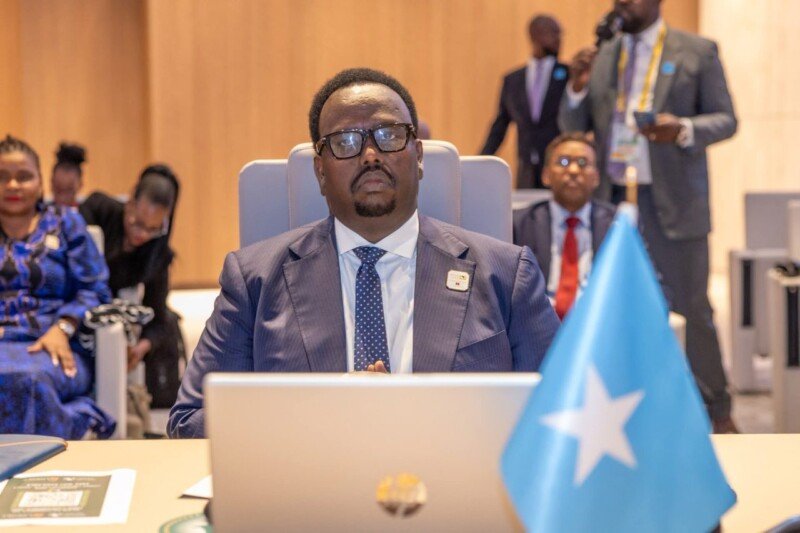
LUANDA — The Deputy Prime Minister of the Federal Government of Somalia, Salah Ahmed Jama, is participating in the 21st Extraordinary Session of the African Union Heads of State and Government in Luanda, Angola, where African leaders are convening to strengthen conflict prevention and resolution across the continent.
The session brings together African leaders to discuss a unified approach to addressing conflicts, implementing sustainable financing for peace and security, and strengthening cooperation between continental institutions and international partners. The discussions reflect the AU’s ongoing efforts to enhance its conflict resolution mechanisms and promote stability across the continent.
Deputy Prime Minister Salah Ahmed Jama stated that Somalia is contributing its experience in regional cooperation and the importance of consolidating security gains to strengthen national initiatives for lasting peace and stability. He emphasized Somalia’s commitment to working with other African nations to address shared security challenges.
The African Union has reaffirmed its dedication to Somalia’s peacebuilding and stabilization initiatives, emphasizing the value of African unity, solidarity and collective action in promoting peace, stability and development throughout the continent. AUSSOM has acknowledged Somalia’s advances in recovery and state-building, noting that “for almost two decades, African nations have stood side by side with the Somali people in backing their path toward peace, stabilization, state-building, and recovery” .
Somalia’s participation in the summit comes at a time when the country is navigating a complex security transition. The UN Security Council has extended the authorization for the African Union Support and Stabilization Mission in Somalia (AUSSOM) until December 31, 2026, while the United Nations Transitional Assistance Mission in Somalia (UNTMIS) is set to conclude its operations by October 31, 2026 .
AU’s Commitment to Somalia’s Sovereignty
The African Union has consistently reaffirmed its unwavering commitment to the sovereignty, unity, and territorial integrity of Somalia, stating that “the Union does not recognize Somaliland as an independent state.” The AU Peace and Security Council has delivered a firm rebuke concerning Israel’s recognition of the Somaliland authority, declaring the action invalid under international law and calling for an immediate withdrawal of the recognition decision .
The African Union Commission has voiced serious concern and strongly condemned reports indicating Israel’s appointment of a diplomatic envoy to the purported “Somaliland,” reaffirming the bloc’s unwavering commitment to the sovereignty, unity, and territorial integrity of Somalia .
President Hassan Sheikh Mohamud has met with Ugandan President Yoweri Museveni in Kampala to discuss the future of AUSSOM, which faces an existential funding crisis as the United States prepares to withdraw logistical support. The meeting comes as Uganda’s Chief of Defence Forces, General Muhoozi Kainerugaba, warned that the AUSSOM mission is facing an existential crisis .
Funding Challenges and International Support
The European Union has approved a €75 million funding package for AUSSOM, ending months of uncertainty and negotiations. The African Union Commission has welcomed the contribution, stating it would strengthen the mission’s operations and reflect continued cooperation between the AU and EU to promote stability, governance, and security in Somalia and the wider region .
The United States faces a critical choice on Somalia security assistance as AUSSOM’s mandate nears expiry. The State Department has reportedly expressed frustration with what it views as insufficient progress by Somali political leaders in assuming responsibility for their own security, and has warned it will oppose any support for the continuation of the AUSSOM mission beyond its current mandate .
The African Union’s Peace and Security Council has convened a special meeting to review the evolving situation in Somalia and assess the operations of AUSSOM, with discussions focusing on recent political developments and the challenging financial conditions facing the mission .
The African Union Peace and Security Council has officially endorsed Djibouti, Egypt, Ethiopia, Kenya, and Uganda as the Troop-Contributing Countries for AUSSOM, deploying nearly 12,000 personnel .
AUSSOM has formally transferred the technical management of the Buurhakaba Forward Operating Base to the Somali National Army’s 60th Division, marking another significant step in the progressive transfer of security responsibilities to Somali forces .
Somalia’s Minister of Defence, Ahmed Moallim Fiqi, has held talks with the African Union Special Representative for Somalia and Head of AUSSOM, Ambassador El Hadji Ibrahima Diene, to reinforce security cooperation and counter-terrorism efforts as Somalia continues its transition toward full security responsibility .
Critical Note
Deputy Prime Minister Salah Ahmed Jama’s participation in the AU summit reflects Somalia’s continued engagement with African institutions and its commitment to regional cooperation. However, the summit comes at a time when the African Union’s peace and security architecture is facing significant challenges, including funding shortfalls and the potential withdrawal of troops from Somalia.
The African Union’s reaffirmation of Somalia’s sovereignty and territorial integrity is a critical diplomatic victory for Mogadishu, particularly in the face of Israel’s recognition of Somaliland. However, the AU’s ability to enforce its position is limited, and the growing engagement between Israel and Somaliland continues to challenge the bloc’s unity on this issue. The joint condemnation by 16 nations, including key AU members, reflects the strength of opposition to Israel’s move, but it also highlights the divisions within the international community on the status of Somaliland.
While Somalia has made progress in stabilizing the country, the security situation remains fragile, and the country continues to rely on international support. The AU’s ability to provide sustained support for Somalia’s security transition will depend on the willingness of member states to contribute troops and resources. The Luanda summit provides an opportunity for Somalia to advocate for continued AU support, but the effectiveness of the summit’s outcomes will depend on the implementation of its decisions.
The Somali government must use this platform to advocate for sustained support for its security transition and to ensure that the AU’s peace and security architecture remains responsive to the country’s needs.