
NAIROBI: Kenyan President William Ruto has warned that Somalia is entering a politically uncertain phase, with the mandates of both its federal parliament and presidency effectively expired or nearing their end. His remarks come as mediation efforts by Kenya, Ethiopia, and Djibouti have failed to break the deadlock between Mogadishu and opposition factions, while Western diplomats intensify their own talks inside Mogadishu’s heavily fortified Halane compound.
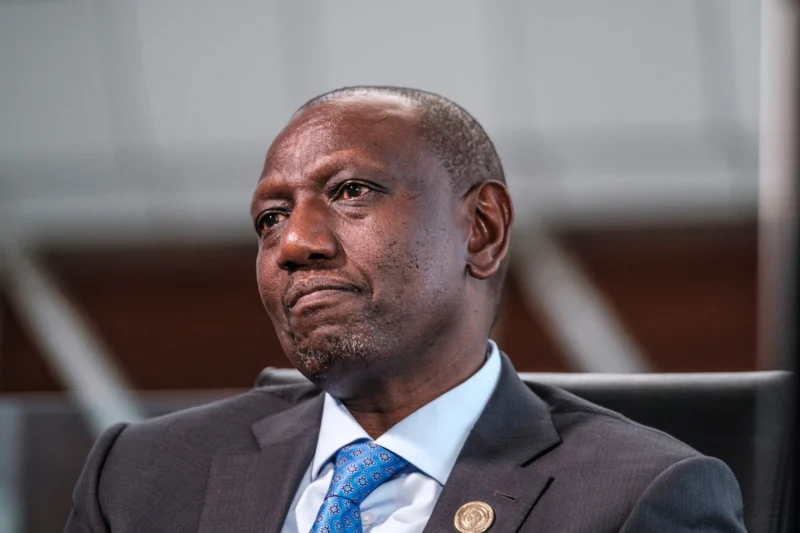
“Today, we have an even much more complicated situation because the term of the parliament there expired. The term of the president, I think, is expiring,” Ruto said in an interview with France 24. “And that situation, nobody knows where it is going because we have tried to broker an engagement between the states and the government in Somalia. We have not been very successful, and we are still pushing between Ethiopia, ourselves as Kenya, and Djibouti. We are still trying to find a solution to it.”
The Kenyan leader’s comments underscore growing regional apprehension over Somalia’s deepening political crisis. The federal parliament’s mandate formally ended on April 14, and President Hassan Sheikh Mohamud’s four-year term is scheduled to expire on May 15. Opposition leaders have declared that the president will lose his legal authority after May 15 unless national elections are held or a constitutional alternative is agreed upon. Meanwhile, senior government officials have argued that a revised constitution approved in March 2026 gives the administration up to two additional years in power – a position the opposition rejects.
President Ruto also questioned the prospects of reopening the long‑closed Kenya‑Somalia border, citing insecurity linked to renewed hostilities between Somali federal forces and Jubaland regional troops. “We were moving very well until a huge disagreement between the government in Mogadishu and the states and unfortunately there was an escalation of war between Somali National Army and the Jubaland forces which are right at the border in Kenya,” he said. He alleged that clashes near the coastal town of Raskamboni resulted in Somali troops crossing into Kenyan territory. “In fact, at that point, some of the Somali National Army were pushed into Kenya and that complicated the already situation that was existing there. We had to support members of the Somali National Army, fly them, assist them so that we could pacify and reduce the war.”
The friction between Mogadishu and Jubaland has repeatedly triggered violent confrontations in southern Somalia. Border towns such as Doolow have witnessed deadly exchanges, and the Kenyan president’s remarks highlight concerns that Somalia’s internal political conflict could destabilise neighbouring countries.
Faltering Regional Mediation and Western-Led Talks
President Ruto’s interview confirmed that months of shuttle diplomacy by Kenya, Ethiopia, and Djibouti have failed to produce a political breakthrough. Despite the lack of progress, he said the three neighbouring states are “still trying to find a solution” as Somalia’s institutions teeter on the edge of a constitutional vacuum. Regional mediation efforts have been ongoing for weeks, but the gap between the government and the opposition remains wide.
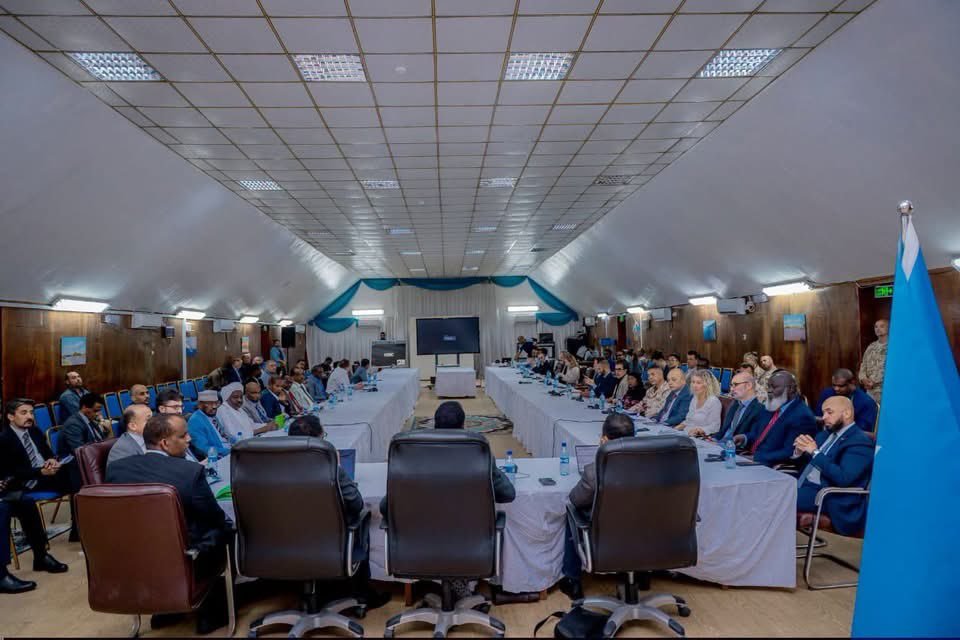
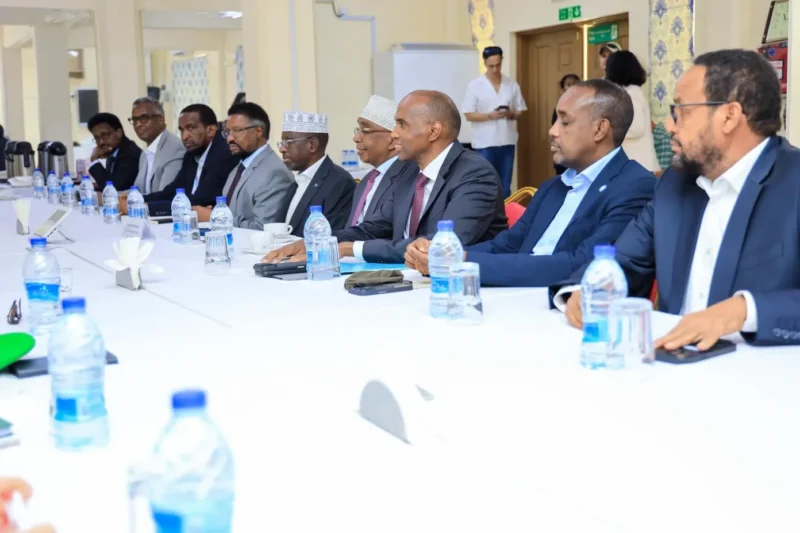
With regional mediation stalled, the United States and the United Kingdom have taken a leading role in pushing Somali rivals toward a deal. High‑stakes talks between President Mohamud and the opposition Somali Future Council opened on May 13 inside the Halane compound. The opposition demanded the release of political detainees as a precondition for substantive negotiations, a condition the president reportedly accepted. The Halane venue, which houses Western diplomats and foreign security agencies, was a hard‑won opposition demand; critics have long accused President Mohamud of delaying inclusive dialogue until international pressure forced his hand.
Core Dispute: Term Length and Electoral Model
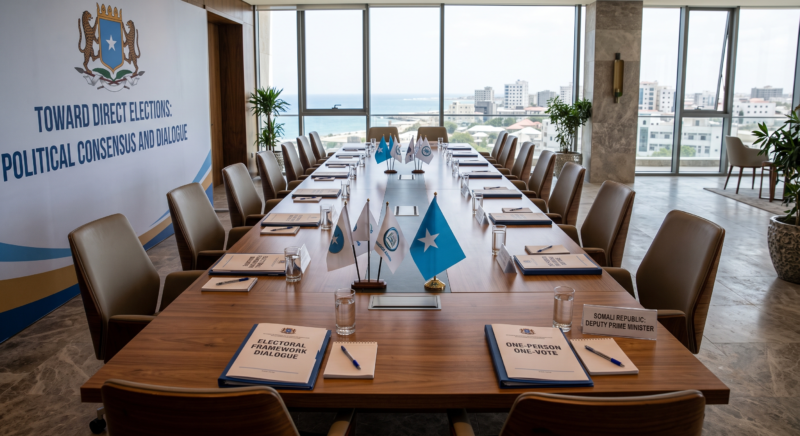
At the heart of the standoff are two irreconcilable visions for Somalia’s political future. The federal government advocates for a transition to a “one person, one vote” electoral system, while opposition leaders have countered that universal suffrage is not feasible under current security conditions and have instead demanded an indirect voting model with an independent mediator. The opposition Somali Future Council has warned that after May 15 it will take measures to prevent a power vacuum or unconstitutional rule. The council also rejects the March 2026 constitutional amendments, which extended presidential and parliamentary terms from four to five years, and insists that the 2012 provisional constitution remains the only legitimate legal framework.
President Ruto’s warning about political uncertainty, combined with the visible presence of US and UK diplomats inside Mogadishu’s most secure facility, reflects shared alarm among international partners that Somalia could be sliding toward a prolonged institutional crisis. Senior Somali officials have previously suggested that the government could remain in power for up to two additional years, a position the opposition has firmly rejected. With the president’s term formally expiring on May 15, and with no agreement on the way forward, the window for a negotiated compromise is rapidly narrowing.
President Ruto did not indicate whether Kenya would launch a new mediation push. His open acknowledgement of the crisis, however, signals that for Somalia’s immediate neighbours, the failure of diplomacy is no longer a distant risk but a present and deeply worrying reality.
Recommended Reading on ftlsomalia.com:
- Opposition: President’s Mandate Expires May 15 Without Elections
- Halane Talks Resume as Opposition Demands Release of Detainees
- Kenya Steps Up Mediation Between Somali Leaders
- Opposition Council Warns of Political Crisis as Election Deadlines Loom
- Somalia Minister Proposes Two-Year Government Extension