
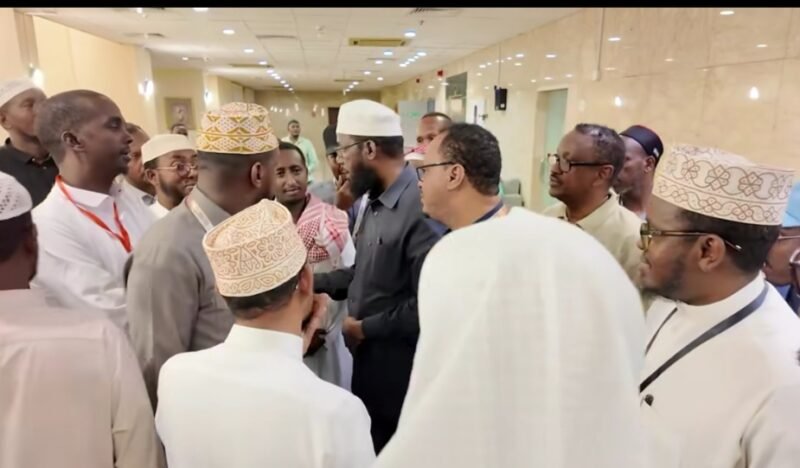
MADINAH: The Minister of Endowment and Religious Affairs of the Federal Government of Somalia, Mukhtar Robow Ali, has inspected several hotels housing Somali pilgrims in Madinah to assess the quality of services provided to worshippers undertaking this year’s Hajj pilgrimage. During his tour, the minister received updates from officials at the Somali Hajj Affairs Office in Madinah and engaged directly with Somali pilgrims to learn about the services offered and to address any concerns they raised.
Minister Robow directed Hajj office officials to ensure that Somali pilgrims receive effective and high‑quality services, emphasizing the need for proper care and assistance throughout their stay in the holy cities. The Federal Government launched this year’s Hajj operations with the first batch of 432 pilgrims departing from Mogadishu and Hargeisa, and minister Robow has previously affirmed that all transportation, lodging, and documentation processes are proceeding in strict accordance with the federal timeline. The Somali Ambassador to Saudi Arabia, Mohamed Amin Sheikh Osman, also conducted an official inspection of the Somali Hajj Affairs Office in Madinah to evaluate service efficiency and organization.
Over 11,500 Somali pilgrims have arrived in Madinah this year to perform the Hajj pilgrimage. Somalia secured an allocation of 11,500 slots for Somali pilgrims in an agreement signed with Saudi Arabia’s Ministry of Hajj and Umrah in November 2025. The agreement reflects the steady strengthening of cooperation between Somalia and Saudi Arabia and the growing capacity of Somali institutions to organize and manage the annual pilgrimage. Somali authorities have been working to streamline the process, ensuring that approved agencies, travel logistics, and accommodation arrangements meet the expectations of pilgrims who often save for years to take part.
In recent years, Somalia’s Ministry of Endowments and Religious Affairs has intensified efforts to improve services and welfare support for Somali pilgrims arriving from various parts of the world. The ministry has implemented a mandatory contractual framework for travel agencies managing the pilgrimage, requiring service providers to enter into binding formal agreements with pilgrims prior to departure. The move enhances logistics management, safeguards pilgrim rights, and strengthens government supervision over private operators, ensuring clear guidelines for lodging, transportation, and support services.
The ministry has also incorporated comprehensive medical services directly into the operational structure of the Hajj mission. Prime Minister Hamza Abdi Barre previously launched a national Hajj committee to oversee pilgrimage operations, signaling high‑level political commitment to ensuring a smooth experience for Somali pilgrims. A team of specialized medical professionals is accompanying the pilgrims to monitor their health conditions and deliver prompt medical attention throughout their stay in Saudi Arabia.
The 2026 Hajj season is expected to see continued improvements in service delivery. Somalia and Ethiopia reached an agreement on flight arrangements to facilitate pilgrim movement, ensuring smoother transit and reducing bottlenecks at regional airports. The government has also eliminated past administrative barriers that historically disrupted the pilgrimage journey. This year’s launch follows the successful conclusion of the 2025 Hajj season, during which Somalia received praise from Saudi authorities for its improved organization and care for pilgrims.
Minister Robow’s inspection tour in Madinah underscores the federal government’s commitment to ensuring that Somali pilgrims receive dignified and well‑structured support during their sacred journey. Officials said the minister will continue to monitor service delivery and address any emerging issues as more pilgrims arrive in Saudi Arabia ahead of the Hajj rituals.
Recommended Reading on ftlsomalia.com:
- 432 Somali Pilgrims Begin Hajj Journey from Mogadishu and Hargeisa
- Somalia Secures Expanded Hajj Quota in New Agreement with Saudi Arabia
- Ministry Launches New Agreement to Safeguard Hajj Pilgrims’ Rights
- Prime Minister Launches 2025 Hajj Committee to Oversee Pilgrimage Operations
- Somalia and Ethiopia Agree on Flights to Facilitate Hajj Pilgrims
- Somalia Urges Implementation of Recommendations from Previous Hajj Reports
- Robow Sets New Hajj Fee for Somalis While Rejecting Corruption Claims