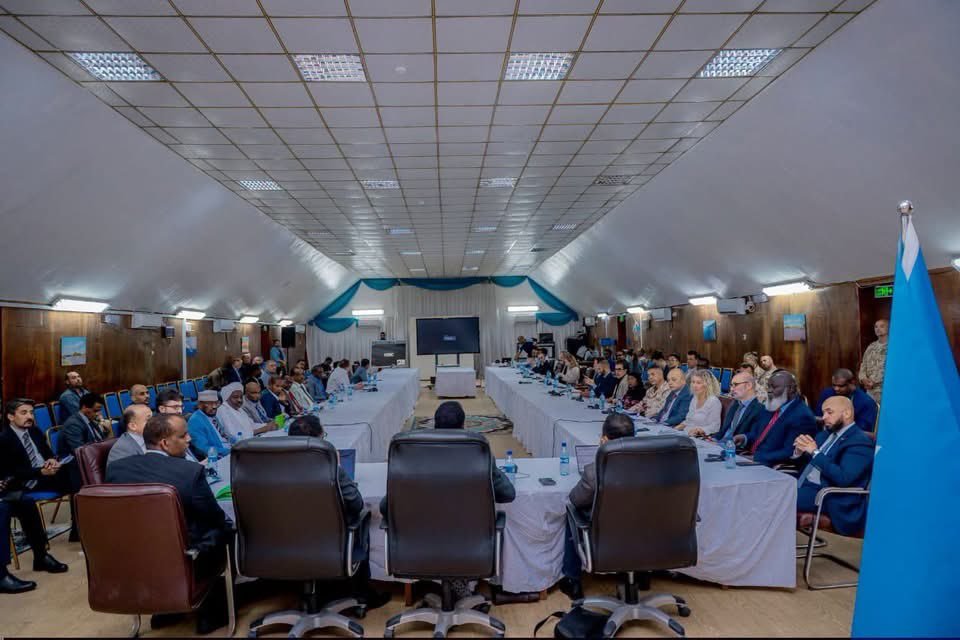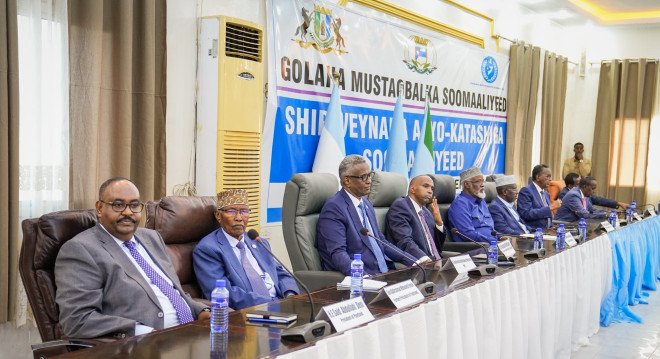

MOGADISHU: Somalia descended into greater political turmoil on Friday as President Hassan Sheikh Mohamud asserted that his presidential term would extend until May 15, 2027, despite opposition claims that his constitutional authority had lapsed. The declaration came shortly after intensive negotiations between the federal administration and opposition representatives ended unsuccessfully at Mogadishu’s secure Halane compound, where American and British diplomatic officials had spent three days trying to mediate the intensifying constitutional and electoral conflict.
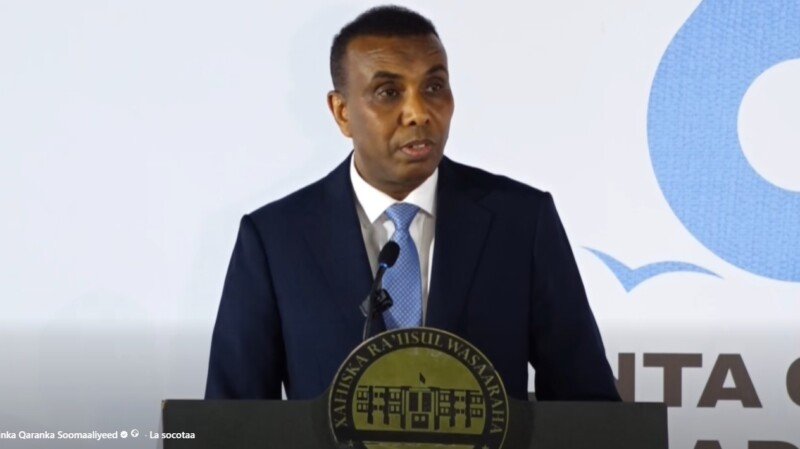
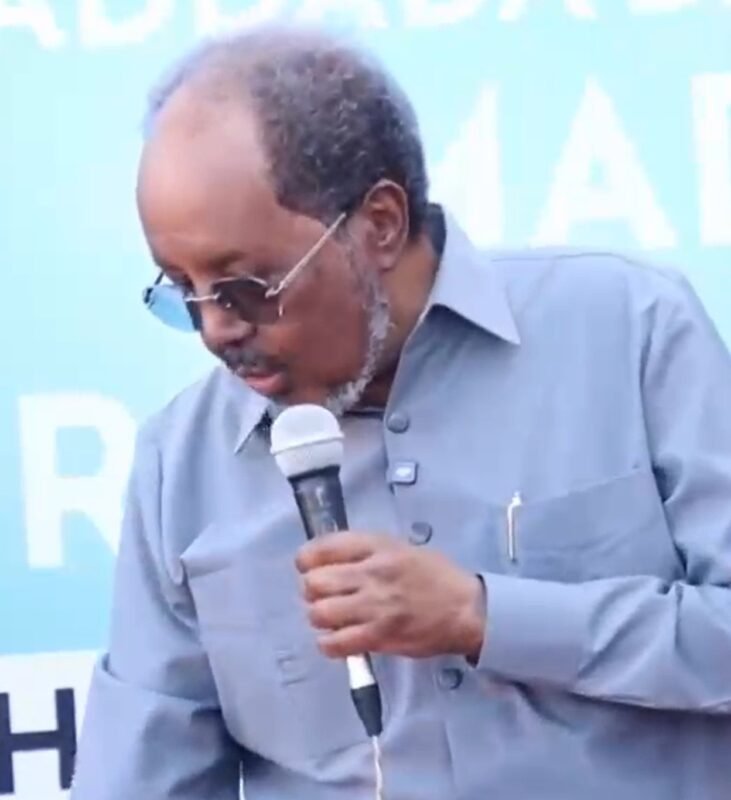
Speaking at an event marking Somali Youth League Day, President Mohamud maintained that recent parliamentary constitutional amendments had lengthened the presidential term from four to five years, effectively giving him an additional year in office. He presented the decision not as a personal pursuit but as a necessary measure for the nation, emphasizing that the extension resulted from institutional processes and served the country’s best interests. The comments immediately exacerbated an already tense confrontation with opposition leaders, who contend that the amendments were enacted unilaterally, violated constitutional principles, and were primarily aimed at extending his tenure.
According to multiple sources, the Halane discussions reached a deadlock almost immediately. During four sessions spanning three days, President Mohamud reportedly remained inflexible, insisting that his mandate remained valid through 2027 and that Somalia would conduct universal suffrage elections under his leadership. Opposition delegation members, including Puntland President Said Abdullahi Deni and former president Sharif Sheikh Ahmed, advocated for a return to consensus‑based governance and indirect elections, cautioning that the nation lacked the necessary security frameworks and institutional capacity to organize a nationwide popular vote.
Deni later indicated that the president approached the talks with little willingness to compromise, noting that discussions continued beyond the initial day only because opposition representatives sought to explore all remaining dialogue possibilities. Opposition sources suggested that even American and British mediators grew increasingly discouraged as negotiations stalled without resolution. Diplomatic observers familiar with the discussions described mounting frustration within the compound, where repeated efforts to bridge differences reportedly proved futile.
Following the breakdown of talks, opposition figures declared they no longer recognized President Mohamud as head of state, stating that his constitutional authority had concluded with the end of his original term on Friday. They accused him of orchestrating an unconstitutional power grab and warned that Somalia had entered a perilous and uncertain period. The crisis has highlighted deepening divisions within Somalia’s fragile federal structure and sparked concerns about renewed instability in a nation still confronting a persistent Islamist insurgency and significant political fragmentation.
In a Friday statement, the federal government reaffirmed its commitment to conducting “one person, one vote” elections nationwide, framing the initiative as a democratic milestone after decades of clan‑based indirect voting processes. Nevertheless, skeptics questioned the feasibility of such an election in a country where the federal government’s authority extends inconsistently beyond the capital. The self‑declared republic of Somaliland remains completely independent of Mogadishu’s control, while authorities in Puntland and Jubaland have explicitly rejected the federal electoral framework. Relations with the Galmudug administration have also deteriorated considerably. Large portions of southern and central Somalia remain under the influence or direct control of Al‑Shabaab, whose fighters continue operating near major towns and strategic transport routes. African Union peacekeepers continue to play a vital role in safeguarding government institutions and securing parts of Mogadishu.
Opposition groups have capitalized on these circumstances to argue that the push for universal suffrage represents less of a democratic initiative and more of a method for extending presidential control indefinitely. Critics have also questioned why the administration failed to organize direct elections before the conclusion of the original presidential term if genuine implementation was the objective.
Adding to the confusion surrounding the negotiations were remarks President Mohamud reportedly made to Somali TikTok influencers shortly before returning to the discussions. In videos circulating online, he appeared resolute in his determination to proceed with universal suffrage elections, dismissing attempts to persuade him otherwise, before negotiations collapsed less than an hour after resuming. The combative messaging reinforced perceptions of political drift at a time when Somalia appears to be approaching one of its most vulnerable periods in recent years.
With the opposition refusing to acknowledge the president’s authority, regional administrations openly resistant, and security threats intensifying throughout the country, Somalia now confronts the possibility of an extended constitutional confrontation without a clear resolution mechanism. Western allies, regional powers, and the African Union face increasing pressure to intervene diplomatically before tensions escalate further. Analysts caution that the current impasse threatens to undermine the already fragile political order that international partners have supported for years.
Recommended Reading on ftlsomalia.com: