
MOGADISHU — The National Intelligence and Security Agency (NISA), in coordination with international partners, has conducted a planned operation that resulted in the killing of Abdullahi Hashi Labajir, known as Ikhlaas, the head of Al-Shabaab’s intelligence, in the Jilib district of the Middle Juba region on August 23.
According to information released by NISA, Ikhlaas had served as the head of Al-Shabaab’s intelligence since 2013, making him one of the most senior commanders within the militant group’s leadership structure. His role placed him at the centre of the group’s intelligence operations, including counter-intelligence, surveillance, and the planning of attacks against Somali security forces and civilians.
NISA has not disclosed the specific details of the operation or the identity of the international partners involved. The killing of Ikhlaas represents a significant blow to Al-Shabaab’s intelligence capabilities, which have been a key component of the group’s ability to carry out attacks and evade security forces.
The operation comes amid intensified military and intelligence efforts against Al-Shabaab. Somali forces and international partners have previously conducted targeted airstrikes that have eliminated senior Al-Shabaab leaders, including the group’s ideological and financial chiefs, dealing significant blows to the organization’s leadership and operational capacity.
NISA and international partners have also eliminated two senior commanders within the Khawaarij network in highly synchronized precision operations. The operations eliminated Abdihamid Ali Abdullahi Maalim, who served as the primary link connecting the domestic insurgency with broader international terrorist syndicates, and Suleyman Omar Fidow, the supreme commander of the group’s suicide bomber divisions.
NISA killed three Al-Shabaab commanders and seriously wounded senior leader Mustaf Caato in a planned operation in the Maxaas district of the Hiiraan region. Caato, who was the group’s overall commander for the so-called “fronts” in the Hiiraan region, had long been involved in planning and coordinating terrorist attacks.
NISA has conducted intelligence-driven operations across central Somalia, with preemptive strikes destroying militant strongholds and thwarting several imminent attacks. The operations specifically targeted armed Kharijite elements gathering in the Hiiraan and Middle Shabelle regions, which have long been identified as vital logistical pathways for insurgents.
The Somali National Army has continued to build the capacity of its elite forces, with the Commander of the Somali National Army initiating Danab Commando training programs to enhance the capabilities of the country’s most effective counter-terrorism unit.
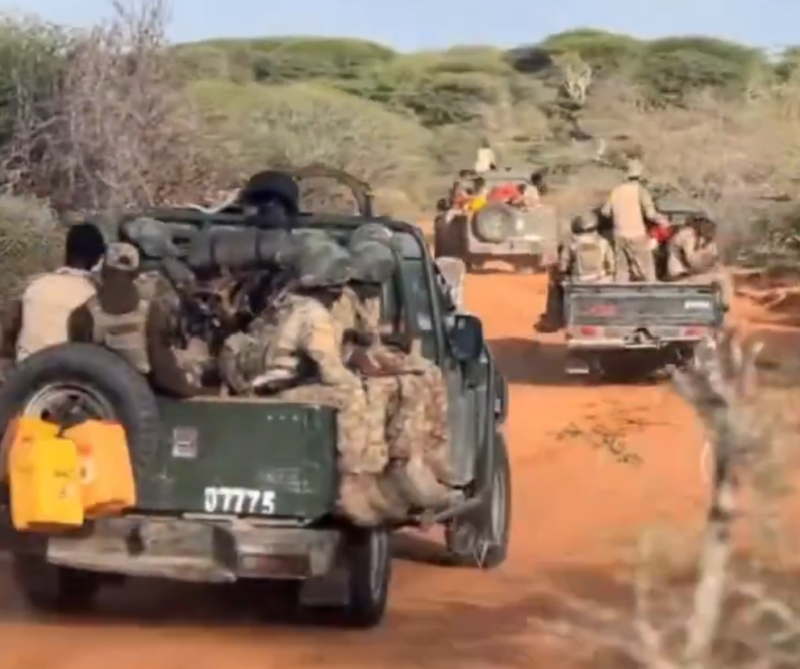
Somali forces have also conducted a 72-hour planned security operation across the Buulo Cabdalla corridor in Lower Shabelle, resulting in the death of 22 Al-Shabaab militants, including their regional commander, Cabdiraxmaan Jeeri.
Critical Note
The killing of Ikhlaas represents a significant tactical victory for Somali and international intelligence forces. As the head of Al-Shabaab’s intelligence since 2013, he was one of the most senior and experienced commanders in the group, and his elimination will likely disrupt the group’s intelligence operations and create leadership gaps that may take time to fill.
However, Al-Shabaab has demonstrated resilience in the face of leadership losses, often replacing senior commanders quickly and adapting its tactics. The group’s ability to maintain its operations despite the elimination of key leaders suggests that military and intelligence operations alone will not be sufficient to defeat the insurgency.
The government must continue to build on these successes by strengthening its intelligence capabilities, securing liberated areas, and addressing the underlying grievances that enable Al-Shabaab to recruit and operate. The international community should continue to support these efforts while maintaining robust oversight to ensure that operations are conducted in accordance with international humanitarian law and that civilians are protected.