
MOGADISHU — The Office of the Auditor General has notified the Ministry of Finance, the Civil Service Commission, and the National Identification and Registration Authority (NIRA) of a plan to integrate the government payroll system with NIRA’s National Identification System, aimed at eliminating ghost workers and payroll irregularities.
A letter dated August 29, 2026, states that the implementation of the new system will begin on October 1, 2026, with an initial pilot test. Following the pilot, the system will be gradually expanded to all government institutions, with the plan to complete the integration by December 31, 2027.
The Auditor General’s Office stated that linking the two systems is essential for verifying government employee data, ensuring accurate salary payments, and combating ghost workers and errors in the payroll system. The letter also clarified that any employee not registered with NIRA or whose data cannot be properly verified will not be included in the payroll system once the new system is operational.
This integration represents a significant step toward improving public financial management and strengthening accountability in the civil service. The government has long faced challenges with payroll management, including the payment of salaries to individuals who do not exist or are no longer employed, which has drained public resources.
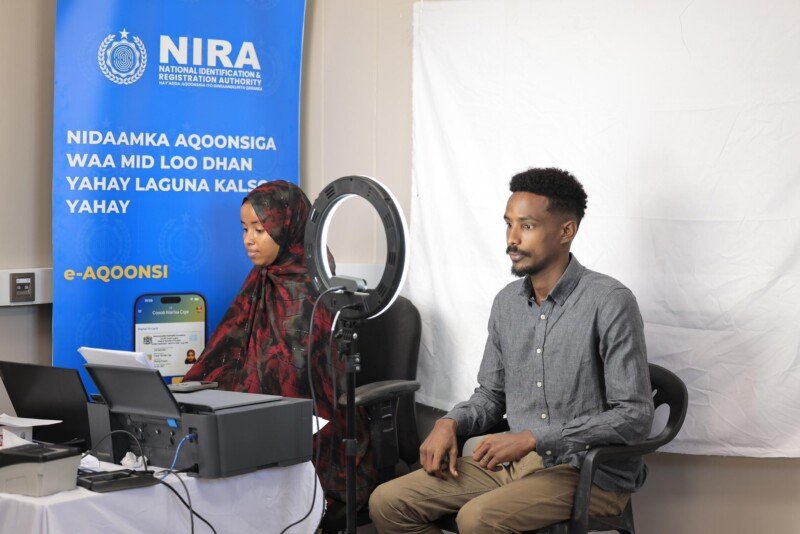
NIRA’s national identification system has registered over one million Somalis with biometric digital identity, processing between 12,000 and 15,000 registrations daily. The government aims to reach 15 million citizens by 2029.
NIRA has also expanded its services to the diaspora, with a new service center at the Somali Embassy in Pretoria, South Africa, extending registration services to Somali citizens residing in the Southern African region.
NIRA has been working to make the registration process inclusive, with a high-level forum in Mogadishu highlighting the critical role of women in Somalia’s National ID system and underscoring the need for inclusive registration.
NIRA has steadily expanded its service centers across the Benadir region, including a new service center in Boondheere District aimed at streamlining the issuance of national IDs, birth certificates, and other critical documents.
The integration of the payroll system with NIRA aligns with broader efforts to strengthen financial governance and transparency. Central Bank of Somalia Governor Abdirahman M. Abdullahi has highlighted that approximately $210 million is lost annually as funds pass through numerous intermediaries in East African financial centers before reaching Somalia.
The banking sector has demonstrated strong growth, with total banking assets increasing by 14 percent to $2.3 billion, equivalent to 20 percent of GDP.
Critical Note
The integration of the government payroll system with NIRA’s National Identification System represents a significant step toward improving public financial management and strengthening accountability in the civil service. The government has long faced challenges with payroll management, including ghost workers and payroll errors, which have drained public resources.
However, the success of this initiative will depend on the government’s ability to ensure that all civil servants are registered with NIRA and that the verification process is completed efficiently. The deadline of December 31, 2027, provides a reasonable timeline, but delays in implementation could undermine the initiative’s effectiveness.
To ensure that the new system is fair and effective, the government must address concerns about accessibility. Employees in remote areas or those without proper documentation must be given adequate time and support to complete their registration. Without such measures, the risk is that eligible employees may be unfairly excluded from the payroll, creating new grievances and undermining public trust in the system. The international community should continue to support Somalia’s efforts to strengthen public financial management and governance.