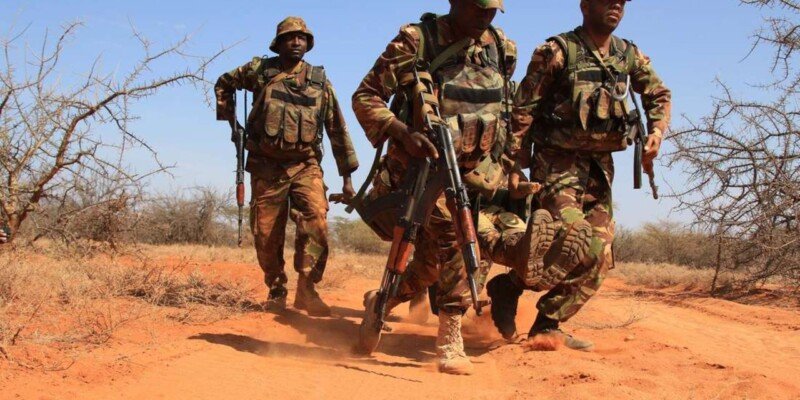

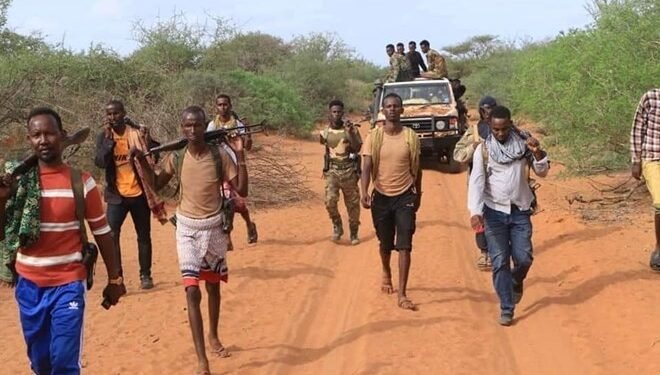
MOGADISHU – The National Intelligence and Security Agency (NISA), in coordination with international partners, has conducted a series of planned operations across the Middle Shabelle and Hiiraan regions, resulting in the deaths of two senior Al-Shabaab propaganda operatives and 14 other militants. The strikes, which targeted the group’s media infrastructure and a militant assembly point, mark a tactical victory in the government’s ongoing counter-terrorism campaign, but they also underscore the enduring challenges of eliminating an insurgency that has proven remarkably resilient.
The first operation targeted what NISA described as the “Security House” in the Miirtaqwo area of Middle Shabelle, a facility used by Al-Shabaab to house equipment for its propaganda outlet, Radio Andalus. The strike killed Cabdisamad Maxamed, the head of Al-Shabaab’s media wing, and Cali Salaad, another operative involved in propaganda efforts. A third militant was wounded. The operation also destroyed broadcasting equipment used for “misleading the public,” according to NISA.
A second set of operations, conducted in the Tardo area of the Hiiraan region, targeted a group of 14 militants who were reportedly preparing to launch attacks in the Goobo and Waab-weyn areas. NISA confirmed that all 14 were killed and that a Noah-type vehicle used by the group was destroyed.
A Tactical Blow to Al-Shabaab’s Propaganda Machine
The elimination of Cabdisamad Maxamed, the head of Al-Shabaab’s media operations, represents a significant tactical success for Somali intelligence. Al-Shabaab has long used Radio Andalus to amplify its attacks and shape the narrative of the conflict, often offering accounts that sharply differ from official government statements. The destruction of the “Security House” and its broadcasting equipment is a direct challenge to the group’s ability to project its message.
NISA has a track record of targeting high-value propaganda operatives. In a separate operation, NISA and international partners eliminated two senior commanders within the Khawariij network, disrupting the group’s logistical and international links. The agency has also eliminated key commanders responsible for mines and rocket attacks in the Middle Shabelle region, dealing a significant blow to the militant network responsible for planning and executing rocket attacks.
The Hiiraan Flashpoint
The second operation, targeting militants in the Tardo area, is part of a broader campaign to secure the Hiiraan region, a longstanding flashpoint in the conflict. The Somali National Army has executed a series of planned security operations in eastern Hiiraan as part of a broader national initiative to eradicate extremist fighters. NISA previously executed an intelligence-driven operation in the Tardo area, resulting in the deaths of five Al-Shabaab militants and the destruction of hideouts and logistical facilities.
The Hiiraan region has become a central battleground in the war against Al-Shabaab. The SNA and local Macawisley forces have launched coordinated military operations targeting Al-Shabaab militants in the Hiiraan region, focusing on flushing out elements hiding in villages and remote areas along key routes used by the group for movement and supply. In a recent precision airstrike in the Suullaay area, 18 militants were killed and 21 others wounded, reflecting the military’s growing capacity to conduct precision strikes with international support.
The Limits of Military Pressure
Despite the tactical successes, the operations in Miirtaqwo and Tardo raise fundamental questions about the sustainability of the current strategy. Al-Shabaab has repeatedly demonstrated its ability to regroup after strikes, as evidenced by the group’s continued presence in areas that have been targeted multiple times. In June 2026, NISA and its allies eliminated 29 Al-Shabaab militants in central Somalia, including the organization’s primary explosives expert in Hiiraan. Yet the group continues to operate, adapt, and launch attacks.
The government has framed these operations as part of a “final offensive,” triggering a wave of defections as Al-Shabaab leaders surrendered in Lower Shabelle. However, the group’s ability to continue operating, and to rebuild its propaganda apparatus, suggests that military pressure alone is insufficient. The conditions that allow the insurgency to endure, including corruption, clan grievances, and economic marginalization, remain unaddressed.
Way Forward
The elimination of two senior propaganda operatives and 14 militants is a significant tactical achievement for Somali forces. It demonstrates the growing capability of NISA and the Somali National Army to conduct intelligence-driven operations against a resilient and adaptive enemy. However, the broader challenge remains: whether military pressure alone can break the insurgency, or whether it must be paired with a credible effort to build state institutions, deliver services, and address the grievances that fuel the conflict.
The government’s emphasis on military solutions, while neglecting governance and reconciliation, risks perpetuating a cycle of violence rather than breaking it. Without a comprehensive strategy that includes political engagement, economic development, and community reconciliation, the tactical victories in Miirtaqwo and Tardo will remain just that: tactical victories, not strategic solutions.
Recommended Reading On ftlsomalia.com
- NISA Forces Eliminate Eight Al-Shabaab Militants, Including Two Commanders, in Middle Shabelle Operation
- NISA, Allies Eliminate 29 Al-Shabaab Militants in Central Somalia
- NISA Operation in Hiiraan Eliminates Five Al-Shabaab Militants
- NISA, International Partners Eliminate Khawaarij Leaders in Precision Strikes
- Final Offensive Triggers Wave of Defections as Al-Shabaab Leaders Surrender in Lower Shabelle