
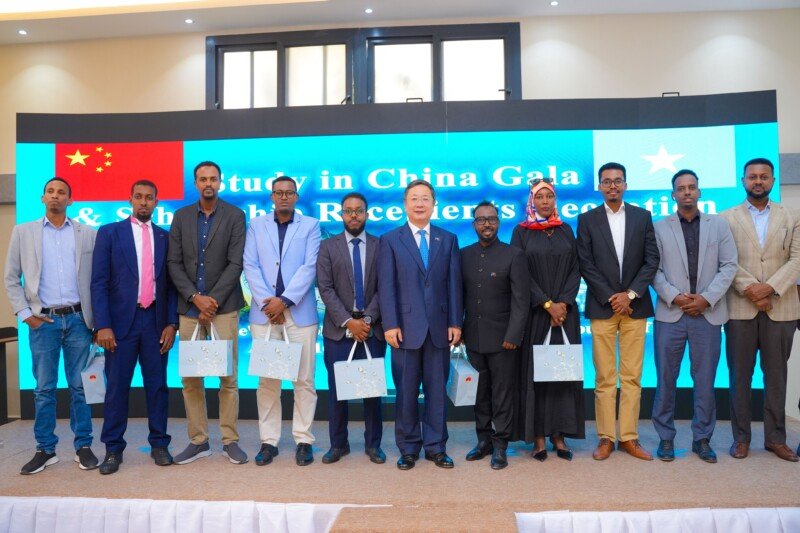
MOGADISHU — More than 150 Somalis have been awarded Chinese government scholarships this year, the largest intake on record, according to an announcement made at the Study in China Gala and Scholarship Recipients Reception held at the Amara Hotel in Mogadishu on August 16, 2026.
The cohort spans government officials, military officers, law enforcement personnel, and university students. Chinese Ambassador to Somalia Wang Yu confirmed that both civilian and military programmes had reached record levels for a second consecutive year, underscoring the deepening bilateral ties between the two countries.
Mohamed Osman Omar, a Member of Parliament and Minister at the Ministry of Family Affairs and Human Rights Development, noted that the first cohort after the programme resumed numbered sixteen students, highlighting the significant growth in the scholarship programme since its re-establishment.
This marks the second year running that the Embassy has held a joint reception for civilian and military recipients, a format that reflects how broadly the two governments now define educational cooperation.
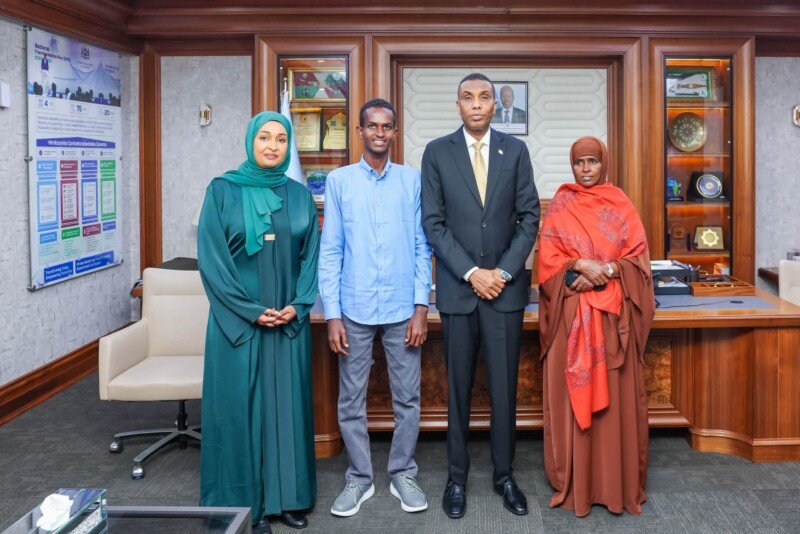
Somalia’s Minister of Education, Culture and Higher Education has held talks with Ambassador Wang Yu to strengthen bilateral cooperation in education, improving the quality of teaching, expanding learning opportunities, and investing in human capital development.
China has awarded military scholarships to 31 officers from the Somali National Armed Forces, covering advanced training programs in Chinese military academies focusing on leadership, strategy, engineering, and specialized technical skills.
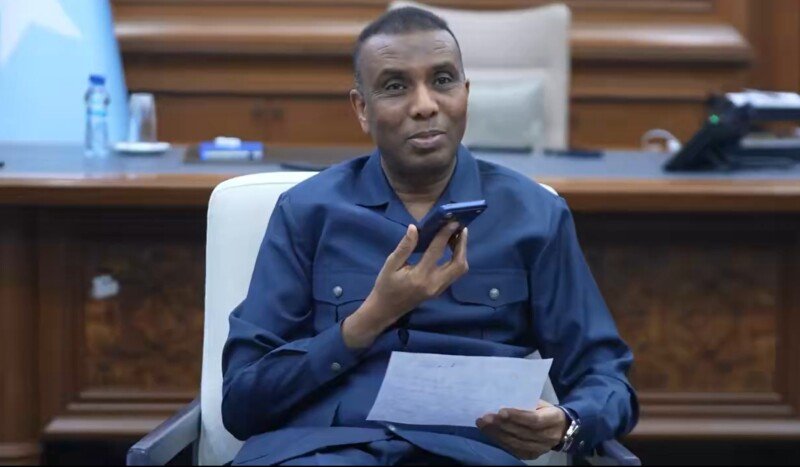
The Minister of Internal Security has held talks with Ambassador Wang Yu focused on China’s support to Somalia, particularly in developing security forces and combating violent extremism. China has pledged to expand military support to Somalia in its fight against al-Shabaab militants, promising equipment, training, and closer security cooperation.
Somalia and China signed a zero-tariff fisheries protocol in July 2026, allowing Somali fishery products to be exported to Chinese markets duty-free, a move officials described as a significant milestone for the Horn of Africa nation.
China has also partnered with Somalia to advance the National ID System, with Ambassador Wang Yu meeting with the Director of NIRA to accelerate implementation of Somalia’s advanced digital registry. Discussions also focused on strengthening public financial oversight, with the Auditor General engaging in strategic dialogue on aligning Supreme Audit Institutions.
The China–Somalia Trade Conference in Yinchuan brought together more than 100 companies, with Prime Minister Hamza Abdi Barre underscoring Somalia’s untapped opportunities in agriculture, fisheries, renewable energy, infrastructure, and telecommunications.
Somalia and China have maintained a long-standing diplomatic relationship dating back to 1960, when Somalia was among the first African countries to recognise the People’s Republic of China. Ambassador Wang Yu framed the awards within a bilateral relationship that has run for sixty-six years, with both countries remaining committed to mutual respect, equality and common development.
In addition to scholarships, China has provided three million United States dollars in humanitarian cash assistance since the end of last year, along with emergency food aid worth fifteen million Chinese yuan to support the response to severe drought, with a further consignment worth ten million yuan now under way.
Critical Note
While the record number of Chinese government scholarships represents a significant opportunity for Somali students and professionals, the sustainability of this programme and its long-term impact on Somalia’s development will depend on the effective use of the skills acquired by returning scholars. The government must ensure that returnees are able to contribute to national development and that their skills are utilised in key sectors. Furthermore, the growing China-Somalia partnership, while offering economic and educational opportunities, also raises questions about the balance of influence and the need for transparency in bilateral agreements.