

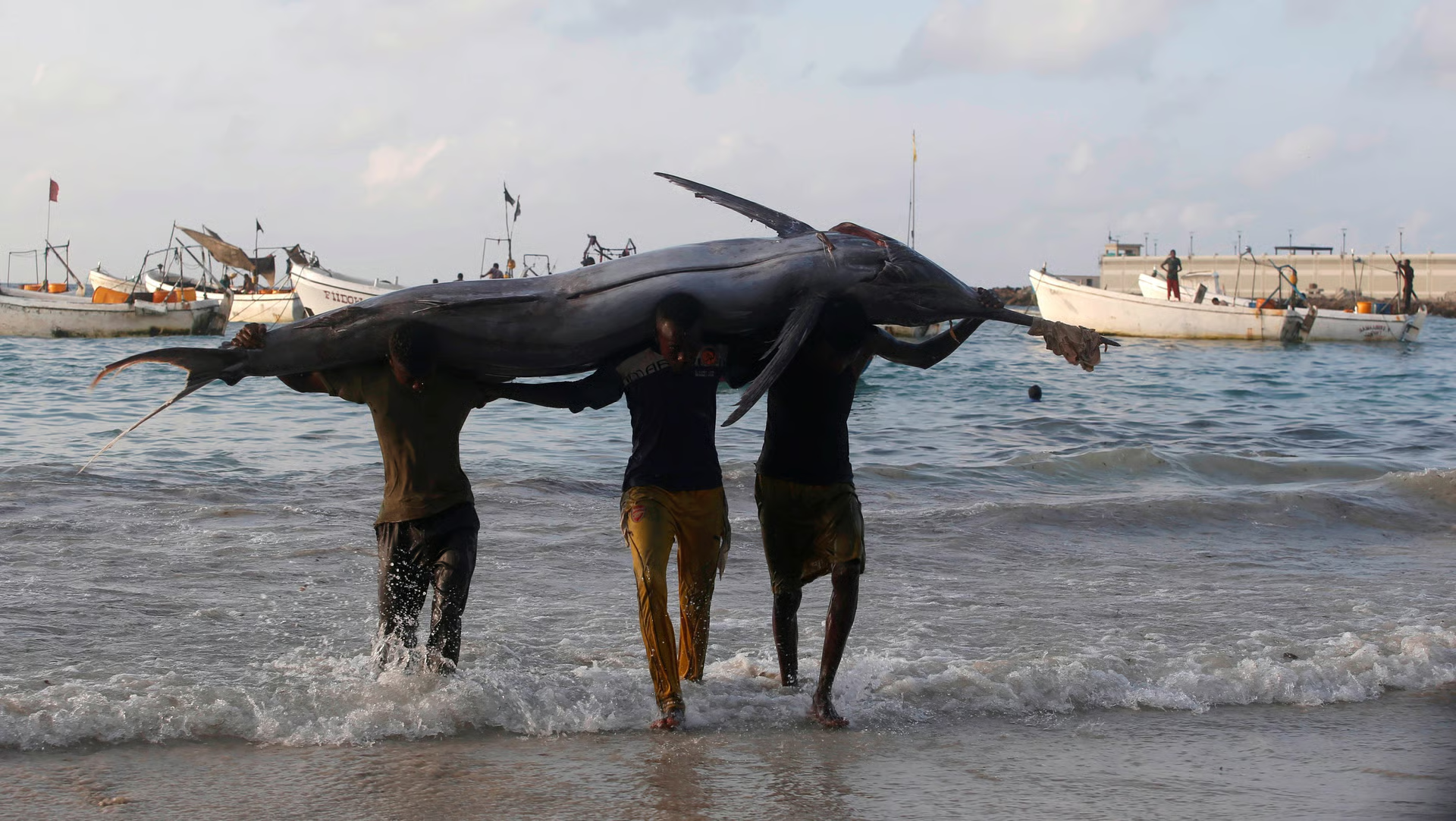
MOGADISHU — Somalia is set to begin exporting fish and other seafood products to China in September 2026, following the implementation of a tariff-free agreement signed between the two countries in July 2026.
The plan to commence exports was announced this week, following the agreement signed on July 13, 2026, between Somalia’s Minister of Fisheries and Blue Economy, Ahmed Hassan Adan, and China’s Ambassador to Somalia, Wang Yu.
The agreement allows Somali fishery products, including tuna and other seafood, to enter the Chinese market duty-free. Director General of the Ministry of Fisheries and Blue Economy, Abdi Dirshe, described the deal as a historic step aimed at boosting the blue economy, creating jobs, and attracting investment in cold storage and supply chain infrastructure.
The start of fish exports opens one of the world’s largest seafood markets for Somalia, as the government works to transform the country’s coastal resources into an economic pillar alongside livestock and agriculture.
Somalia has one of the longest coastlines in Africa, stretching over 3,500 kilometers, but the fisheries sector has long suffered from a lack of adequate infrastructure in refrigeration, processing, transport, and marketing. Somali officials hope that access to the Chinese market will encourage investment in ports, landing sites, processing plants, and cold storage facilities that are essential for consistent exports to international markets.
The agreement comes as Somalia is seeking to expand its blue economy while also facing challenges including illegal fishing and limited capacity to patrol its waters.
Attention is now focused on how the September exports will be implemented, including which Somali companies will participate, which ports will be used, and what quality standards will be required for fishery products to enter the Chinese market.
The zero-tariff fisheries protocol signed between Somalia and China is expected to increase competitiveness and export opportunities for Somali fishermen and traders, incentivizing investment in processing and cold-chain infrastructure. The protocol includes fish, crustaceans, molluscs, and other aquatic invertebrates.
Somalia’s blue economy holds a billion-dollar promise, with the potential to transform livelihoods and strengthen the economy if properly managed and protected from illegal fishing.
Somalia has also established a fisheries partnership with Turkey through the SOMTÜRK joint venture, which aims to enhance blue economy development, increase fish production, create local processing facilities, and address illegal, unreported, and unregulated fishing.
Mogadishu Port Chief has welcomed a Somali fishing company exporting to international markets, reflecting growing private sector engagement in the fisheries sector.
Somali Fisheries Minister Ahmed Hassan Adan has outlined plans to combat illegal fishing, including strengthening monitoring, control and surveillance, and establishing a robust legal framework to regulate access to Somalia’s fishing grounds.
Critical Note
While the tariff-free agreement with China represents a significant opportunity for Somalia’s fisheries sector, the country faces considerable challenges in fully benefiting from the deal. Infrastructure deficits, including a lack of cold storage facilities, processing plants, and quality control systems, have historically constrained the growth of the fisheries sector. The government must address these structural challenges while also tackling illegal fishing, which continues to deplete Somali waters and cost the country millions of dollars annually.
Furthermore, the agreement must be accompanied by efforts to build the capacity of Somali fishermen and businesses to meet the quality and safety standards required for the Chinese market. Without such investments, the deal risks benefiting foreign operators rather than Somali communities. The government should also ensure that the agreement contributes to sustainable fishing practices and the long-term health of Somalia’s marine resources.