

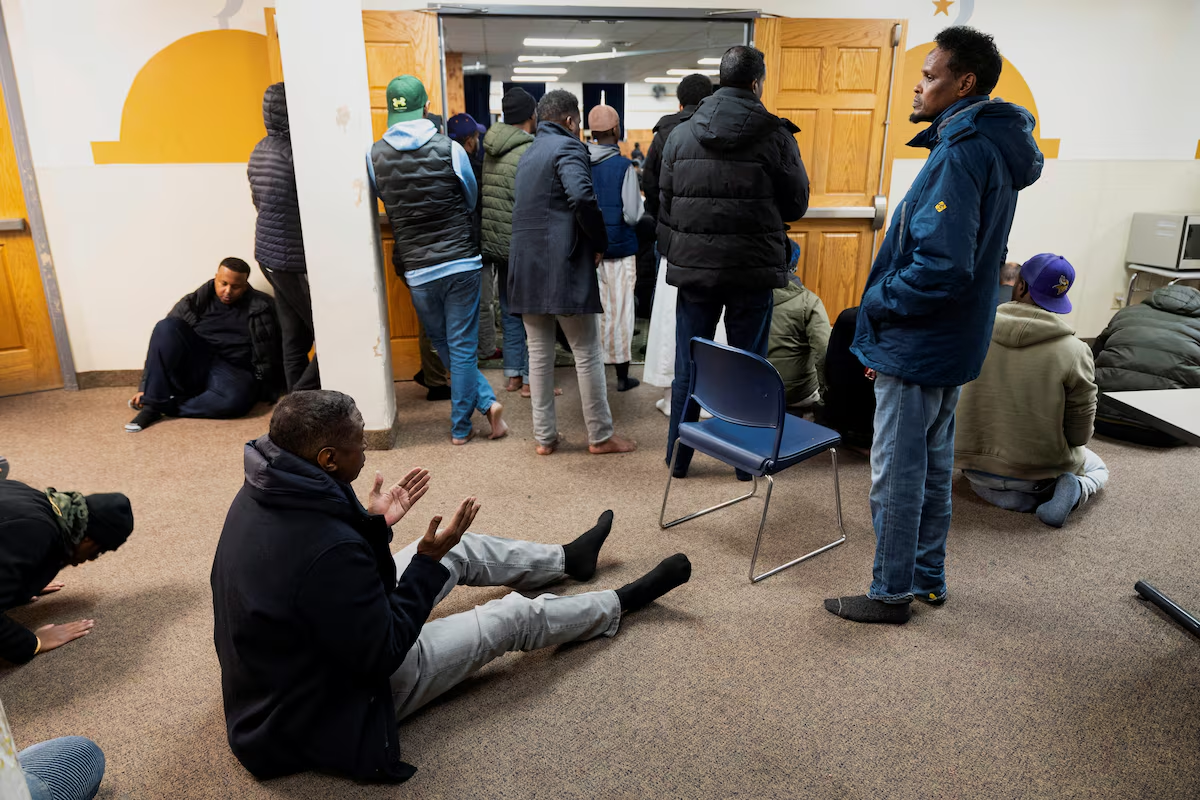
WASHINGTON — A federal judge has cleared the way for the Donald Trump administration to end Temporary Protected Status (TPS) for nearly 1,100 Somali nationals living in the United States, a decision that could put them at risk of deportation and marks a significant escalation in the administration’s broader immigration crackdown.
U.S. District Judge Allison Burroughs, an appointee of former President Barack Obama, allowed the Department of Homeland Security to proceed with terminating Somalia’s TPS designation. The ruling follows a Supreme Court decision in June that limited judicial challenges to the administration’s efforts to end similar protections for migrants from several countries.
The decision reverses an earlier move by Burroughs, who had blocked the termination of Somali TPS in March while considering a lawsuit brought by Somali nationals and immigrant advocacy groups. The plaintiffs had argued that the decision was influenced by discriminatory rhetoric targeting Somali immigrants.
TPS is a program that grants temporary protection from deportation to nationals of countries facing armed conflict, environmental disasters, or other extraordinary conditions. Somalia has been designated for TPS since 2012 due to ongoing conflict and humanitarian crisis. However, the Trump administration has pursued terminations for several countries, including Venezuela and Nicaragua, arguing that the protections were intended to be temporary.
The decision has drawn sharp criticism from Democratic leaders, including Minnesota Attorney General Keith Ellison, who stated that Trump cannot legally end TPS “for just one state or on a bigoted whim” and has promised to pursue legal remedies. Somali leaders in Minnesota have also resisted the termination, arguing that it constitutes discrimination against their community. Farah Mohamed Ali, a Somali American journalist in Minnesota, described the accusations used to justify the decision as “propaganda against the Somali community,” noting that no evidence has been presented linking Somali TPS holders to fraud or criminal activity.
Trump announced the termination of Somali TPS in Minnesota in November 2025, citing unverified claims of fraud and gang involvement without providing evidence. The announcement sparked outrage among state leaders, who argued it constitutes discrimination against the Somali community.
The Trump administration formally announced the termination of TPS for Somali nationals in January 2026, setting an effective deadline of March 17, 2026. The decision impacts approximately 705 individuals, a relatively small segment of the 1.3 million immigrants currently covered by TPS nationwide, but has been part of a broader executive strategy that has seen protections revoked for nationals from multiple countries.
Somali leaders in Minnesota have been actively resisting the TPS termination, with Attorney General Keith Ellison describing the president’s action as “fear-mongering and scapegoating.” Congresswoman Ilhan Omar has also vocally opposed the increased ICE presence in her district, characterizing the president’s fixation on Somali-Americans as “unhealthy” and politically motivated.
The Trump administration’s focus on the Somali community in Minnesota has been sharpened by allegations of financial misconduct, with Treasury Secretary Scott Bessent targeting alleged fraud involving Somali money in Minnesota, fueling a narrative that President Trump has used to justify stricter enforcement measures.
Somali MP Accuses Officials of Secret Criminal Deportation Deal
Over 4,000 Somalis to be Deported from the US Following Trump’s Orders
EU Considers Stricter Visa Measures for Somali Citizens Over Repatriation Cooperation Concerns
Critical Note
The court’s decision to allow the termination of TPS for Somali nationals represents a significant blow to the Somali community in the United States and raises serious questions about the fairness and consistency of U.S. immigration policy. While the administration has argued that conditions in Somalia have improved sufficiently to end the protections, the country continues to face ongoing conflict, displacement, and humanitarian crisis, with millions of people in need of assistance. The decision also highlights the vulnerability of immigrant communities to changes in political leadership and judicial interpretations. The international community should press the U.S. government to reconsider this decision and to ensure that any changes to immigration policy are based on a careful and fair assessment of conditions in home countries.
Recommended Reading On ftlsomalia.com
- Trump Terminates Somali TPS in Minnesota
- Trump Ends Protected Status for Somalis
- Somali Leaders Challenge TPS Termination
- Trump Criticizes Minnesota’s Somali Community
- Somali MP Accuses Officials of Secret Criminal Deportation Deal
- Over 4,000 Somalis to be Deported from the US
- EU Considers Stricter Visa Measures for Somali Citizens