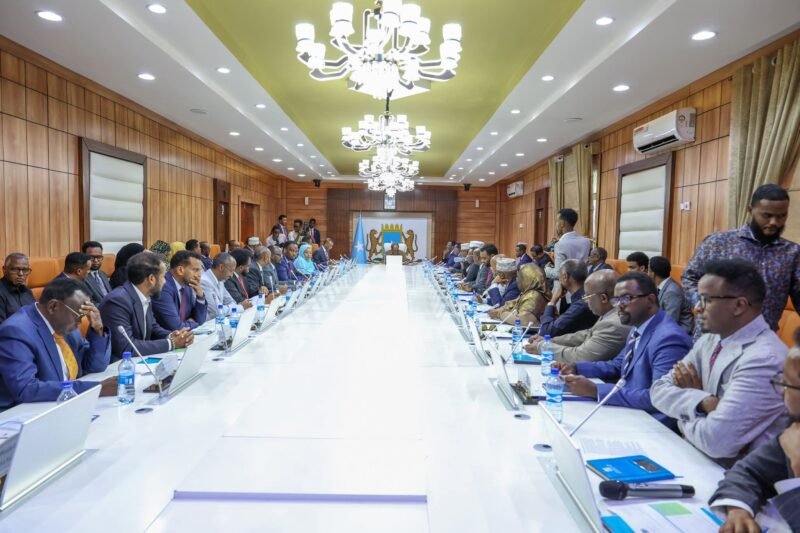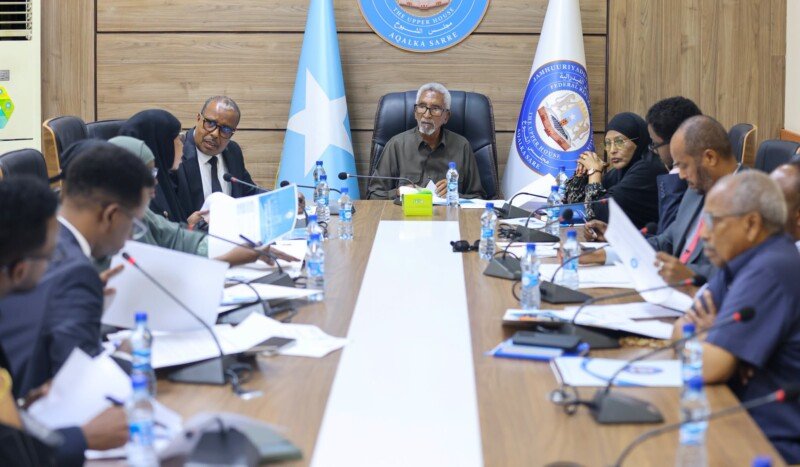

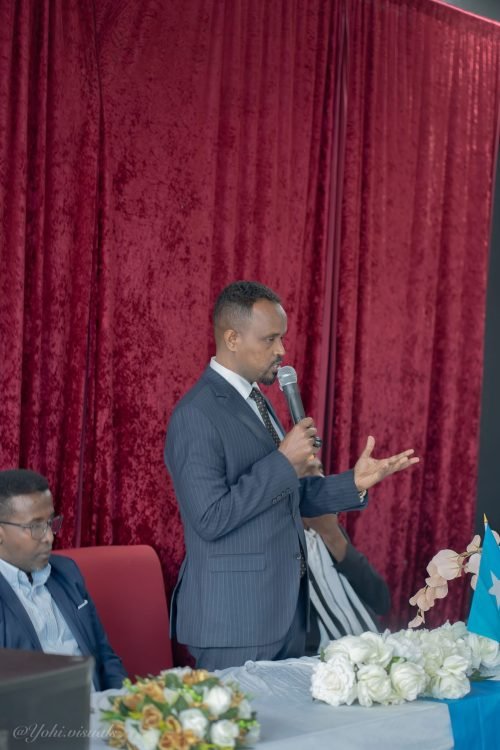
GOTHENBURG: The Deputy Minister of Information, Culture and Tourism of the Federal Government of Somalia, Abdirahman Yusuf Al‑Adala, held a special meeting with members of the Somali community in Gothenburg on Monday as part of a working visit to Europe. The gathering, organised by community leaders headed by Mohamed Salad Yarrow, provided a platform for the diaspora to engage directly with a senior government official on the country’s recent progress and ongoing national development.
During the meeting, community members posed questions about the situation in Somalia and the achievements of the federal government over the past four years. Deputy Minister Al‑Adala responded directly, presenting a detailed briefing on government successes across several key sectors. According to the Somali National News Agency (SONNA), his presentation covered security, democratisation, economic growth, counterterrorism operations, public service delivery, and foreign affairs – a comprehensive overview of the administration’s state-building efforts.
Security and Democratisation
The Somali government has consistently prioritised security and political reforms as twin pillars of its national recovery. Anti-terrorism efforts have made Mogadishu safer than ever, with the reopening of 52 key roads in the capital after more than 15 years of security closures, demonstrating visible progress in counterterrorism operations.
On the political front, Somalia has taken decisive steps towards ending decades of indirect clan‑based elections. The government has successfully held one‑person, one‑vote elections across 13 districts in South West State, with more than 376,000 registered voters casting their ballots. President Hassan Sheikh Mohamud praised the peaceful conduct of the polls, describing them as “a new chapter in Somalia’s history” and a major step towards universal suffrage.
Counterterrorism Gains
The federal government continues to wage an aggressive campaign against Al‑Shabaab. Security forces have carried out targeted operations, including the elimination of an Al‑Shabaab extortionist and the dismantling of an illegal checkpoint in Lower Shabelle. Somali forces have killed dozens of Al‑Shabaab fighters in coordinated ground and air offensives, while the government has also moved to starve the group of funds, shutting down hundreds of bank and mobile money accounts used to finance its operations.
Economic Growth and Foreign Relations
On the economic front, Somalia has embarked on ambitious infrastructure projects, including the reopening of long‑blockaded roads, intended to boost internal trade and economic activity. The government has also focused on fiscal discipline and public service expansion to improve the delivery of essential services.
In the arena of foreign policy, Mogadishu has been actively expanding its international partnerships. The Somali Premier met with Yemen’s ambassador to strengthen bilateral ties on migration and maritime cooperation, and the country has successfully repatriated Somali nationals from war‑torn Yemen with the support of UN agencies. Somalia has also deepened military and political cooperation with Turkey, with Defence Minister Ahmed Moallim Fiqi holding talks with Turkish defence industry officials on the sidelines of SAHA EXPO 2026 to modernise the Somali National Army.
Diaspora Engagement and Community Support
The meeting in Gothenburg underscores the Federal Government’s sustained commitment to engaging the Somali diaspora as a strategic partner in national recovery. During an earlier trip to London in February 2026, Deputy Minister Al‑Adala urged the diaspora in the UK to maintain their advocacy and financial remittances, while presenting a unified front against activities that threaten the nation’s cohesion. In Birmingham, the deputy minister was warmly received by the Somali community, where he emphasised the “active and positive role” of the diaspora in backing Somalia’s recovery.
The Gothenburg gathering, organised under the leadership of Mohamed Salad Yarrow, similarly reflected strong diaspora support for the Somali government and its vision for continued national progress. As the country navigates a complex political transition and ongoing security operations, the backing of the diaspora remains a vital component of Somalia’s state-building efforts.
Recommended Reading on ftlsomalia.com:
- Somali Deputy Minister Holds UK Community Meeting
- Improved Safety in Bakara Market Encourages Voters Ahead of Polls
- South West State Elections Begin with 394 Parliamentary and 1,297 Local Council Candidates
- President Hassan Sheikh Commends Peaceful Southwest Elections
- Anti‑Terror Efforts Make Mogadishu Safer Than Ever, Minister Says
- From Sanctions List to Financial Collapse: How Somalia is Crippling Al‑Shabaab’s War Chest
- Somali Premier Meets Yemeni Envoy to Boost Ties
- Somalia’s Defence Minister Engages Turkish Arms Industry at IDEF 2025