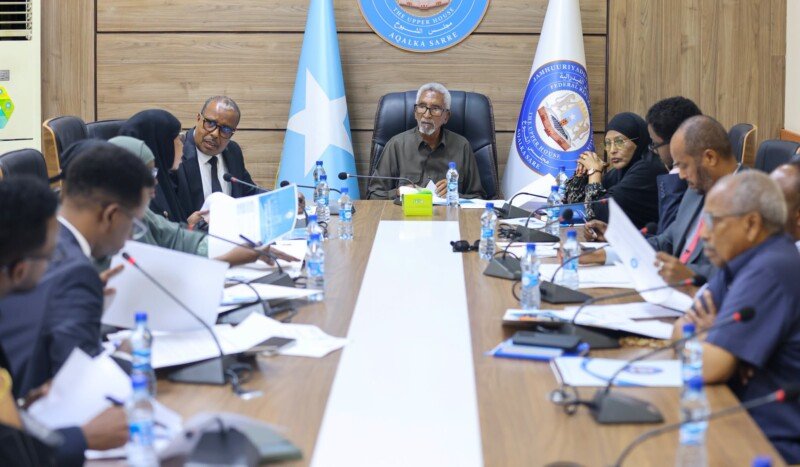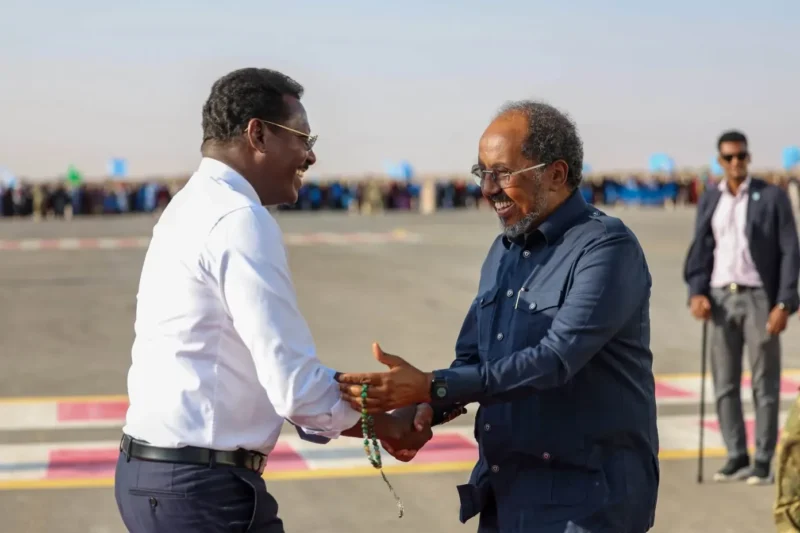

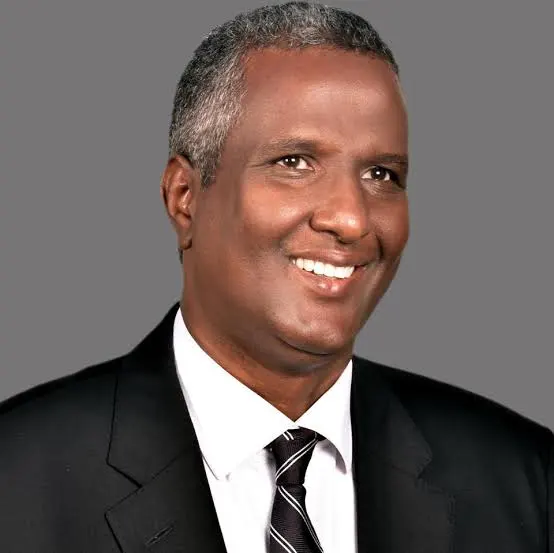
MOGADISHU: Senior opposition leader Abdirahman Abdishakur Warsame has accused the Somali government of pushing the nation into a constitutional abyss and warned that Ankara’s public support for President Hassan Sheikh Mohamud is inflaming an already perilous political crisis. In a statement released on Sunday, May 17, Warsame, a prominent opposition lawmaker and leader of the Wadajir Party, argued that the country has entered one of its most fragile political periods since the collapse of the central government in 1991.
Warsame’s warning follows the formal expiry of President Mohamud’s four‑year term under the 2012 Provisional Constitution on May 15, and the earlier lapse of the Federal Parliament’s mandate on April 14. Opposition leaders have long insisted that the president would lose his legal authority after May 15 unless a national election is held or a constitutional alternative is agreed upon. The president, however, has invoked constitutional amendments approved by parliament in March 2026, which he says extend the presidential term to five years.
Warsame accused the government of pursuing a contested transition without broad political consensus, stating that “unilateral efforts to extend Hassan Sheikh’s rule have intensified institutional polarization, weakened constitutional legitimacy, and heightened security risks nationwide.” He pointed to the recent collapse of U.S.-mediated talks at Mogadishu’s Halane compound as evidence that the administration is unwilling to compromise. The Somali Future Council has already declared that it no longer recognises President Mohamud as head of state and has warned that it will not allow a power vacuum or unconstitutional rule.
Criticism of Turkish Alignment A central element of Warsame’s statement was a sharp critique of Turkey’s recent diplomatic and military posture. He expressed concern that Ankara’s public reaffirmation of support for President Mohamud, issued immediately after the expiration of the president’s term, had damaged the perception of Turkey as a neutral actor. “For more than a decade, Somalis viewed Turkey differently from many external powers,” Warsame said, acknowledging Ankara’s humanitarian aid, infrastructure projects, and security cooperation.
But he argued that Turkey’s visible alignment with an increasingly disputed presidency could erode the goodwill it has built. Turkey has maintained one of its largest overseas military training facilities in Mogadishu and has provided extensive support to Somali security forces. However, Warsame warned that by backing a leader whose constitutional mandate is contested, Ankara risks being seen as taking sides in an internal political struggle rather than standing for institutional stability.
South West State as a Flashpoint Warsame used the recent events in South West State as a case study of the dangers of politically‑contested electoral processes. He accused the federal government of intervening directly in regional politics after the removal of former president Abdiaziz Laftagareen and the installation of parliamentary speaker Adan Mohamed Nur (Madobe) as the Villa Somalia’s favoured presidential candidate. Madobe has since convened a political alliance in Baidoa, securing backing from multiple parties ahead of the regional presidential election.
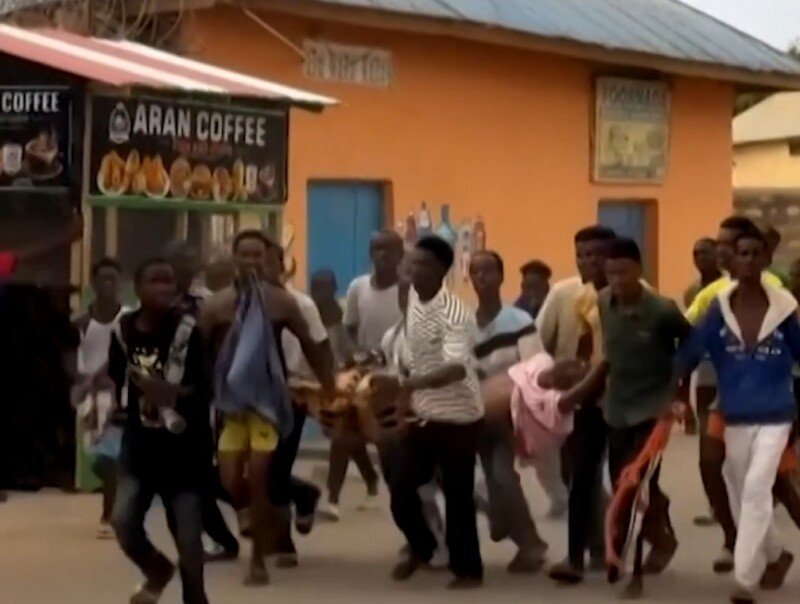
The opposition leader alleged that the resulting tensions triggered armed confrontations in Baidoa involving federal forces, clan militias, and Turkish drone‑backed military operations. Heavy fighting on the outskirts of Baidoa in March pitted federal troops against forces loyal to the ousted South West administration. Warsame said the unrest later contributed to the emergence of a rival administration in Marka and created conditions that allowed Al‑Shabaab to intensify attacks across the region. “The deterioration of security in South West State is therefore not separate from the political crisis. It is one of its direct consequences,” he stated.
Democracy Beyond Ballots Warsame acknowledged that direct elections remain a legitimate national aspiration, but cautioned that democratic legitimacy could not be reduced to electoral rhetoric alone. “Elections alone do not create democracy,” he said, adding that fragile states require constitutional legitimacy, institutional neutrality, political inclusivity, public trust, and security guarantees before credible elections can occur. He warned that Somalia risked normalizing governance beyond constitutional limits while continuing to invoke democratic language, arguing that authoritarian tendencies often emerge through disputed elections, contested constitutional amendments, and the concentration of power justified in the name of stability.
Warsame urged international partners to support inclusive dialogue, constitutional clarity, and negotiated political arrangements rather than aligning with individual leaders during contested transitions. He singled out Turkey, stating that it now faced a critical test over whether its engagement would remain anchored in support for Somali institutions or become associated with a single political actor. “Genuine partnership with Somalia should mean strengthening institutions rather than individuals,” he concluded.
Recommended Reading on ftlsomalia.com:
- Kenya’s Ruto notes Somalia’s political uncertainty as presidential term ends
- Halane deadlock: Opposition rejects Mohamud’s legitimacy
- Deni accuses Hassan Sheikh of ‘breaking the country apart’
- Federal Parliament Speaker holds political alliance talks after South West polls
- Somalia’s Defense Minister holds talks with Turkish counterpart
- MP warns of imbalanced oil deal with Turkey