
HARGEISA — The Somaliland administration has criticised a senior United Nations delegation’s visit to Laascaanood, the administrative capital of the North Eastern State, stating that engagements in politically and security-sensitive areas should be conducted through established diplomatic channels with prior coordination with authorities in Hargeisa .
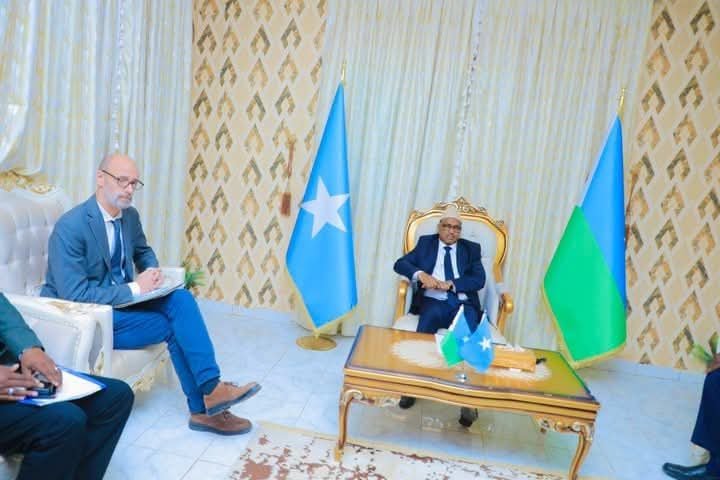
The UN delegation, led by Deputy Special Representative of the UN Secretary-General for Somalia and Humanitarian Coordinator George Conway, visited Laascaanood on Sunday, August 16, 2026, to assess drought conditions and humanitarian needs in the region . The mission included meetings with North Eastern State Acting President and Vice President Abdirashid Yusuf Jibriil, who expressed appreciation for the UN’s continued engagement with the regional administration .
In a statement issued on August 16, Somaliland’s Ministry of Foreign Affairs said it remained committed to facilitating humanitarian assistance to communities in need, including residents of Laascaanood, but insisted that visits by senior UN officials to areas of political sensitivity should follow established diplomatic procedures .
“Somaliland remains firmly committed to facilitating the delivery of humanitarian assistance to all communities in need, including our people in Laascaanood,” the statement read . “The Government wishes to underscore, however, that visits by senior United Nations officials to areas of political and security sensitivity should be undertaken through established diplomatic channels, with appropriate prior notification, consultation, and coordination with the Government of the Republic of Somaliland.”
The statement reflects the unresolved territorial dispute over the Sool region, which is claimed by both Somaliland and the Federal Government of Somalia. Laascaanood has been under the control of forces aligned with Somalia’s federal government and the North Eastern State administration since Somaliland forces withdrew from the city in 2023 following months of fighting .
Conway’s visit focused on the worsening humanitarian crisis in the region, which has experienced below-average rainfall for approximately two years, leading to severe drought, displacement, and food insecurity . The UN delegation also visited the stabilization centre at Laascaanood Hospital, where children were being treated for severe malnutrition . Conway warned that prolonged drought could lead to further deaths, loss of livelihoods and displacement .
Acting North Eastern State President Abdiraashid Yuusuf Jabriil received Conway and his delegation to discuss strengthening cooperation between the regional administration and the United Nations, with discussions covering humanitarian needs, development priorities, and the ongoing partnership between the two sides . The Acting President expressed appreciation to the UN delegation for their continued efforts in supporting the North Eastern State administration .
Humanitarian agencies are facing severe funding shortages, with Somalia’s humanitarian response plan only 29 percent funded . In Sool and Sanaag, just 26 percent of requirements have been met, forcing agencies to prioritise life-saving assistance for the most urgent cases . SoDMA Commissioner Mahamuud Moallim Abdulle had previously arrived in Laascaanood on August 6 to bolster humanitarian response efforts and oversee the launch of a new drought relief programme targeting vulnerable families across the region .
The political situation in the North Eastern State remains fragile. Five North Eastern State MPs resigned and were stripped of their parliamentary privileges after allegedly defecting to Somaliland, underscoring the deepening political and security crisis gripping the region . The resignations followed a similar move by MP Fahiima Yuusuf Quuje, who defected to Somaliland earlier in July 2026 after renouncing the Somaliweyn cause she had once championed .
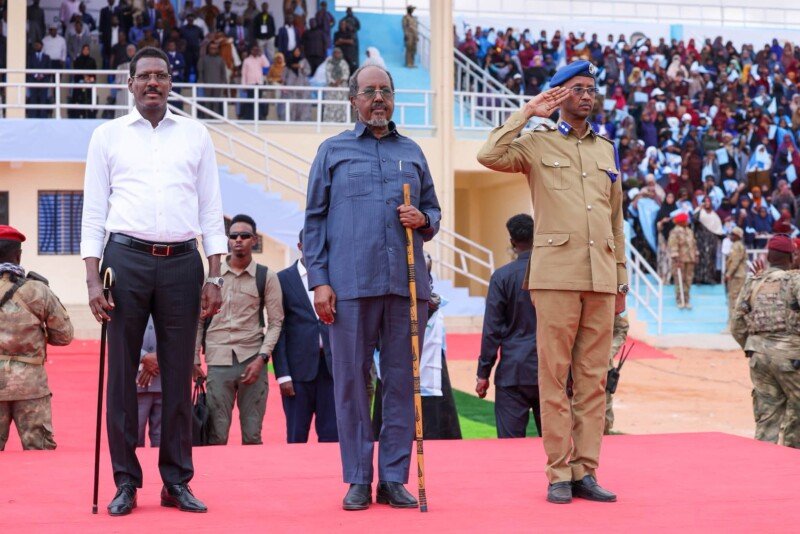
Prime Minister Hamza Abdi Barre had previously visited Laascaanood in early August to take part in celebrations marking the first anniversary of the North Eastern State administration, issuing a call for dialogue with Somaliland politicians and criticising the breakaway region’s engagement with Israel . The Prime Minister’s visit drew strong condemnation from Somaliland, which described it as a “clear provocation” and a violation of its claimed territorial sovereignty .
Critical Note
Somaliland’s criticism of the UN delegation’s visit to Laascaanood highlights the persistent tensions over the region’s political status and the challenges of delivering humanitarian aid in contested territories. While Somaliland’s call for coordination through established diplomatic channels reflects its claim to authority over the region, the UN’s engagement with the North Eastern State administration signals growing international recognition of the regional government within Somalia’s federal framework .
The humanitarian situation in the Sool region demands urgent and sustained attention, regardless of political disputes. The severe funding shortfall, with only 29 percent of Somalia’s humanitarian response plan funded, underscores the international community’s failure to adequately respond to the crisis . Without increased funding and a depoliticised approach to aid delivery, vulnerable communities will continue to bear the heaviest burden of the drought and displacement. Somaliland’s insistence on procedural coordination, while understandable from its perspective, must not be allowed to delay or obstruct the delivery of life-saving assistance to communities in need .