
MOGADISHU — Former Prime Minister Omar Abdirashid Ali Sharmarke has strongly condemned the ongoing evictions and demolitions in Mogadishu, as the federal government’s land clearance operations intensify and the Banadir Governor defends the redevelopment efforts.
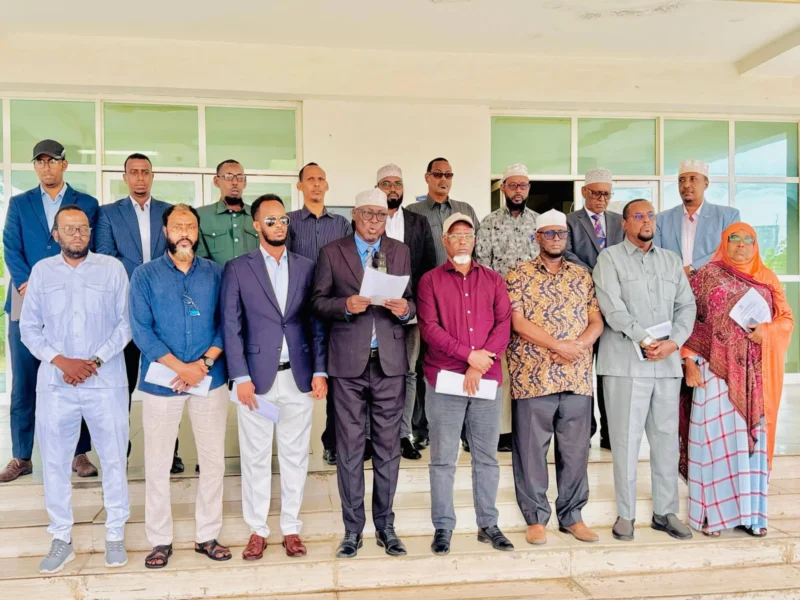
In a statement, Sharmarke said the Federal Government bears the responsibility of protecting the rights and welfare of Somali citizens, expressing deep concern over the displacement of residents from their homes. He specifically cited Buulo Elay and the two Tokyo neighbourhoods in Howlwadaag and Yaqshiid districts, where he said tens of thousands of people have been displaced.
“The displacement of tens of thousands of people from Buulo Elay and the two Tokyo neighbourhoods in Howlwadaag and Yaqshiid districts, without consultation with the community, is an entirely unacceptable and painful matter,” Sharmarke said. He emphasized that the Federal Government has a duty to protect the rights and welfare of its citizens.
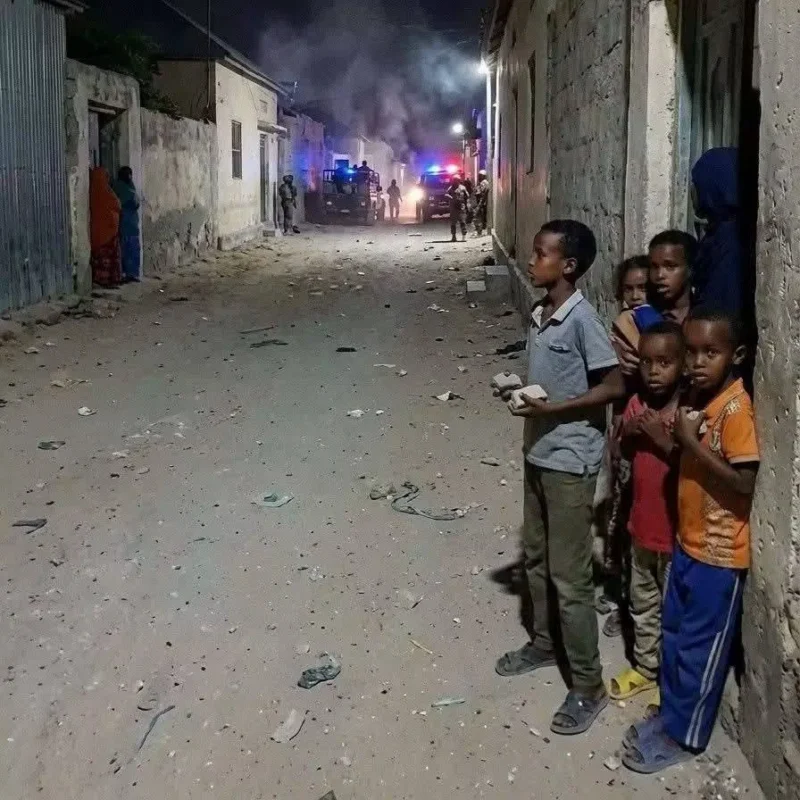
Sharmarke’s condemnation comes after nearly 10 people were injured in clashes between government forces and residents protesting the demolition of homes in the Tookiyo neighbourhood of Yaqshiid district, according to local reports. Residents staged a protest against security forces after being informed that their homes would be demolished on land that the government claims as public property.
Meanwhile, Banadir Governor and Mogadishu Mayor Hassan Mohamed Hussein (Muungaab) has defended the demolitions, stating that the government’s plan is to rehabilitate public land in Kaaraan and Yaqshiid districts to open major roads and beautify the city. He asserted that the land would be legalised for its original owners, and that those with valid documents would not have their property touched. Muungaab said the administration has consulted with Somali Islamic scholars on the matter.
“What I want to make clear is that the public land where people were residing is being legalised for them. That is what the President knows of us. Those who have documents, their land will not be touched, and we have consulted with the scholars on this,” Muungaab said.
Muungaab also addressed concerns about residents who have been displaced, stating that those who lose their land when roads are opened will be compensated with a comprehensive resettlement plan. He said the first 1,000 plots are nearing completion in the Gubadley area for the resettlement of displaced residents.
The Tookiyo demolitions follow growing unrest over forced evictions in other parts of Mogadishu. In August 2026, families in the Siliga Towfiiq area of Yaqshiid district staged protests against what they described as systematic land grabs by powerful business interests. Residents accuse individuals of fraudulently selling off their homes and plots of land, leaving many households without shelter.
Families in Mogadishu’s Wabari district also took to the streets to protest forced evictions, with demonstrators criticising President Hassan Sheikh Mohamud and accusing Turkey of supporting what they described as a “bloody hand” in Somalia. Somali government forces used live ammunition against residents resisting eviction from their homes, according to reports. “We have nowhere to go. We are civilians. We are being robbed,” a woman said while protesting the forced evictions in Wabari.
Former President and opposition leader Sheikh Sharif Sheikh Ahmed has issued a stark warning that the country’s fragile statehood is “on the brink of collapse” due to what he called rampant and unlawful land seizures by politically connected elites. Sharif accused influential businessmen and well-placed officials of orchestrating widespread land grabs across the capital and beyond, describing the practice as “a dangerous betrayal of the public trust” that undermines stability.
The Union of Somali Islamic Scholars Councils has also called on the federal government to halt actions that deprive citizens of their property rights, urging President Hassan Sheikh Mohamud, Prime Minister Hamza Abdi Barre, the Banadir regional administration, and relevant government institutions to independently investigate the complaints and hold accountable anyone found to have abused their authority.
A Somali internet service provider, SOON, has accused members of the presidential guard of raiding and demolishing its main network hub in Mogadishu’s Bondhere district, escalating concerns over alleged land seizures near the presidential palace. Parliamentarian Qali Shire is said to be claiming the property, raising questions about the involvement of powerful figures in contested land cases around Villa Somalia.
MP Abdirahman Abdishakur Warsame has previously warned that forced evictions in Mogadishu could fuel extremism, saying the government’s actions risk creating a humanitarian and security catastrophe. “This isn’t just about homelessness; it’s about national security,” Abdishakur said, warning that the government’s campaign was “handing Al-Shabaab a powerful recruitment tool on a silver platter.”
The Tookiyo demolitions represent another escalation in the growing crisis over land governance in Mogadishu. The use of force against residents protesting the destruction of their homes reflects a troubling pattern of governance failure that undermines the rule of law and public trust. The government’s stated justification—that the land is public property—raises questions about the transparency of land administration and the protection of citizens’ property rights.
Critical Note
The conflicting statements from former Prime Minister Sharmarke and Governor Muungaab reflect the deep divisions over the government’s land clearance operations. While the government frames the demolitions as urban development, the displacement of tens of thousands of residents without adequate consultation or compensation raises serious questions about the protection of property rights and the rule of law.
The Tookiyo demolitions, which left nearly 10 people injured in clashes between government forces and residents, are part of a broader pattern of forced evictions, demolitions, and violent clashes in Wabari, Yaqshiid, and Daynile. These are not isolated incidents but part of a broader crisis. The allegations of politically connected land grabs, the involvement of security forces in evictions, and the targeting of opposition figures suggest that the problem extends beyond individual cases to systemic governance failures.
The Governor’s assurance that those with valid documents will not be affected offers little comfort to the many families who lack formal documentation despite years of residency. The promise of resettlement in Gubadley, while welcome, is vague and does not provide a clear timeline or guarantee for those already displaced.
The government must immediately halt all demolition operations pending a transparent review of land claims and establish a fair mechanism for resolving disputes. Without urgent action to address the grievances of affected communities, the cycle of violence, displacement, and instability is likely to continue. The international community must press for accountability and the protection of property rights, recognizing that land disputes are not merely local grievances but threats to Somalia’s long-term stability.
Recommended Reading On ftlsomalia.com
- Violence Erupts in Mogadishu as Residents Protest Demolition of Homes in Tookiyo Neighbourhood
- Families in Yaqshiid Protest Alleged Land Grabs
- Mogadishu Residents Protest Forced Evictions
- Ex-President Sharif Warns Somalia Risks Collapse
- Religious Leaders Call for Halt to Land Grabs
- Internet Firm Accuses Presidential Guards
- Wadajir Leader Warns Evictions Could Fuel Extremism