
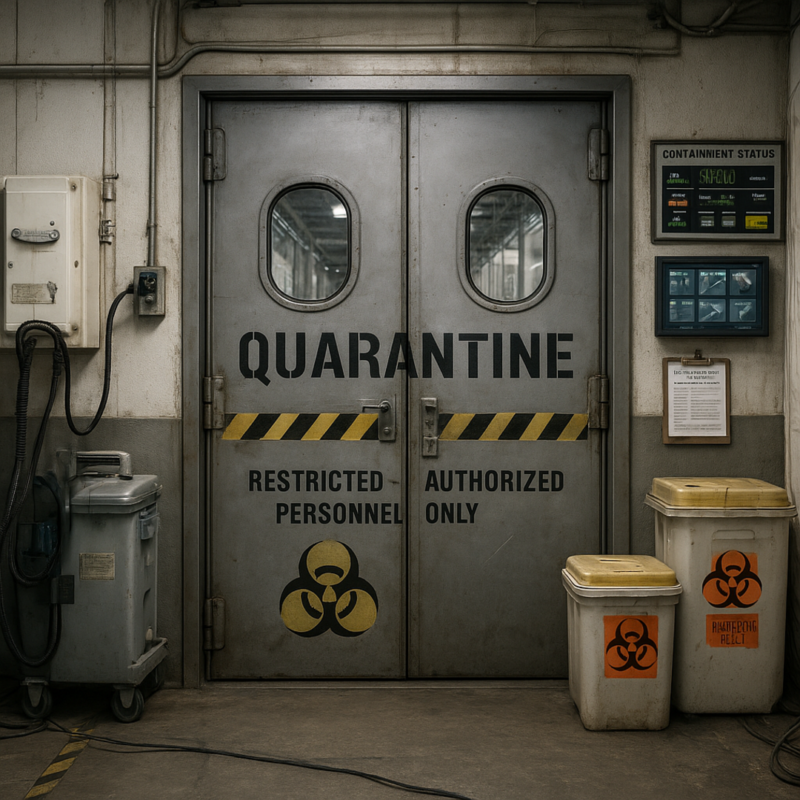
MOGADISHU – A proposal to create an Ebola quarantine center in Kenya for American citizens has triggered significant regional biosecurity concerns, prompting strong warnings from the Africa CDC as East African nations evaluate their shared vulnerability. The initiative, which would transfer individuals exposed to the deadly virus to a regional facility, comes during a critical period when international support for the ongoing Bundibugyo Ebola outbreak has drastically diminished.
The controversial proposal to establish an Ebola quarantine and treatment facility in Kenya for American personnel has sparked intense regional biosecurity concerns, drawing sharp warnings from the Africa Centres for Disease Control and Prevention as East African nations assess their collective vulnerability. The plan, which involves transferring individuals exposed to the highly lethal virus to a regional logistical hub, emerges at a critical juncture when international funding for the active Bundibugyo Ebola strain outbreak is experiencing a severe collapse.
Africa CDC Warns of Healthcare Strain and Funding Crisis
Africa CDC Director Dr. Jean Kaseya has openly expressed alarm about the substantial strain this arrangement would impose on Kenya’s healthcare infrastructure, which is already burdened by the regional health emergency. Dr. Kaseya emphasized that advanced containment facilities demand sophisticated systems for infection control, intensive care, and hazardous waste management. The Africa CDC chief expressed concern about the additional burden the arrangement could place on Kenya’s health system.
He highlighted that international funding commitments for the outbreak response have unexpectedly fallen from $498 million to just $219 million, creating a substantial resource shortfall across the continent. The Africa CDC chief gave a firm one-week deadline to international organizations that have reduced their financial pledges before naming them publicly, though he acknowledged the World Bank and African Development Bank for effectively redirecting budgets to strengthen continental protection measures.
Bundibugyo Strain: No Vaccine, No Treatment
The current outbreak stems from the Bundibugyo strain, which lacks a proven effective vaccine or treatment, as current immunizations only address the Zaire variant. Dr. Kaseya has warned that the current Ebola outbreak centered in the Democratic Republic of Congo could spread to as many as 12 countries, as health officials race to contain what is now being described as the second-largest Ebola outbreak since the West Africa epidemic a decade ago.
“This strain was discovered 19 years ago. After 19 years, if we still don’t have vaccine medicine, it’s because it was in Africa. I can assure you that if Bundibugyo was in Europe or the US, the vaccine would be available,” Dr. Kaseya stated. The Africa CDC estimates that between 10 and 12 countries are now at risk, including Somalia, South Sudan, Rwanda, Kenya, Zambia, the Central African Republic, Tanzania, Ethiopia, Angola, the Republic of the Congo, and Burundi.
Regional health data indicates that misdiagnosis has already facilitated early transmission among healthcare workers in the Democratic Republic of Congo, where patients were initially treated for severe malaria following a testing failure on May 5. The first alert emerged on May 5 in DR Congo’s Ituri province, but initial tests failed to detect the virus because local teams screened for the more common Zaire strain of Ebola.
Somalia’s Cross-Border Risk and Emergency Response
Somalia, which is rapidly advancing its commercial and border integration within the East African Community, faces unique cross-border risks with the establishment of a high-consequence pathogen facility in neighboring Kenya. IGAD has called for urgent regional preparedness against the current Ebola outbreak, with Executive Secretary Workneh Gebeyehu noting that porous borders and high population mobility require sustained vigilance, regional solidarity and harmonized response mechanisms to safeguard public health.
The Federal Government of Somalia has activated high-level containment and preventative protocols in response to the escalating epidemiological threat in Central and East Africa. The Acting Minister and Minister of State for Health, Dr. Maryama Mohamed Hussein, chaired an emergency coordination summit at the Public Health Emergency Operations Center in Mogadishu, aiming to strengthen the country’s early-warning alert architecture and fortify screening operations at critical international points of entry, including airports, seaports, and land borders.
Kenyan Court Blocks Facility Amid Legal Challenge
Despite these concerns and an ongoing civil lawsuit by the Katiba Institute in Nairobi seeking to legally block the bilateral agreement, Kenyan medical authorities have strongly defended the initiative. The High Court has issued conservatory orders temporarily halting the establishment and operationalisation of any Ebola-related facility in Kenya under arrangements involving the United States or any other foreign government or agency pending the inter-parties hearing of the application.
“The impugned arrangement is being undertaken in a manner that is not transparent and is devoid of constitutional accountability, public participation, parliamentary oversight, or full disclosure of its health, environmental, and security implications,” the Katiba Institute’s application states. The rights group argued the centre was being established in secrecy and unilaterally, saying it raises grave constitutional concerns.
The petitioner warns that if implemented, the arrangement could effectively position Kenya as an “offshore quarantine hub” for foreign states, raising questions about sovereignty and the country’s preparedness to safely manage highly infectious diseases such as Ebola. Kenya’s current laboratory infrastructure is largely limited to BSL-1 and BSL-2 facilities, with only limited BSL-3 capacity, which is insufficient for safely managing Ebola-level containment risks.
Kenyan Officials Defend Global Health Obligation
Kenya’s Medical Services Principal Secretary Dr. Ouma Oluga asserted that the nation has a global responsibility for health security and possesses adequate emergency response capabilities to operate the center safely. However, public health experts in Mogadishu caution that any systemic breakdown or accidental containment failure within Kenya’s healthcare facilities would immediately spread across the porous air and land links connecting Nairobi to the Somali capital, endangering national security and disrupting critical maritime and trade routes.
The court has directed that the matter be mentioned on June 2, 2026, for further directions, with the Kenyan government required to respond to the petition by that date.