
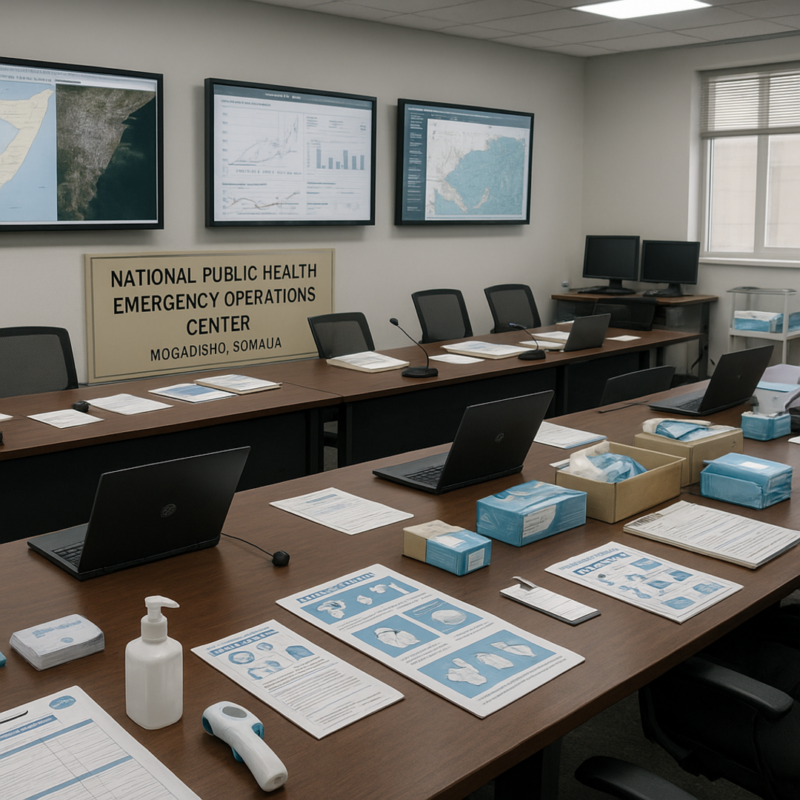
MOGADISHU – A high-level national conference on Ebola readiness and prevention strategies has convened at the National Public Health Emergency Operations Center (PHEOC) in Mogadishu, as the Federal Government moves to protect the country from the growing regional outbreak of the Bundibugyo ebolavirus in the Democratic Republic of the Congo and Uganda.
The multi-sectoral gathering brought together senior officials from the Ministries of Internal Security, Foreign Affairs, Health, Civil Aviation, and Information, alongside the Director General of Civil Aviation and the Commissioner of the National Disaster Management Agency (SoDMA). Authorities stated that the conference aims to enhance coordination and collaboration between government bodies to prevent and prepare for any possible Ebola outbreak in Somalia.
Regional Ebola Threat Triggers Emergency Response
The conference follows the World Health Organization’s declaration on May 15, 2026, of a Public Health Emergency of International Concern (PHEIC) over the Ebola outbreak in the DRC and Uganda. As of May 16, 2026, eight laboratory-confirmed cases, 246 suspected cases and 80 suspected deaths had been reported in Ituri Province of the DRC across at least three health zones. Additionally, two laboratory-confirmed cases (including one death) were reported in Kampala, Uganda, within 24 hours of each other among two individuals who had travelled from the DRC. The outbreak is being caused by the Bundibugyo virus, a species of Ebola for which there are currently no approved vaccines or specific treatments.
The WHO has scaled up its response, delivering 11.5 tonnes of vital medical supplies within 72 hours of the outbreak declaration and deploying more than 35 experts and first responders to the field. The response is focusing on disease surveillance, clinical care, infection prevention and control, and community engagement. However, the WHO’s risk assessment for the epidemic is “high at the national and regional levels”, with concerns about the high number of suspected cases, the spread to urban areas, and the significant population movement due to insecurity and mining activities in the region.
Somalia’s Coordinated National Preparedness Strategy
The Federal Government has already initiated advanced containment and preventive measures, including enhanced early warning systems and reinforced screening procedures at key international entry points such as airports, seaports, and land borders. The Ministry of Health has directed immediate stockpiling of Personal Protective Equipment (PPE) at all primary public and private healthcare facilities, and imposed a rigorous three-day deadline for implementing an immediate localized response framework, followed by a thorough seven-day national readiness execution plan.
The conference participants agreed to rapidly deploy a health emergency management team and enhance health screenings at points of entry. Key decisions include advancing regional diagnostic laboratory capabilities, simplifying national disease surveillance reporting systems, and standardizing Infection Prevention and Control (IPC) protocols. Somalia has been working with the Eastern Mediterranean Public Health Network (EMPHNET) to strengthen disease surveillance and train frontline responders.
International and Regional Coordination
The current outbreak has prompted regional bodies like the Intergovernmental Authority on Development (IGAD) to mobilize support. IGAD has appealed to its member countries to urgently back Uganda’s efforts to curb the spread, warning that neighboring countries would never be safe if the virus gets out of hand. International partners, including the World Food Programme and the International Organization for Migration, are also supporting cross-border surveillance and preparedness activities.
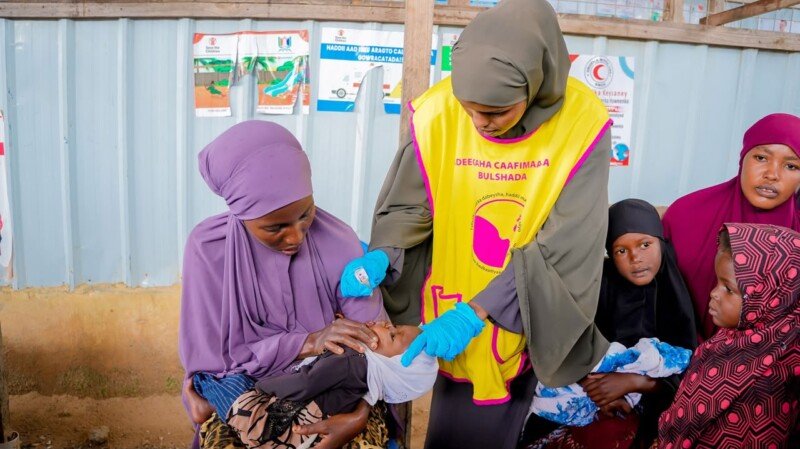
Despite the challenges, Somalia has been making significant strides in strengthening its health system. The reopening of the Galdogob General Hospital, a modernized facility serving over half a million people, is a testament to these efforts. Puntland has also completed major vaccination campaigns to protect thousands of children from preventable diseases.
Public Communication and Next Steps
The government has called on the public to remain calm and rely on official health information channels, warning that panic and unverified rumors could undermine national preparedness efforts. The Ministry of Health has appealed to the WHO to help improve health system resilience, focusing on health governance, workforce training, and enhancing healthcare outcomes.
The Ministry of Health has also announced that all travelers arriving from affected regions will be subject to enhanced screening. As the health alert remains in effect, authorities continue to call on residents to take the situation seriously, emphasizing that the risk of imported cases, while still low, exists. The ministry has vowed to keep the public informed of any further developments and to swiftly implement additional preparedness measures.
Recommended Reading On ftlsomalia.com:
- Puntland Issues Ebola Alert Amid Uganda, Congo Outbreaks
- Somalia Implements Emergency Measures Amid Regional Ebola Threat
- Uganda’s First Case of Ebola Causes Tension in Somalia
- IGAD Appeals to Member Countries to Support Uganda’s Efforts to Curb Spread of Ebola
- Somalia and WHO to Collaborate in Tackling Chronic Health Emergencies