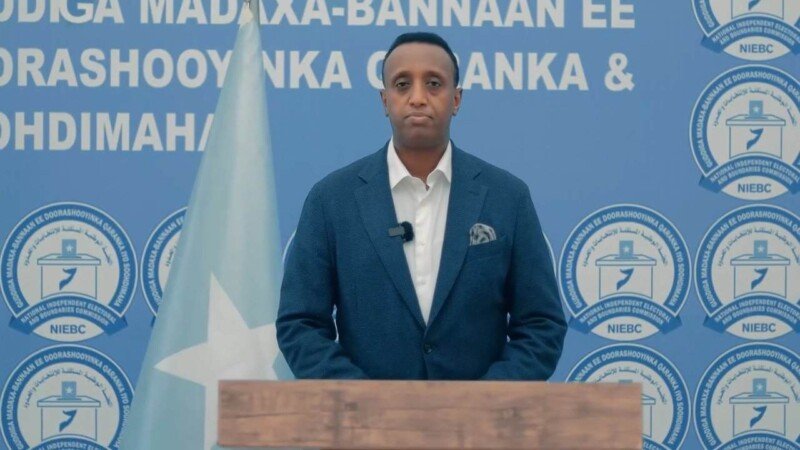

MOGADISHU — The National Independent Electoral and Boundaries Commission (NIEBC) has officially released the timetable for the Galmudug State repeat elections, setting polling day for September 30, 2026, following the Supreme Court’s ruling that nullified the previous election results.
The Commission announced the schedule on September 1, 2026, acting in accordance with the Supreme Court’s ruling (SUM:MSF/DD/BX/1/2026) issued on August 24, 2026, which invalidated the Galmudug elections held on July 30, 2026. The timetable is based on the Commission’s legal obligations under Article 10 of the law establishing the Commission and Article 18 of the National Electoral Law.
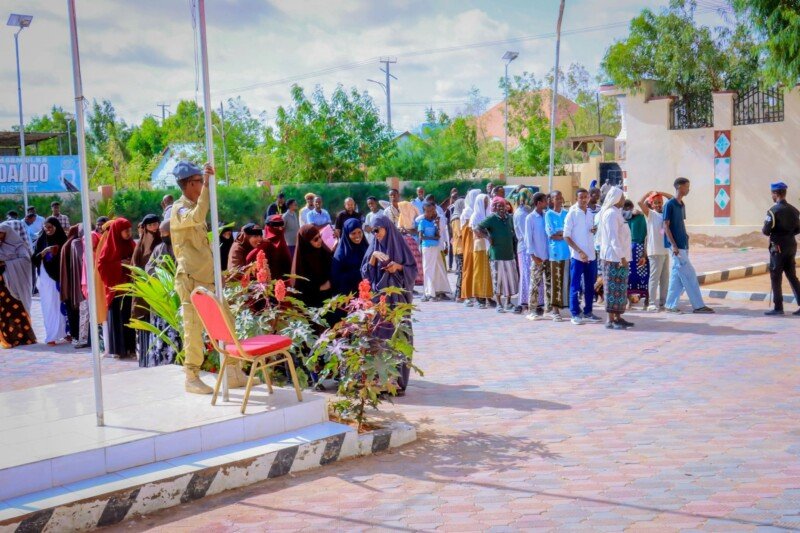
According to the new timetable, the announcement and marking of polling stations will take place on September 10. The publication of candidate lists for political organizations will follow on September 20. The submission of lists of political party representatives for polling stations is scheduled for September 22. The accreditation of party representatives and observers will be conducted on September 26. The electoral campaign will close on September 28, with polling day set for September 30, 2026.
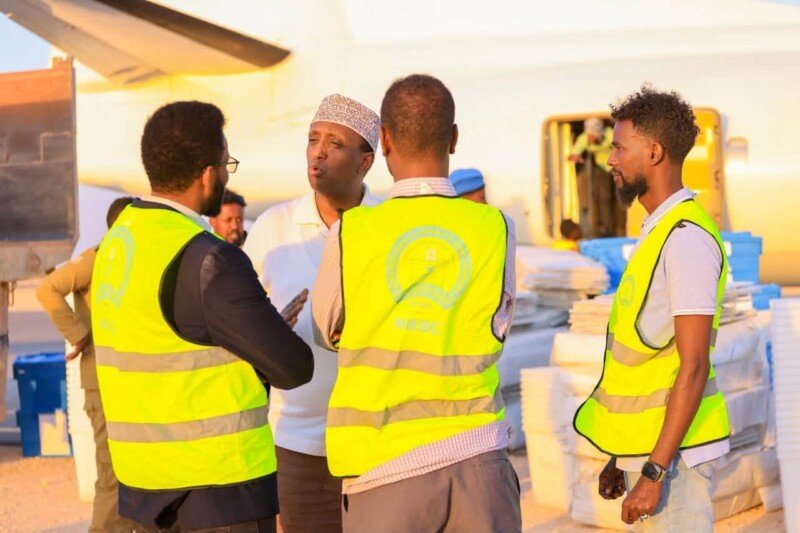
Notably, September 30 is also the polling day scheduled for the Hirshabelle State elections, meaning both federal member states will hold their elections on the same day. The overlapping dates present significant logistical and administrative challenges for the Commission, which will need to manage two simultaneous electoral processes across 23 districts in the Galgaduud, Mudug, Hiiraan, and Middle Shabelle regions.
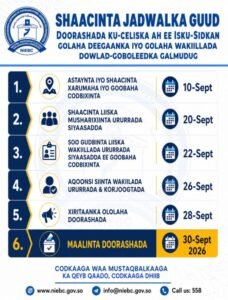
The Commission called on political organizations, the people of Galmudug, and all election stakeholders to prepare for participation in the electoral process.
The Supreme Court’s ruling on August 24, 2026, nullified the Galmudug election results, with Chief Justice Bashe Yusuf Ahmed delivering the decision that directly impacts previously announced electoral outcomes. The ruling followed legal challenges to the electoral process, with the Chairman of the Tawfiq Political Party, Sheikh Mohamed Shakir Ali Hassan, voicing deep disappointment over the conduct of the elections and alleging irregularities, violence, and the exclusion of party representatives from polling stations .
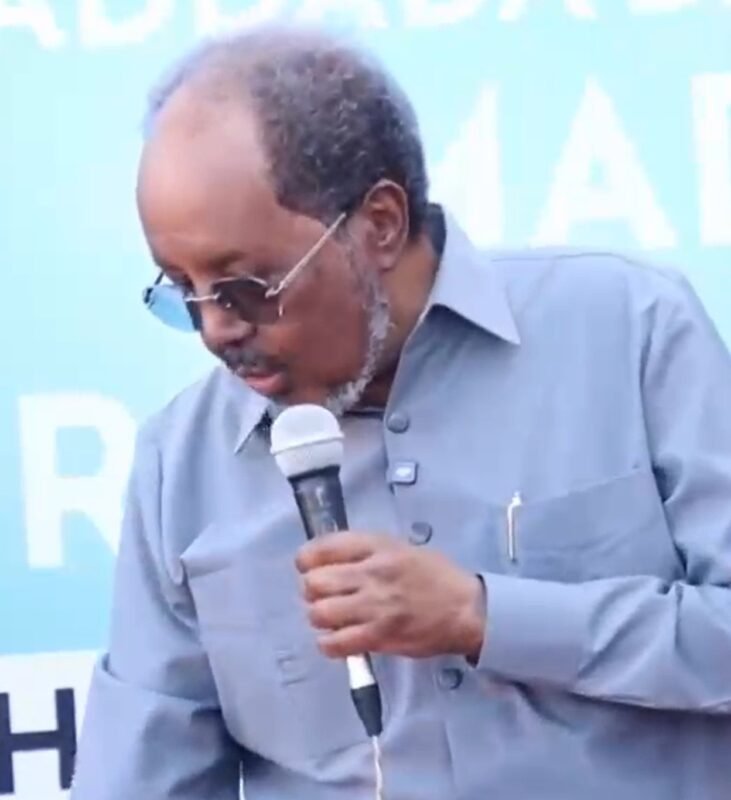
The Tawfiq Party subsequently formally rejected the final results, declaring the outcome invalid and calling for an independent review . The Justice and Solidarity Party (JSP), led by President Hassan Sheikh Mohamud, accepted the Supreme Court’s ruling and stated it is ready to participate in the repeat elections .
The JSP emerged as the dominant force in the initial elections, securing 115 local council seats with 106,388 votes (55.55 percent) and 63 parliamentary seats. The party’s candidate, Liban Ahmed Hassan, had been designated as the sole presidential candidate by President Hassan Sheikh Mohamud, a move that drew criticism from opposition parties who accused the federal government of interfering in the electoral process .
The National Independent Electoral and Boundaries Commission formally accepted the Supreme Court’s ruling and announced it would reschedule the elections. The Commission confirmed that it received the Supreme Court’s rulings and stated it is acting in accordance with its constitutional powers, the National Electoral Law, the Law on the Establishment of the Commission, and the Law on Political Organizations and Parties .
The electoral process was overshadowed by a deep political rift between President Hassan Sheikh Mohamud and NISA Director Mahad Mohamed Salad over who should lead Galmudug, exposing deep fractures within the ruling party. A political standoff also emerged between the Federal Government and the Galmudug State administration over a controversial dual appointment for the position of Galmudug Police Chief .
Critical Note
The release of the new timetable for the Galmudug repeat elections represents a significant step forward for the electoral process following the Supreme Court’s ruling that nullified the previous results. However, the decision to hold the Galmudug elections on the same day as the Hirshabelle repeat elections raises significant questions about the NIEBC’s capacity to manage two complex electoral processes simultaneously.
The overlapping dates mean that the Commission will need to allocate electoral materials, deploy polling staff, and coordinate security arrangements across 23 districts in four regions on the same day. The Commission must ensure that the electoral process in both Galmudug and Hirshabelle is conducted transparently and fairly, and that the results accurately reflect the will of the voters.
Without a clear plan for managing the logistical and political challenges of simultaneous elections, the risk remains that the Commission’s capacity could be stretched beyond its limits, leading to delays, irregularities, or disputes that could destabilize both states.