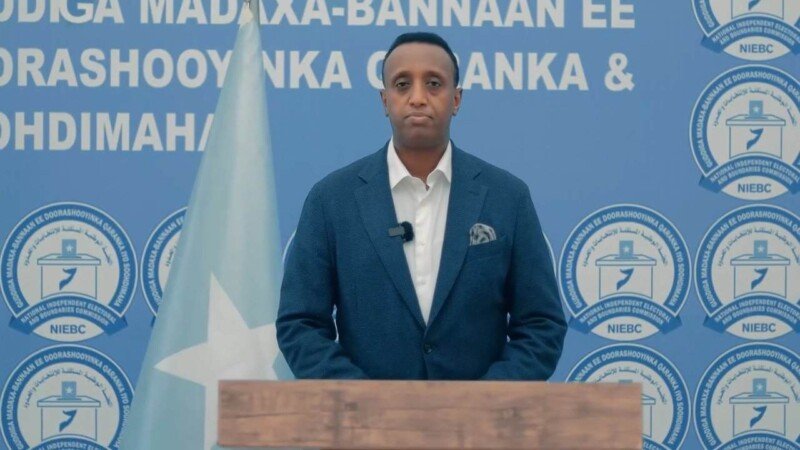

MOGADISHU — The National Independent Electoral and Boundaries Commission (NIEBC) has officially released a new timetable for the Hirshabelle State local council and parliamentary elections, setting polling day for September 30, 2026.
The new schedule replaces the previous timetable issued on July 25, under which the elections had been scheduled for August 20 . The commission cited three primary reasons for the postponement: voter registration is still underway in four districts of the Hiiraan region; political organizations need additional time to mobilize their supporters; and political groups require more time to submit candidate lists for the House of Representatives and local council elections.
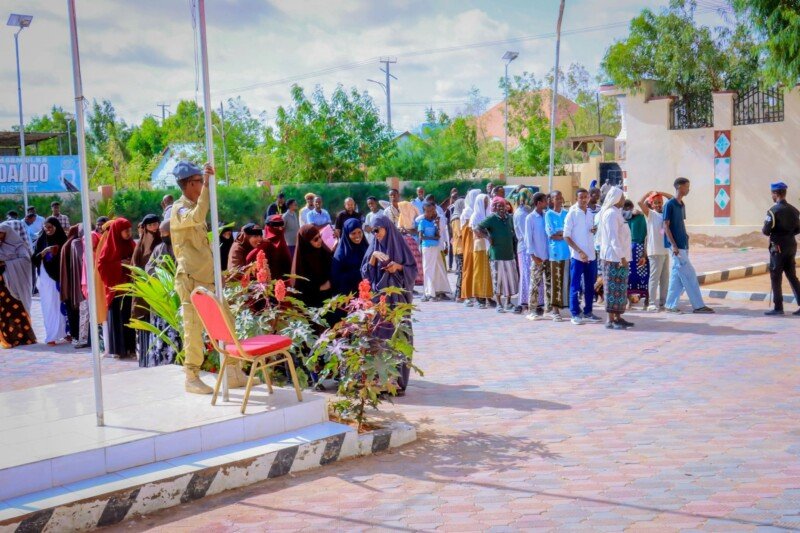
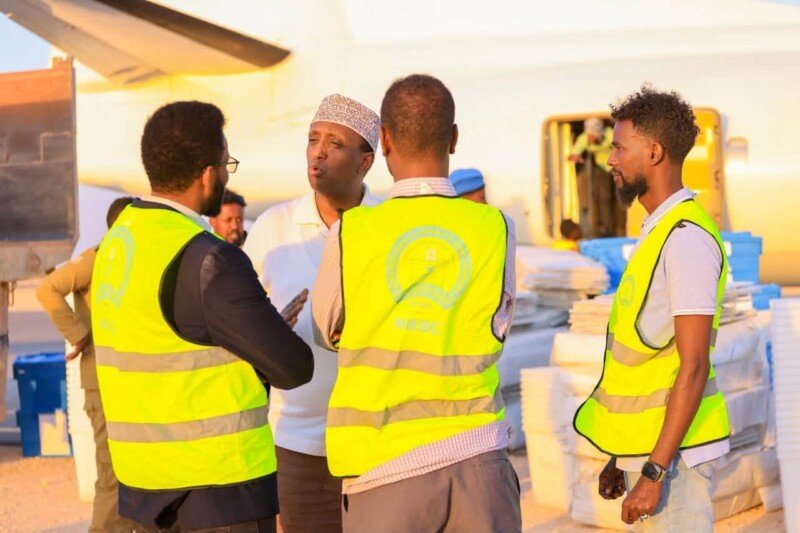
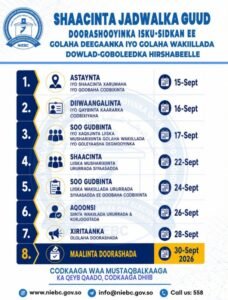
According to the new timetable, election activities will begin in early September. The preliminary voter list will be published on September 2, while the marking and announcement of polling stations will take place on September 15 . The registration committee will begin work and voter cards will be distributed on September 16. The submission and verification of candidate lists for the House of Representatives and district councils are scheduled for September 17. The final voter list will be announced on September 19.
The timetable includes the accreditation of political organization representatives at polling stations on September 24, and the official recognition of representatives and observers on September 26. The electoral campaign will officially open on September 28, with polling day scheduled for September 30, 2026 .
The commission stated that the timetable is based on its legal obligations, particularly Article 10 of the law establishing the commission and Article 18 of the National Electoral Law . It called on political organizations, the people of Hirshabelle, and all election stakeholders to prepare for participation in the electoral process.
The postponement of the Hirshabelle elections underscores the significant challenges facing Somalia’s transition to direct, one-person, one-vote elections. While the Commission cited logistical reasons for the delay, the underlying political tensions over the regional leadership suggest that the postponement is as much about political maneuvering as it is about technical preparation .
The power struggle between the Hawadle and Abgaal communities, the involvement of President Hassan Sheikh in selecting a candidate, and the broader competition between Villa Somalia and regional leaders all point to a political process that remains deeply entangled with clan dynamics and federal-regional rivalries . The Commission’s ability to conduct free and fair elections depends not only on technical preparations but also on the willingness of political actors to respect the outcome and accept the results.
In August 2026, the commission announced the 12 districts where elections will be held: six in Hiiraan region (Beledweyne, Jalalaqsi, Bulo Burde, Matabaan, Jawiil and Farlibaax) and six in Middle Shabelle region (Jowhar, Balcad, Warsheekh, Adale, Mahadaay and Raage Celle) .
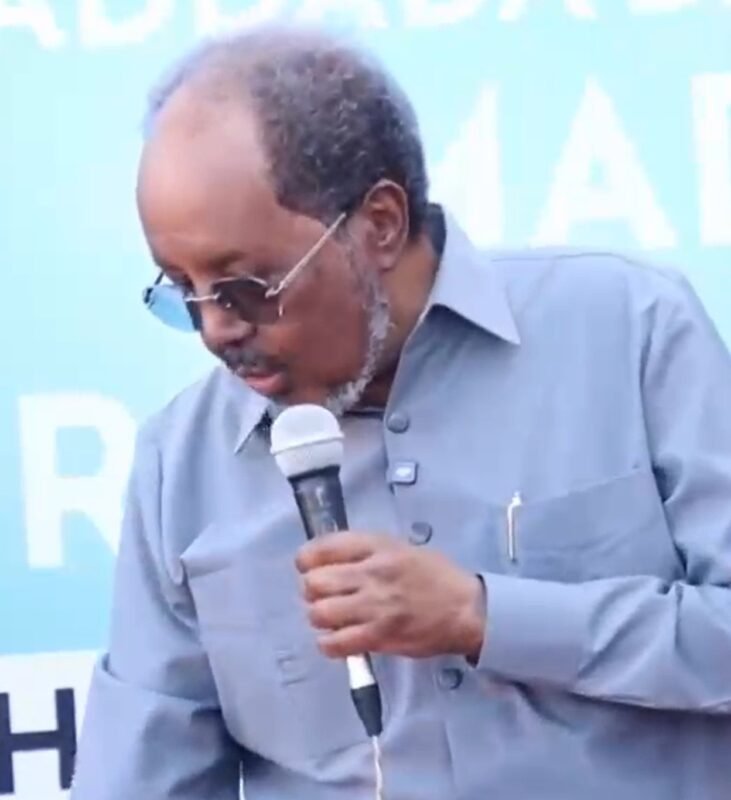
President Hassan Sheikh Mohamud has met with Hawadle traditional leaders to discuss the next leadership of Hirshabelle State. According to sources, President Hassan Sheikh asked Hawadle leaders to agree on a single candidate from their community to contest the upcoming Hirshabelle presidential election. During the meeting, however, the leaders instead agreed to authorize the president to choose the community’s candidate .
The agreement is part of a broader political understanding that the next president of Hirshabelle will come from the Hawadle community, while the outgoing president, Ali Abdullahi Hussein Guudlaawe, is from the Abgaal community . The arrangement reflects the power-sharing formula that has shaped Hirshabelle politics since the state was established .
The NIEBC has previously briefed the international community on Somalia’s electoral progress, including preparations for the Hirshabelle elections . The commission’s chairman, Abdikarim Ahmed Hassan, held a briefing with members of the international community on the Commission’s electoral achievements and ongoing preparations .
Critical Note
The announcement of the new electoral timetable for Hirshabelle represents a significant step forward for the electoral process, but the challenges facing the election remain substantial. The previous postponement, cited by the Commission as necessary due to incomplete voter registration and the need for political organizations to submit candidate lists, highlights the difficulties of organizing elections in a federal member state with limited infrastructure and capacity.
The concerns about federal interference, articulated by some political actors, underscore the deep mistrust that has characterized the relationship between Mogadishu and regional administrations. The federal government’s apparent strategy of proceeding with elections in allied regional states before engaging in national electoral negotiations raises questions about the independence of the electoral process and the commitment to inclusive political dialogue.
The Commission must ensure that the revised electoral timetable is realistic and that the process is transparent and inclusive. Without genuine commitment from all parties to a peaceful electoral transition, the postponement risks being followed by further delays or, worse, a disputed election that could destabilize the region. The international community must support the Commission in its efforts to conduct credible elections while urging political actors to prioritize the national interest over narrow political ambitions.