
NAIROBI — Kenya’s aviation workers have called off a strike that disrupted flights at its main international and other airports, with normal operations expected to resume on Tuesday after a return-to-work agreement was signed by union leaders, airport authorities, and government officials.
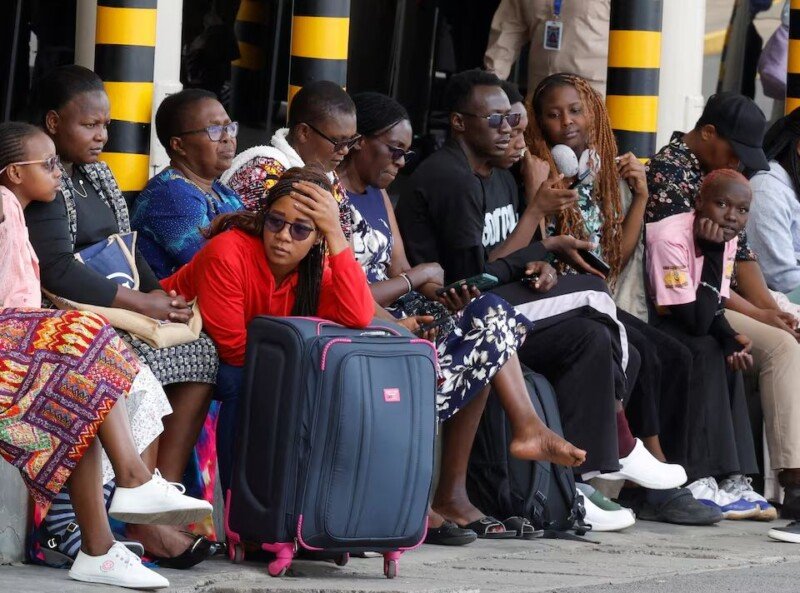
Flights between Somalia and Kenya had been suspended for a second day on August 31, leaving hundreds of passengers stranded as authorities from both countries remained silent on the cause of the disruption. Approximately 4 to 6 flights operated daily between the two countries, carrying an estimated 500 passengers over the past two days .
The strike, mostly by air traffic controllers on Sunday and Monday, disrupted several flights into and out of the main Jomo Kenyatta International Airport (JKIA) and delays spilled over to regional airports in East Africa and beyond. The disruption affected flights between Somalia and Kenya for three consecutive days, leaving hundreds of passengers stranded in Mogadishu and Nairobi, including senior officials of the Federal Government of Somalia.
The Mogadishu-Nairobi route has been a key regional connection since Kenya Airways resumed direct flights in February 2024, joining other international carriers such as Turkish Airlines, Qatar Airways, and Ethiopian Airlines. The route is one of East Africa’s busiest short-haul connections .
Flights between Mogadishu and Nairobi have reached unprecedented low prices, with round-trip tickets available for as little as $130, making international travel cheaper than many domestic routes within Somalia. The price war, involving carriers including African Express, Salaam Air, and Skyward Express, has made the route more accessible to Somali travelers .
Kenya Transport Minister Davis Chirchir announced on Tuesday that the union, the airport and civil aviation authorities, and low-cost airline Jambojet signed a return-to-work agreement to end the strike while negotiations on all outstanding issues continue. The Kenya Aviation Workers Union (KAWU) had engaged in industrial action over unresolved employment grievances, including the lack of a collective bargaining agreement at the Civil Aviation Authority, delayed salary reviews, a dispute over union dues at the Kenya Airports Authority, and what the union described as victimization of union members at Jambojet.
KAWU Secretary General Moss Ndiema said the union was calling off its strike action and pleading with members to begin normalizing operations and restoring services. “For those who are on duty, we are asking them to begin clearing flights,” Ndiema told a press conference.
The disruption had a significant impact on travel between Somalia and Kenya. An estimated four to six passenger flights normally operate between Somalia and Kenya each day, with approximately 500 passengers affected over the past three days. Kenya Airways said on Sunday that operational constraints affecting Air Traffic Control services at JKIA had resulted in average delays of between two and three hours for its scheduled flights. The Kenya Airports Authority advised passengers to confirm their flight status with airlines before travelling to the airport.
The suspension came amid a history of aviation disputes between the two countries. In October 2024, Kenya Airways suspended all passenger flights to Mogadishu, citing operational challenges. The airline faced stiff competition from Somali-owned carriers, which offered more flexible booking options and fewer penalties, catering to the specific preferences of Somali travelers .
Earlier, in September 2024, the Somali Civil Aviation Authority (SCAA) issued a 48-hour ultimatum to Kenya Airways to address significant delays experienced by Somali passengers stranded at Nairobi’s Jomo Kenyatta International Airport for three days . A Kenyan-registered aircraft entered Somali airspace without authorization in January 2025, heightening tensions between Somalia and Kenya .
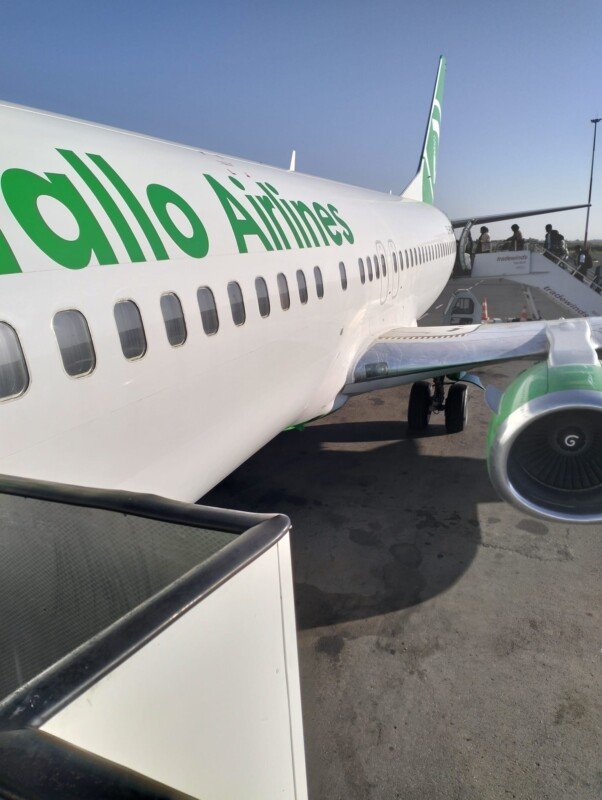
Air links between Somalia and Kenya have also been affected by diplomatic incidents. In June 2026, a diplomatic incident occurred when Somali Deputy Prime Minister Salah Ahmed Jama was denied entry and deported from Nairobi, straining ties between the two countries. The incident occurred at Terminal 2 of JKIA, where Haji arrived on a Saacid Airlines flight from Mogadishu and was subsequently escorted onto a Daallo Airlines flight back to Mogadishu.
The resolution of the strike comes after a series of high-level meetings chaired by Transport Cabinet Secretary Davis Chirchir, with Labour Cabinet Secretary Alfred Mutua and officials from the Ministry of Aviation and Aerospace Development also involved. Under the agreement, agency fees due to KAWU and held by the Kenya Airports Authority will be remitted to the union immediately, and negotiations on the collective bargaining agreement between KAWU and the Kenya Civil Aviation Authority will proceed.
The agreement also addressed the Salaries and Remuneration Commission’s withdrawal of initial guidance and issuance of new parameters to guide negotiations, though the union indicated it had reservations over the new guidelines and would seek to address concerns during the CBA talks.
The Mogadishu-Nairobi route, once restricted by limited carriers and fluctuating schedules, now stands as a symbol of renewed regional connectivity and economic openness, with passengers benefitting from competitive fares and increased options . The route also provides essential access for Somalis traveling to Kenya for business, education, or medical care .
Critical Note
The resolution of the Kenya aviation workers’ strike is a welcome development for travelers and businesses that rely on the Mogadishu-Nairobi route. However, the disruption highlights the fragility of air travel infrastructure in the region and the vulnerability of travelers to industrial action and operational disruptions.
While the strike has been called off, the underlying grievances that sparked the industrial action remain unresolved, with negotiations on key issues still pending. The Salaries and Remuneration Commission’s new parameters for the CBA negotiations have already drawn reservations from the union, suggesting that further disputes could arise.
The Somali government and aviation authorities must work closely with their Kenyan counterparts to ensure that regular flight services resume fully and to establish clear communication channels for future disruptions. The international community, including the East African Community, should encourage both governments to address any remaining concerns to prevent future disruptions to this vital air corridor.