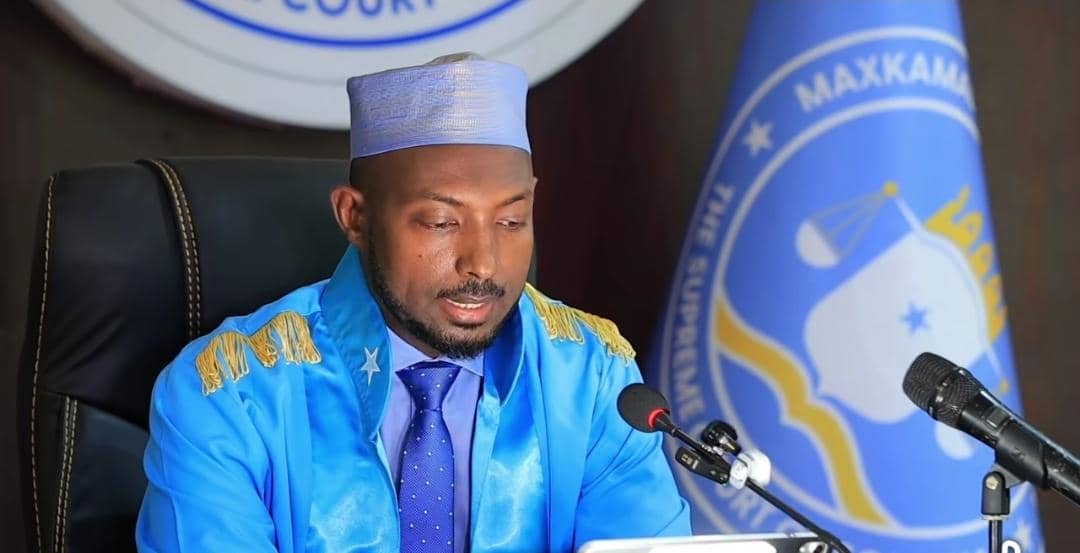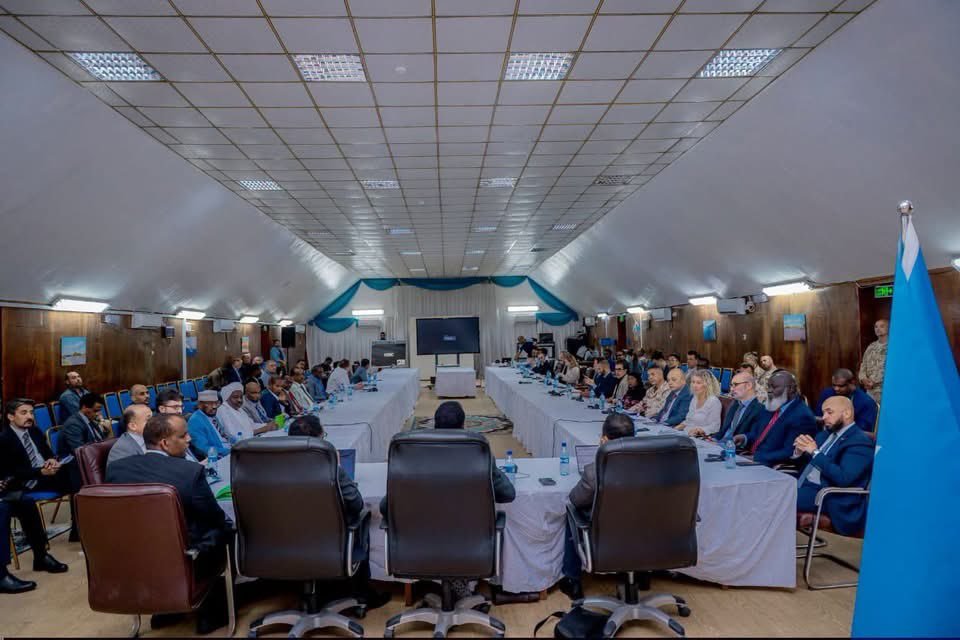

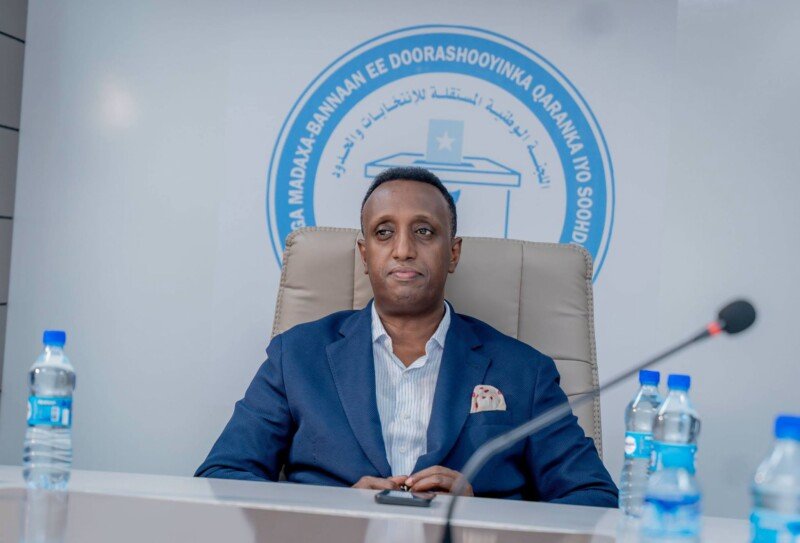
MOGADISHU — The National Independent Electoral and Boundaries Commission (NIEBC) has issued a statement formally accepting the Supreme Court’s ruling on the Galmudug State local council and parliamentary elections, and has announced it will reschedule the elections .
In its statement, the Commission confirmed that it received the Supreme Court’s rulings, dated August 24, 2026, regarding the Galmudug State elections held on July 30, 2026 . The Commission stated that it is acting in accordance with its constitutional powers, the National Electoral Law, the Law on the Establishment of the Commission, the Law on Political Organizations and Parties, and the relevant procedures and regulations. The Commission affirmed its commitment to the principles of implementing free, fair, transparent elections with equal participation for all citizens .
The Supreme Court’s ruling followed legal challenges to the electoral process in Galmudug State, with the Chairman of the Tawfiq Political Party, Sheikh Mohamed Shakir Ali Hassan, voicing deep disappointment over the conduct of the elections and alleging irregularities, violence, and the exclusion of party representatives from polling stations . The Tawfiq Party subsequently formally rejected the final results, declaring the outcome invalid and calling for an independent review .
The NIEBC had previously announced the final results of the Galmudug elections on August 2, 2026, confirming that 197,971 voters cast their ballots across 11 districts, with the Justice and Solidarity Party (JSP) emerging as the dominant force, securing 115 local council seats with 106,388 votes (55.55 percent) and 63 parliamentary seats . The Commission now faces the task of organizing a repeat election in Galmudug, with the Supreme Court’s ruling effectively nullifying the previous results .
Political Tensions and Federal Interference Allegations
The electoral process was overshadowed by a deep political rift between President Hassan Sheikh Mohamud and NISA Director Mahad Mohamed Salad over who should lead Galmudug . The dispute became public when Salad decided to contest the presidency against the federal government’s preferred candidate, exposing deep fractures within the ruling party . The intelligence chief had reportedly informed both President Mohamud and Prime Minister Barre directly that he planned to run for the Galmudug presidency himself .
Galmudug President Ahmed Abdi Kariye (Qoor-Qoor) withdrew from the presidential race following talks with federal officials, clearing the way for the federal government’s preferred candidate . President Hassan Sheikh Mohamud designated Liban Ahmed Hassan as the sole candidate for the ruling Justice and Solidarity Party (JSP), bypassing internal party competition and raising concerns about the independence of the electoral process .
A political standoff also emerged between the Federal Government and the Galmudug State administration following a controversial dual appointment for the position of Galmudug Police Chief . The federal authorities appointed Colonel Mohamed Dahir Abdulle, while President Qoorqoor issued a state decree rejecting the federal move and reappointed Khaliif Abdulle Maalin (Ilkacase). The overlapping claims of authority risk creating a leadership vacuum or internal friction within the regional security apparatus .
Electoral Process and Credibility Concerns
The Galmudug elections, held across approximately 300 polling stations in 11 districts, marked a historic shift to a one-person, one-vote system, with 215,860 individuals enrolled and issued voting cards across the Galgaduud and Mudug regions . However, the process was marred by allegations of irregularities and federal interference .
The NIEBC confirmed that voting was largely smooth and that polling stations closed on time, though some remained open longer to accommodate voters still in line. However, the commission also confirmed that it is investigating alleged violations of electoral procedures at some polling stations .
The NIEBC faced challenges in the vote-counting process, with delays reported in receiving results from some polling stations, particularly those located in remote areas. The commission assured stakeholders that it was working to ensure that every vote is accurately counted and that the final results are credible .
Critical Note
The Supreme Court’s ruling on the Galmudug election results highlights the critical role of the judiciary in resolving electoral disputes and upholding the rule of law. However, the allegations of irregularities, violence, and federal interference underscore the deep mistrust that has characterized the electoral process in Galmudug .
The NIEBC’s acceptance of the Supreme Court’s ruling is a necessary step, but the Commission must now ensure that the repeat election is conducted transparently and fairly. The federal government’s heavy-handed role in the previous process, including the withdrawal of the incumbent president and the designation of a single candidate for the ruling party, has raised serious concerns about the independence and credibility of the process .
The constitutional crisis over the police chief appointment and the political rift between President Mohamud and his intelligence chief further complicate the situation . Without transparent investigation into the alleged irregularities and a commitment to releasing results that accurately reflect the will of the voters, the Galmudug elections risk being remembered not as a milestone for democracy, but as another example of political manipulation in Somalia’s federal member states .
Recommended Reading On ftlsomalia.com
- Galmudug Election Results Announced Amid Allegations of Irregularities and Federal Interference
- Towfiiq Party Rejects Galmudug Election Results, Demands Independent Review
- Sheikh Shakir Alleges Irregularities as Galmudug Vote Counting Continues
- NISA Chief Arrives in Galmudug Amid Election Tensions
- Galmudug Elections Underway as 300 Polling Stations Open Across 11 Districts
- Galmudug Polling Stations Close as Electoral Commission Investigates Irregularities
- Galmudug Vote Counting Underway as Electoral Commission Reports Delays in Remote Districts