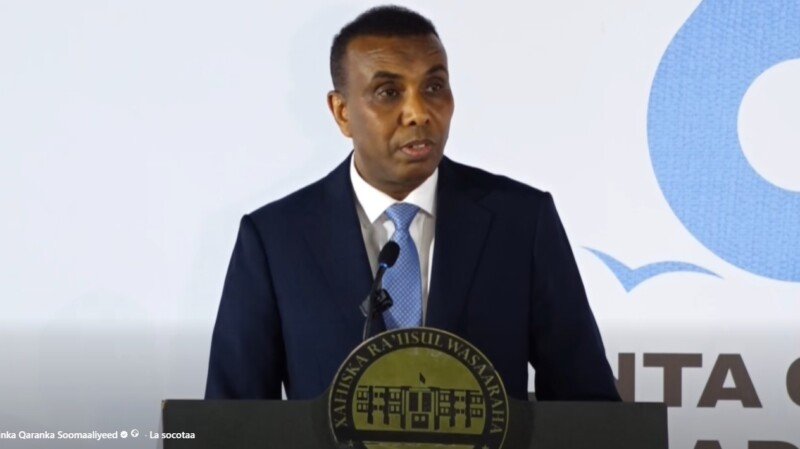

MOGADISHU: The Federal Government of Somalia has announced that the country will proceed with a “one person, one vote” election, describing the move as a constitutional duty and a transition toward a democratic system based on universal suffrage. The declaration came in a press release issued on Friday, May 15, 2026, as President Hassan Sheikh Mohamud’s term formally expired under the 2012 provisional constitution.
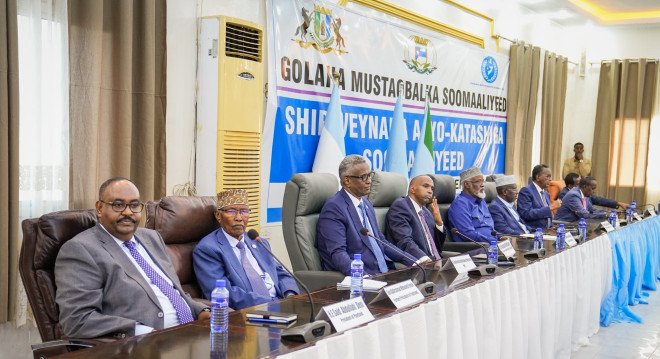
The government stated that it has been conducting regular consultations with election stakeholders and various segments of Somali society. However, over the past three days, discussions with some members of the opposition brought “views that contradict the fundamental rights of citizens to elect and be elected.” The statement did not specify which opposition figures were involved in the talks, but it referred to ongoing dialogue efforts that have taken place at the Halane compound.
“The Federal Government of Somalia shares with the Somali public that the country will hold a one person, one vote election that is free, fair, transparent, and in accordance with the Constitution, the laws of the land, and the Government’s promised political program,” the press release read. The government reaffirmed that “the door for dialogue and consultation remains open.”
The announcement comes on May 15, the date that opposition leaders have long declared as the end of President Mohamud’s legal mandate. Opposition figures have insisted that the president would lose his authority after this date unless a national election is held or a constitutional alternative is agreed upon. The federal government, however, has maintained that a revised constitution approved in March 2026 extends the presidential term to five years, giving the administration up to two additional years in power.
The government’s commitment to universal suffrage has been a central pillar of President Mohamud’s political agenda. The president has repeatedly rejected indirect, clan‑based voting systems, describing them as relics of the past. Yet the opposition has demanded an indirect electoral model, arguing that direct elections are not feasible under current security conditions. The Somali Future Council has insisted on an independent mediator and a halt to government‑led electoral activities as preconditions for a political settlement.
Friday’s press release did not provide a specific timeline for the planned election, nor did it address the opposition’s demand for mediation. It also did not mention the status of talks that have been taking place at the Halane compound, where U.S. and British diplomats have mediated between the government and opposition. Those negotiations have been marked by deep distrust, with the opposition demanding the release of political detainees before substantive discussions.
The government’s statement is likely to deepen the political standoff. Opposition leaders have not yet issued an immediate response. Meanwhile, senior officials have previously argued that the administration could remain in power for up to two additional years, a claim the opposition has rejected. With no consensus on the electoral framework and with the government forging ahead with its universal suffrage plan, Somalia’s political crisis appears poised to continue.
Recommended Reading on ftlsomalia.com: