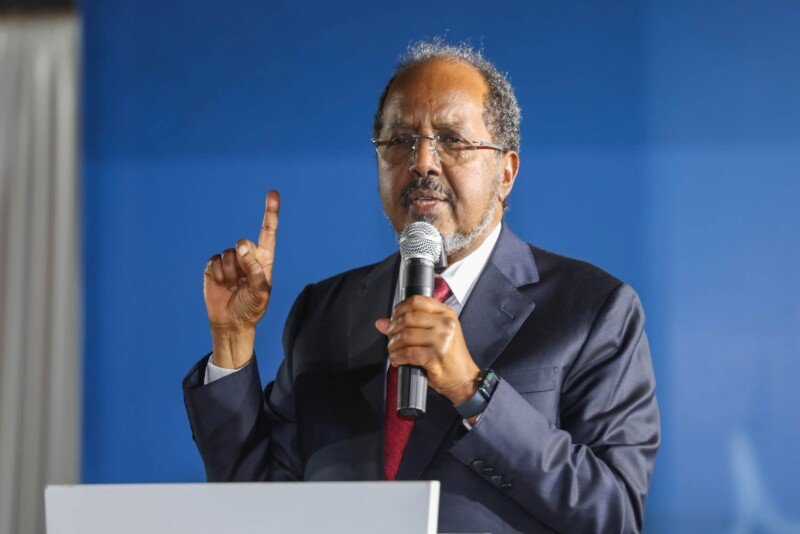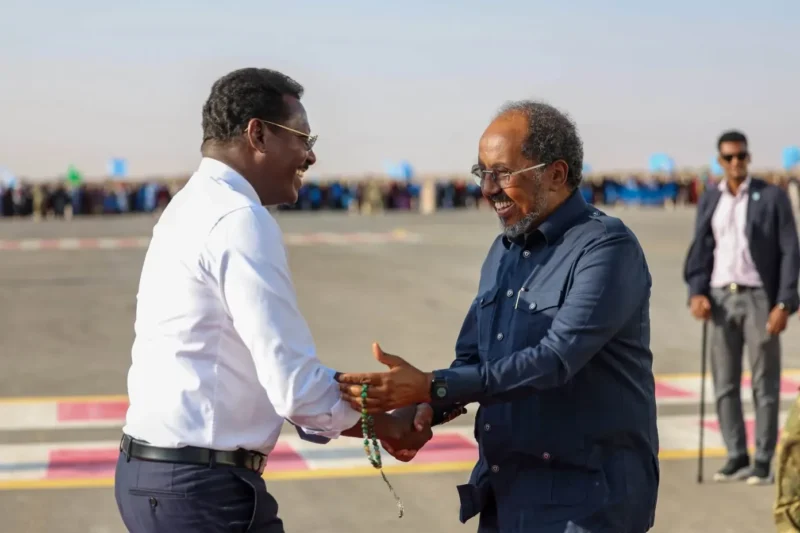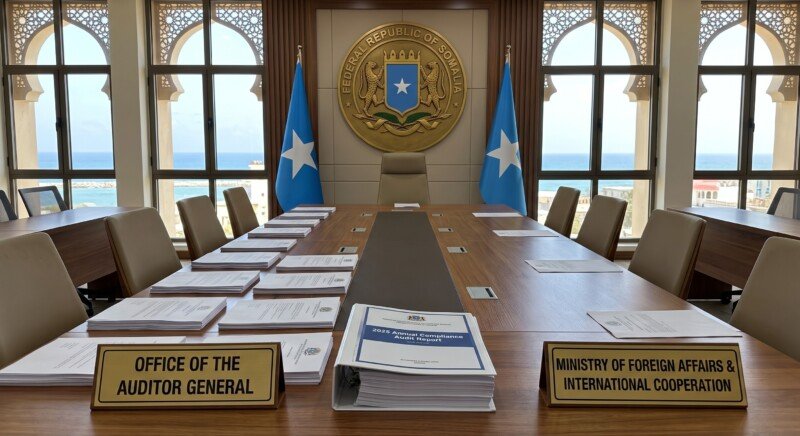

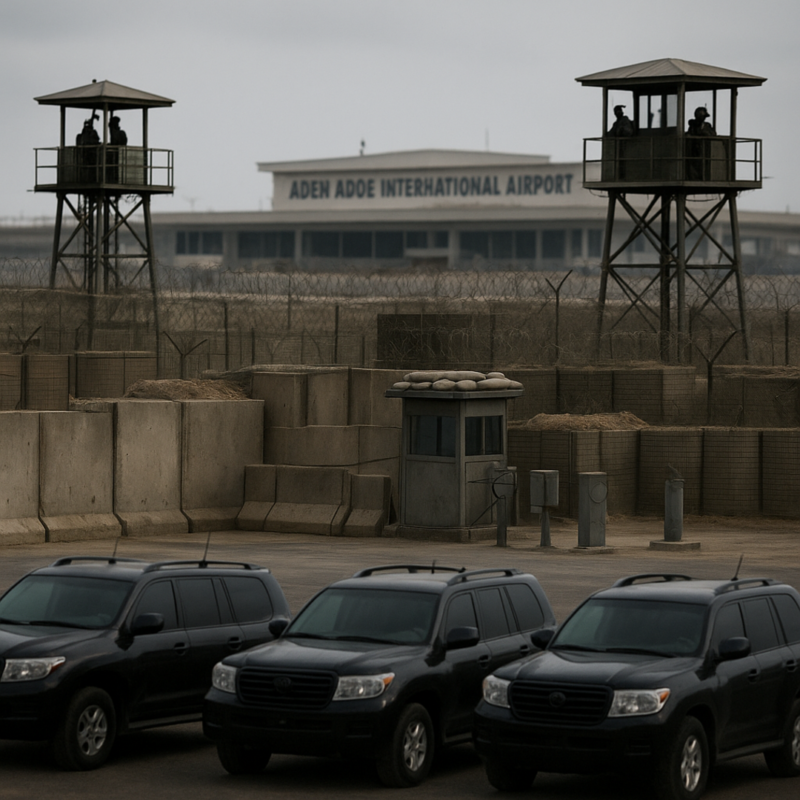
MOGADISHU: High‑stakes talks between Somalia’s federal government and the opposition Somali Future Council opened on Wednesday inside the heavily fortified Halane compound near Aden Adde International Airport. The negotiations, informally mediated by the United States and the United Kingdom, mark one of the most politically sensitive meetings in Somalia in recent years as the country faces mounting tensions over elections, governance and constitutional disputes.
President Hassan Sheikh Mohamud led the government delegation alongside Deputy Prime Minister Salah Ahmed Jama. The opposition was represented by former president Sharif Sheikh Ahmed and Puntland leader Said Abdullahi Deni. The talks come just two days before the president’s term is scheduled to expire on May 15, increasing pressure on Somali leaders to avert a deeper constitutional and political crisis.
Opposition Makes Release of Detainees First Demand
Before broader political negotiations could begin, opposition leaders demanded the release of their supporters and other detainees arrested for dissent or criticism of the government, a condition that President Mohamud accepted, according to officials familiar with the meeting. The move immediately set the tone for the talks, transforming the issue of political detentions into a symbolic test of trust, legitimacy and political leverage between the two sides.
Political analysts said the opposition’s insistence on securing the release of detainees before entering substantive negotiations was designed to project loyalty toward supporters and demonstrate political strength ahead of any compromise discussions.
Halane Venue Highlights Foreign Influence in Somali Politics
The choice of the Halane compound, which houses Western diplomats, international organisations and foreign security agencies, underscored the extent to which international actors remain deeply embedded in Somalia’s political and security affairs. Defence Minister Ahmed Moalim Fiqi said the talks opened in a “good atmosphere” and were taking place in a Somali government office inside the Halane base. However, critics have long accused President Mohamud of resisting calls for direct and inclusive political dialogue with opposition leaders, only agreeing to negotiations after pressure from international partners intensified amid growing political uncertainty.
The talks are the first of their kind to be held in Halane with a significant role played by the international community to reach a final resolution on the electoral impasse. They follow a previously scheduled meeting called by the president for last Sunday at Villa Somalia, which the opposition declined to attend. The opposition had long demanded that negotiations be held inside the Halane compound, citing security concerns.
The Somali Future Council has previously warned of a political crisis as election deadlines loom, and the opening session inside Halane represents a rare moment of direct engagement between Somalia’s rival political camps, and perhaps the clearest opportunity in months to step back from the brink of a deeper national crisis.
Analysts Warn of Political Crisis Without Compromise
Somali political analysts warned that the negotiations reflect a broader pattern in which Somali leaders struggle to independently resolve disputes over elections and governance without outside mediation. Professor Abdirahman Badiyow, a veteran Somali politician who has held several cabinet positions, said: “It is unfortunate that the political elites, both within the government and the opposition, failed to reach a compromise on the disputed issues. Nevertheless, this reflects the prevailing political culture among Somali political actors, where meaningful political agreements are rarely achieved without external involvement.”
“As for the international mediators, their intervention came too late, and their level of engagement appears too low to exert sufficient pressure on both sides. This situation risks repeating the experience of 1990, when Somali politicians failed to reach agreement while international actors applied insufficient pressure, resulting in a national disaster. Resolving the conflict must now be in full gear to avert a possible worsening situation,” Badiyow added.
Despite the breakthrough on the detainee issue, significant divisions remain between the federal government and opposition leaders over elections, constitutional reforms and the balance of political power in Somalia’s fragile federal system. A dispute over the venue for electoral talks had previously stalled negotiations, and the core disagreements over the “one person, one vote” system versus an indirect electoral model remain unresolved. The opposition also rejects the revised constitution adopted in March 2026, which extends presidential and parliamentary terms to five years, and insists that the 2012 provisional constitution remains the only legitimate legal framework.
Diplomats and analysts say the coming days will determine whether the negotiations can produce a political compromise capable of preventing fresh instability in a country still battling insurgency, institutional fragility and decades of political fragmentation. The outcome remains uncertain as Somalis await the results of the talks between the government and the Future Council.
Recommended Reading on ftlsomalia.com: