
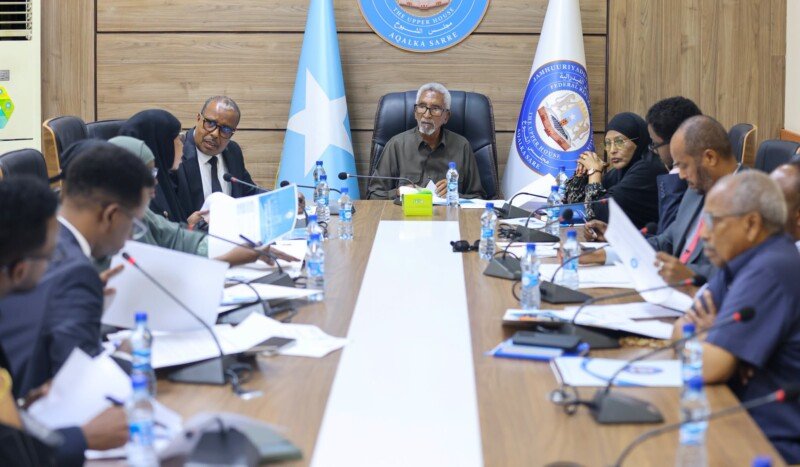
MOGADISHU — The Speaker of the Upper House of the Federal Parliament of Somalia, Abdi Hashi Abdullahi, has today chaired the second meeting of the 8th Session of the Senate’s Standing Committee at the Parliament building in Mogadishu.
The meeting focused on accelerating priority agendas for the House sessions, formulating committee session speaking notes, and strengthening the accountability framework and monitoring of government institutions’ performance. Second Deputy Speaker of the Upper House, Abdullahi Ali Hirsi (Timacadde), was also in attendance.
Committee chairpersons from various Senate committees presented their views on oversight and accountability procedures, and how to strengthen the committees’ role in fulfilling their constitutional obligations.
Speaker Abdi Hashi Abdullahi emphasized the importance of implementing practical recommendations put forward by committee members and accelerating oversight and accountability activities. He also stressed the need to maintain work schedules and ensure member attendance to fulfill assigned responsibilities efficiently and responsibly.
The Upper House’s Oversight Role
Speaker Hashi has previously expressed strong disapproval of senators for consistently arriving late to sessions and leaving early, emphasizing that punctuality and full attendance are essential for the effective functioning of the Senate in addressing pressing national issues. His remarks reflect broader concerns about commitment and accountability within the legislative process.
Speaker Hashi has been a prominent figure in Somali politics since his election as Speaker of the Upper House in January 2017, becoming the first Speaker since the chamber’s establishment. He was re-elected for a second term in April 2022, securing 28 votes out of 54 available from Senators, defeating his closest challenger, Salah Jama, who received 24 votes.
The Upper House has been actively involved in mediating political disputes between the Federal Government and Federal Member States, with Speaker Hashi playing a key role in these efforts. Speaker Hashi returned from a medical trip to Turkey in August 2024 and resumed his duties overseeing debates on key national issues such as federalism, constitutional review, and national reconciliation.
Both Speaker Hashi and Speaker Sheikh Adan Mohamed Nur Madobe of the House of the People attended the 5th League of Parliamentarians for Al-Quds meeting in Istanbul, Turkey, joining fellow global dignitaries at the gathering.
Speaker Hashi has previously urged Somali politicians to demonstrate leadership, stating during the fourth annual conference of the Heritage Institute for Policy Studies in Garowe that the country’s leadership must work together to find solutions that enable Somalia to avoid falling into a relapse and crisis.
In December 2021, Speaker Hashi called for the nullification of election results for 16 parliamentary seats, stating that the elections had been fraudulent and lacked transparency, warning that the ongoing electoral process would not receive the credibility it deserves if those elections were allowed to stand.
Critical Note
While the Senate’s standing committee meeting reflects ongoing parliamentary efforts to strengthen oversight and accountability, the practical impact of these engagements remains uncertain. Speaker Hashi has been a vocal critic of the lack of punctuality and commitment among senators, yet the problem persists. The Upper House’s role in mediating political disputes between Mogadishu and Federal Member States has been significant, but the effectiveness of these efforts has been mixed, with political tensions continuing to undermine federal stability.
The Speaker’s emphasis on implementing practical recommendations and accelerating oversight activities is commendable, but translating these commitments into tangible improvements in governance and accountability has proven difficult. The government must ensure that parliamentary oversight mechanisms are supported with adequate resources and institutional independence to fulfill their constitutional mandate. Without meaningful follow-through and political will, the standing committee’s work risks remaining a procedural exercise rather than a driver of genuine accountability and reform.
Recommended Reading On ftlsomalia.com
- Somali Senators Blasted for Lack of Punctuality
- Hashi Reelected the Speaker of Somalia’s Upper House
- Somalia’s Senate Speaker Returns Home from Medical Trip to Turkey
- Somali Parliamentary Speakers in Turkey for Al-Quds Meeting
- Speaker Hashi Urges Politicians to Show Leadership
- Speaker Hashi Calls for Nullification of Parliamentary Elections Results