
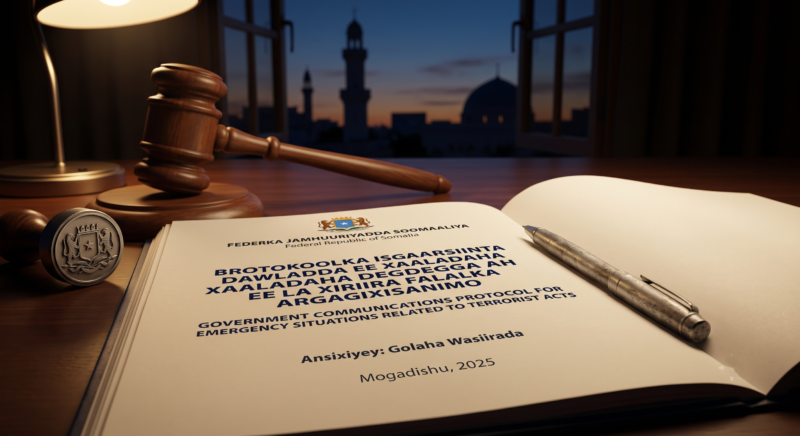
MOGADISHU – The Council of Ministers of the Federal Government of Somalia has officially approved the Government Communications Protocol for Emergency Situations Related to Terrorist Acts, a national framework designed to unify the management and dissemination of official communications during crises.
The protocol was presented to the Council by the Minister of Information, Culture and Tourism, Abdulfatah Qasim Mahmud. Following the approval, the minister extended his gratitude to the Council of Ministers and to all government agencies that contributed to the development of the framework.
Minister Qasim noted that the protocol strengthens the coordination of government messaging and improves the management of emergency situations related to terrorist activities[reference:0]. The framework clarifies the roles and responsibilities of government agencies, ensures that the public receives accurate, unified and timely information, enhances inter-agency coordination, reduces contradictions in messaging, and prevents the spread of misinformation and disinformation[reference:1].
Strengthening Government Communications
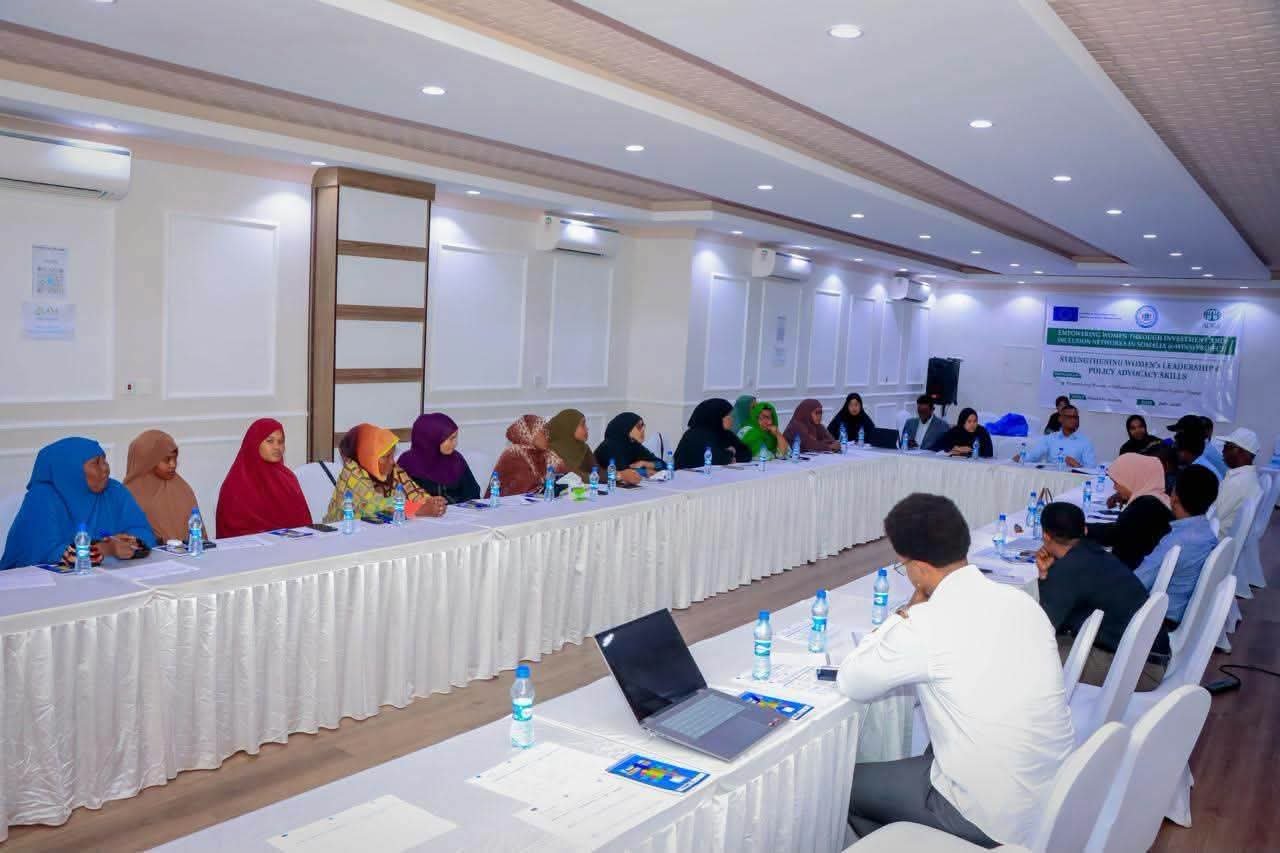
The approval of the protocol comes as part of broader efforts by the Ministry of Information to enhance government communications and public engagement. The ministry previously concluded a workshop on developing comprehensive protocols for government communication during national emergencies, gathering communication and media officials from diverse government agencies for practical exercises and crisis simulations[reference:2].
Minister Qasim has stressed the need for enhanced collaboration with independent media, characterising private outlets as vital contributors to public awareness, peacebuilding and national progress[reference:3]. However, these positive steps toward collaboration have taken place against the backdrop of a sophisticated digital proxy war, with independent media outlets reporting what they describe as state-sponsored electronic warfare campaigns designed to systematically eliminate political dissent from the global internet[reference:4].
Combating Disinformation and Hate Speech
Somalia has faced significant challenges from misinformation and disinformation, particularly during periods of political transition and security emergencies. Police have arrested multiple individuals accused of spreading false claims about being forcibly taken to register for elections, with authorities describing a coordinated misinformation campaign intended to create fear and mistrust around the voter registration process[reference:5].
The Ministry of Information has organised workshops aimed at strengthening journalists’ ability to combat disinformation and fake news, bringing together journalists from different regions of the country[reference:6][reference:7]. The ministry has also concluded workshops on combating hate speech in election coverage, training journalists on their responsibility in combating misinformation and disinformation that could erode public trust and social stability[reference:8].
The Broader Context: Journalists Under Threat
The government’s efforts to combat disinformation and coordinate messaging come against a troubling backdrop for press freedom in Somalia. Somalia recorded at least 41 violations against media freedom between January and June 2025, according to data compiled by media rights groups and journalist unions[reference:9]. The incidents include the arbitrary detention of reporters, physical violence during news coverage, harassment by security forces, and the filing of criminal charges against journalists for publishing stories critical of authorities[reference:10].
Somali security forces detained and allegedly assaulted three journalists in Mogadishu before releasing them hours later, according to media organisations[reference:11]. In a single month, 32 journalists were arbitrarily arrested and detained, most released without charge[reference:12].
The UK Ambassador to Somalia has held a high-level roundtable with Somali journalists to assess the state of press freedom, confronting the realities of harassment, censorship and security risks faced by media workers[reference:13]. The National Union of Somali Journalists (NUSOJ) has issued strong warnings at the United Nations Human Rights Council, highlighting persistent and grave threats facing media freedom in Somalia[reference:14].
The United Kingdom and Somalia jointly hosted a high-profile side event at the UN Human Rights Council, placing media freedom and civil liberties at the centre of global attention[reference:15]. The UK representative affirmed that safeguarding journalists is essential to Somalia’s democratic transition, noting that “no nation can progress without the voices that hold power to account”[reference:16].
Way Forward
The approval of the Government Communications Protocol for Emergency Situations marks an important step in Somalia’s efforts to strengthen its communications infrastructure and ensure that the public receives reliable and accurate information during crises. However, the effectiveness of these efforts will depend not only on the government’s ability to coordinate its own messaging but also on its commitment to protecting the journalists and independent media outlets that serve as essential watchdogs in Somalia’s democratic transition. The persistent attacks on press freedom, the arbitrary detention of journalists and the reports of state-sponsored digital censorship raise serious questions about the government’s willingness to tolerate the independent scrutiny that is essential to any functioning democracy.
Recommended Reading On ftlsomalia.com
- Somalia Recorded 41 Media Freedom Attacks in First Half of 2025
- Journalists Arrested, Beaten in Mogadishu Amid Press Freedom Crackdown
- Somalia’s Information Minister Courts Independent Media Amid Allegations of State-Sponsored Digital Censorship
- UK Envoy, Somali Journalists Tackle Media Freedom Challenges
- NUSOJ Sounds Alarm on Somalia’s Media Freedom at UN Rights Council
- UK, Somalia Lead UN Human Rights Council Dialogue on Media Freedoms