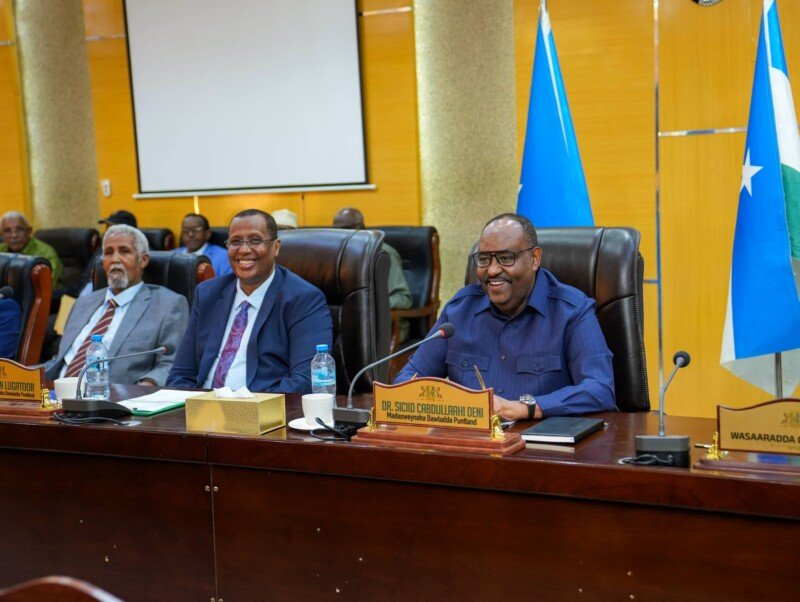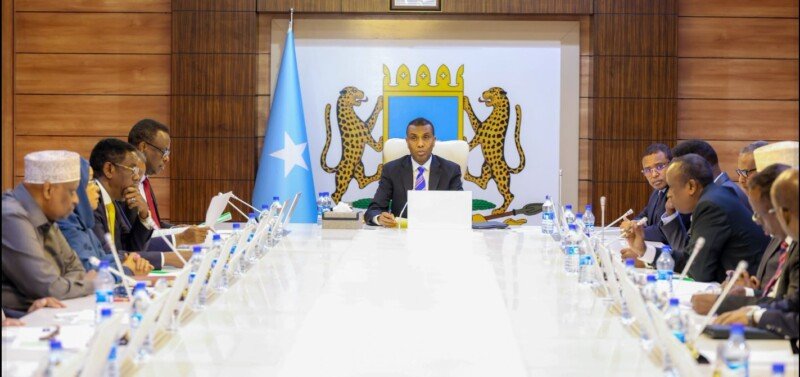

MOGADISHU: The Council of Ministers of the Federal Government of Somalia convened Thursday for its weekly session, chaired by Prime Minister Hamza Abdi Barre, to address national conditions with emphasis on security matters, government effectiveness, and strategies to counter increasing international security and economic pressures.
The meeting approved the Regulation on Private Security Services, presented by the Ministry of Internal Security, as well as the Internal Audit Charter submitted by the Ministry of Planning. The private security regulation establishes a legal and oversight framework for the country’s growing private security sector, which has expanded significantly in recent years as Somalia continues to rebuild its national security institutions.
The Cabinet also reviewed data-driven briefings on river flooding and threats facing the country’s water resources, presented by the Ministry of Energy and Water Resources. Ministers evaluated a comprehensive report concerning escalating commodity prices amid ongoing tensions in the Strait of Hormuz.
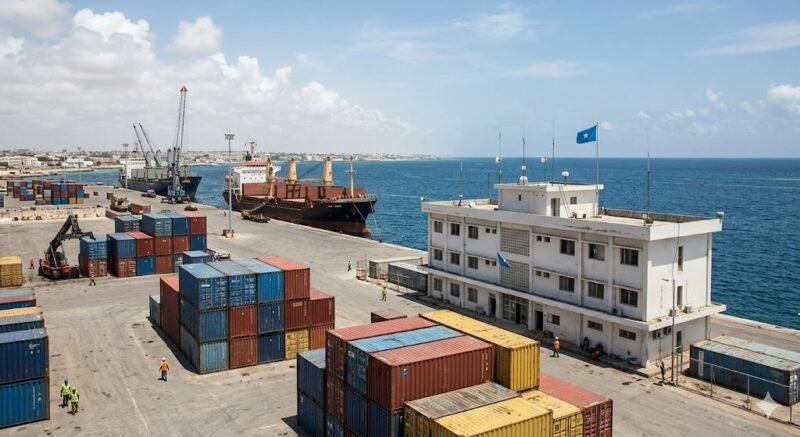
According to findings from the National Bureau of Statistics, Somalia’s imports have declined by 40 percent due to disruptions linked to the Hormuz Strait crisis. The report showed that food prices have increased by 10 percent, healthcare service costs have risen by 14 percent, while prices of other goods have experienced even higher increases. The crisis in the strategic waterway, a critical artery for global oil and commodity shipments, has disrupted supply chains reaching the Horn of Africa, compounding existing economic vulnerabilities in the import-dependent nation.
Cabinet participants deliberated on appropriate response strategies and directed responsible ministries to implement immediate measures to alleviate economic pressures on Somali citizens. The Ministry of Planning has recently engaged with international partners to address food security and economic resilience, as part of broader government efforts to mitigate the impact of global shocks.
The Ministry of Endowments and Religious Affairs also updated the Cabinet on Hajj pilgrimage preparations, highlighting that Somali pilgrims will have access to a dedicated terminal at Aden Adde International Airport this year. In closing, Prime Minister Hamza commended the security and stability prevailing across much of the country, particularly in Mogadishu, cautioning against efforts to destabilize public security and urging citizens to safeguard peace and harmony.
Recommended Reading on ftlsomalia.com: