
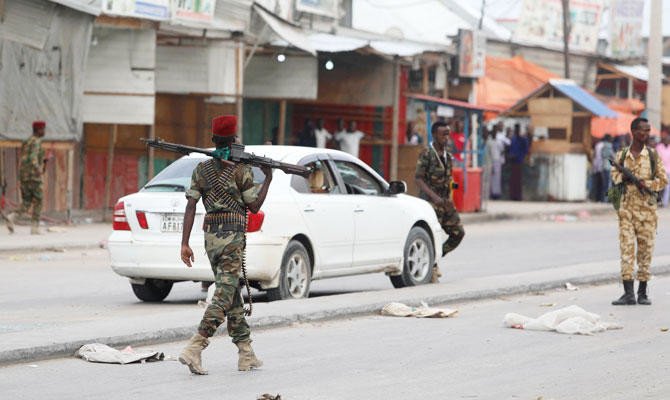
MOGADISHU: The federal government has carried out a major security reshuffle in northern Mogadishu, replacing commanders at strategic checkpoints and redeploying troops outside the capital. The changes, which affect districts including Karan and Heliwa, appear designed to strengthen control in areas considered politically sensitive ahead of planned opposition rallies and the expiration of President Hassan Sheikh Mohamud’s term on May 15.
According to local media and security analysts, many of the newly appointed commanders are linked to the president’s sub-clan. Most of the removed troops have been redeployed to regions neighboring Mogadishu. The reshuffle follows the deployment of Turkish-trained Gorgor special forces around a military camp led by Colonel Saney Abdulle, an opposition-aligned figure and relative of former President Sharif Sheikh Ahmed. The deployment aims to prevent potential rebellion as the president’s term concludes.
Strategic Checkpoints and Political Control
Northern Mogadishu remains a sensitive security zone because of its strategic access routes from the Middle Shabelle region into the capital. In 2021, forces opposed to former President Mohamed Abdullahi Farmaajo’s term extension entered parts of Mogadishu with military vehicles, triggering clashes that raised fears of wider conflict. Opposition leaders have recently gathered with Hawiye clan elders at the residence of former President Sharif Sheikh Ahmed, announcing plans for a “national salvation” initiative — a term that in Mogadishu has historically referred to armed mobilization campaigns that prevented incumbent presidents from extending their tenure.
The reshuffle follows a recent incident involving former Somali army chief Odowa Yusuf Rageh, who was reportedly stopped by federal security forces at a checkpoint on the northern outskirts of Mogadishu while attempting to enter the city with a heavy security escort. Political observers viewed the move as part of wider efforts to tighten control over movement into the capital amid fears that former military officials could support opposition activities during a tense political period.
Opposition Vows Parallel Government
The security changes come as opposition leaders have warned that if both parliamentary and presidential terms lapse without elections or a political agreement, they would move ahead with organizing their own polls and establish a parallel federal administration. The Minister of Planning, Mohamud Abdirahman Beene Beene, has warned that Mogadishu could face a renewed wave of car bombings if residents fail to confront opposition figures. The federal government has consistently justified its actions, maintaining that such measures are essential for maintaining security and safeguarding national stability.
May 10 Protests and Dialogue
The troop reshuffle occurs as opposition leaders have called for mass protests on May 10, the same day President Mohamud has scheduled talks with opposition leaders. Government officials have warned that unauthorized protests will not be allowed. The opposition Somali Future Council has conditioned its participation in the May 10 dialogue on a halt to electoral activities and securing impartial mediation.
Political observers view the latest changes as an attempt to prevent a repeat of the 2021 crisis by limiting the influence of commanders traditionally viewed as sympathetic to the opposition. With the president’s term set to expire on May 15 and no electoral framework in place, the political climate in Mogadishu remains highly tense.