
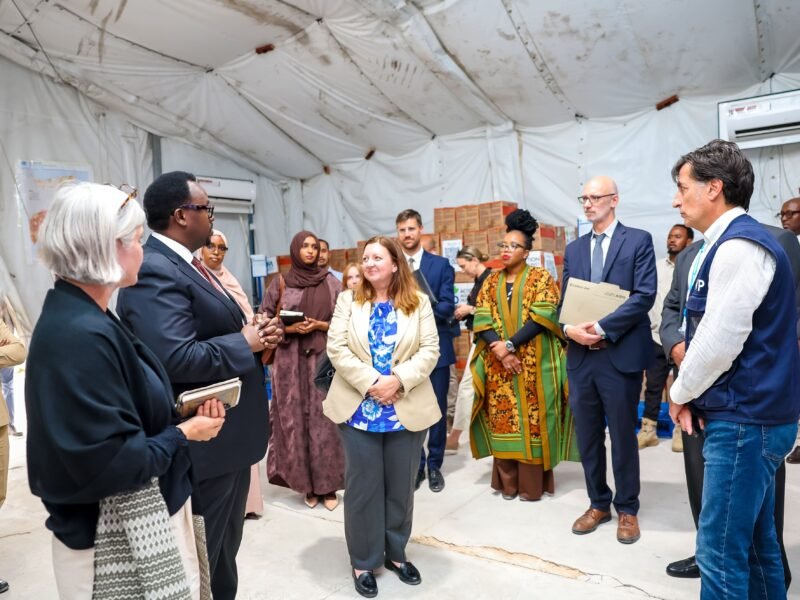
MOGADISHU — Deputy Prime Minister Salah Ahmed Jama and UK Minister for Development and Africa Kirsty McNeill have visited a World Food Programme warehouse in Mogadishu, where they were shown food supplies and other aid items destined for families affected by the worsening drought, and briefed on the registration and verification system WFP uses to track beneficiaries. The system registers each recipient using biometric data and issues a UN-recognized verification card, aiming to enhance accountability and prevent duplication of aid.
The visit came as WFP warned that approximately six million people, or one third of Somalia’s population, are facing acute hunger or worse, including nearly two million in emergency levels of hunger. Somalia remains one of the world’s worst malnutrition crises, with an estimated 1.88 million children under five projected to suffer acute malnutrition in 2026, including nearly 493,000 requiring treatment for severe acute malnutrition .
Deputy Prime Minister Salah Ahmed Jama said some of the hardest-hit areas are in peaceful regions, where the crisis is driven not by insecurity but by consecutive seasons of drought and climate shocks that have eroded the ability of families and communities to recover. He also stated that the Federal Government will officially launch a food reserve project in Jowhar next month, part of a broader plan to strengthen the country’s capacity to store and manage food and humanitarian supplies.
The UK Minister’s visit was her first to Somalia since taking office, and her government said it was part of efforts to assess how humanitarian aid is reaching communities affected by drought and food insecurity.
WFP’s lifesaving nutrition services are extremely limited, with preventive programmes cut across the country, increasing risks for vulnerable women and children. Severe funding shortfalls have drastically reduced the agency’s operational reach, meaning WFP can only assist a small fraction of the millions facing acute food insecurity and emergency-level hunger across the country. The 2026 Somalia Humanitarian Needs and Response Plan is currently only 15.2 percent funded .
The UN released $10 million in emergency funding in June 2026 to help prevent a full-scale famine, with the allocation intended as a lifeline for 640,000 people. The chance to prevent a catastrophic famine is narrowing rapidly, as the organisation races to reach the most vulnerable before the crisis passes a point of no return .
A “Brutal Contradiction”
UNICEF has warned that 205 health and nutrition facilities have already closed on the back of unprecedented cuts in humanitarian aid, with a 32 per cent increase in children being admitted to stabilization centres with severe acute malnutrition and complications in the first six months of this year. “Fewer facilities mean longer journeys for mums and their babies; longer journeys mean later treatment; later treatment means more severe illness and a greater risk of preventable death,” UNICEF spokesperson James Elder said.
The increase in children at stabilization centres is not because more children are becoming sick, but because preventive and community-based nutrition services have been cut, meaning vulnerable children are less likely to be identified and treated early. Nearly one million children under five, adolescent girls and women risk losing access to nutrition services in Somalia.
The escalation of conflict in the Middle East has brought more than rising fuel costs to Somalia’s malnourished children. Critical shortages of essential therapeutic foods, worsened by shipping disruptions linked to the Iran crisis, have compelled clinics to reject severely malnourished children and ration available supplies. The cost of a single carton of therapeutic food has risen to $200 from $55, meaning available funds now provide enough for only 83 children instead of 300. An IRC order for peanut paste sufficient to feed more than 1,000 children has been stranded for two months at the Indian port of Mundra, now overwhelmed with redirected shipments unable to enter the Gulf .
WFP requires USD 198 million for the next six months (September 2026 – February 2027) but faces an urgent shortfall of USD 147 million for humanitarian food assistance and nutrition. “We can only do the bare minimum,” WFP executive director Carl Skau said during a visit to a nutrition center on the outskirts of Mogadishu. “We’re only providing these nutrition supplies to the children that are really the worst hit.”
The reduced funds, because of cuts in international aid by donors and the redirection of resources to other humanitarian crises, meant that the WFP is unable to expand its assistance in Somalia. “We had 10 times more resources than now,” Skau said of the 2022 hunger emergency. “We were able to step in, and we prevented a famine here in Somalia. We know what’s going on, we have the capacity, we have the experience of dealing with this. We just need the resources now to do it.”
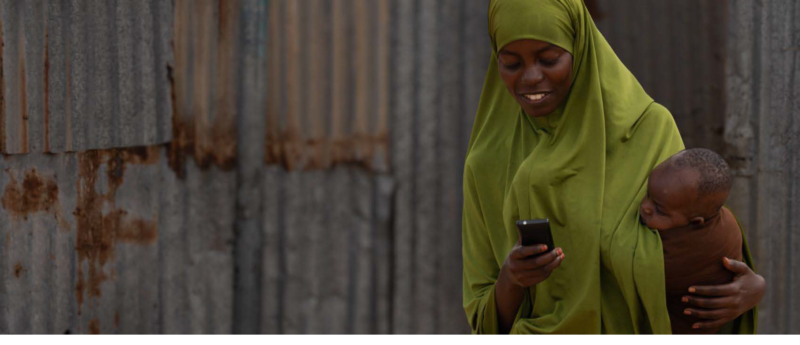
The consequences of the current food shortage are seen at the Feynuus Health Center in Mogadishu’s Kahda district, where dozens of women carrying babies wait for help. Abdirahman Barkhad, program director of Youth Link Somalia, which operates the center, said about 10 nearby health and nutrition centers had closed because of a reduction in humanitarian funding, increasing pressure on those that remain. “We have witnessed children collapsing, because their families do not have enough food,” he said.
Climate Outlook and El Niño Preparedness
The latest climate forecasts point to a dangerous outlook: prolonged dry conditions through October, followed by an elevated risk of El Niño-related flooding before the end of the year. The Minister of Interior, Federal Affairs and Reconciliation, Ali Yusuf (Ali Xoosh), has warned the Somali public about the risk of floods and flash floods linked to the anticipated Super El Niño weather phenomenon, urging communities to take precautionary measures and remain vigilant.
The warning comes as humanitarian agencies and the government scale up preparedness efforts ahead of the anticipated El Niño rains expected between October and December 2026, with forecasts indicating a high probability that the weather phenomenon will persist throughout the season, increasing the risk of widespread flooding across the country. Building on lessons from 2023, when floods and drought displaced 2.3 million people and affected millions more, the government and humanitarian partners are supporting contingency planning, risk analysis, and coordination at national and state levels to strengthen readiness for potential flooding and displacement.
SoDMA Commissioner Mahamuud Moallim Abdulle has held high-level talks with UN Deputy Special Representative George Conway to review the country’s humanitarian situation and strengthen joint preparedness for anticipated climate shocks. The meeting focused on assessing the progress of drought relief efforts, preparing for the forecasted Super El Niño rains expected later this year, and planning a joint assessment mission to regions including Somaliland, North Eastern State, and Puntland .
Commissioner Abdulle emphasized the importance of accelerating joint efforts to prepare for the potential impacts of Super El Niño, which is expected to bring heavy rains and flooding that could worsen the already fragile humanitarian situation. He stressed the need to mitigate the effects on vulnerable communities, particularly internally displaced persons and pastoralist populations .
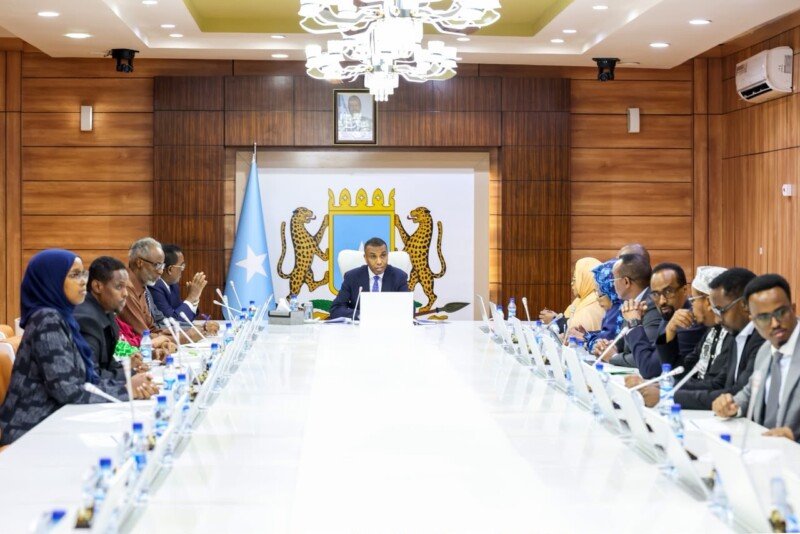
The Cabinet has endorsed a national El Niño preparedness plan as the country faces the threat of severe flooding, displacement, and disruption to agriculture and food security. Prime Minister Hamza Abdi Barre has visited SoDMA headquarters to review El Niño preparedness, receiving briefings on measures already in place to prepare for the anticipated rainfall.
SoDMA and the UN have bolstered joint efforts to confront the escalating climate crisis, with Commissioner Abdulle and Conway co-chairing strategy sessions to reinforce the country’s response to the climate emergency and assess the drought’s current path and its harsh effects on at-risk populations. A joint assessment team led by Commissioner Abdulle and including Conway has also visited Kismayo to examine the consequences of the persistent drought and assess living conditions in internally displaced persons settlements near the city.
The Federal Government has launched a new climate resilience initiative named “Activating Climate Resilient Agricultural Livelihoods in Somalia” (ACALS) to support farmers and pastoralists as the country faces persistent droughts and extreme weather conditions. The program will deliver climate-adapted technologies and livelihood support to vulnerable communities in Hirshabelle and Puntland states, supported by the African Development Bank and implemented jointly by WFP and UNOPS .
WFP and Somalia have unveiled a $1.5 billion Food Security Strategy for 2026-2030, a comprehensive five-year framework aimed at strengthening food security, building resilience, and improving the livelihoods of Somali communities affected by drought, climate change, and conflict. The strategy marks a shift from project-based interventions to integrated, people-centred programming, continuing to prioritize life-saving assistance for the most critically food-insecure communities while positioning WFP as an enabler of national systems and local actors .
Critical Note
WFP’s warning paints a devastating picture of Somalia’s deepening hunger crisis, with six million people facing acute hunger and a funding gap of USD 147 million threatening to push millions deeper into crisis. The agency’s ability to assist only one in ten of those facing acute hunger reflects a catastrophic failure of international solidarity.
The 32 per cent increase in children admitted to stabilization centres is not because more children are becoming sick—it is because preventive services have been cut. The international community’s retreat from Somalia at this moment is not a saving; it is a decision to pay more later, in money, in security, in lost development and, for some children, in lives.
The rhythm of Somalia’s climate response has become painfully predictable: warnings are issued, meetings are held, plans are endorsed, and when the rains come, communities are once again submerged, displaced, and left to depend on emergency aid. The Super El Niño forecast is not an aberration but part of a pattern that has seen Somalia lurch from one climate crisis to the next, with little evidence of a sustained break in the cycle.
The Somali government must urgently prioritize resource mobilization for humanitarian assistance, engaging donors and international financial institutions to bridge the funding gap. Without immediate funding to sustain life-saving operations, the country risks a humanitarian catastrophe that could reverse years of progress in state-building and stability. The international community must recognize that investing in Somalia’s humanitarian response is not just a moral imperative but a strategic necessity to prevent further displacement, instability, and the erosion of fragile governance gains.
Recommended Reading On ftlsomalia.com
- Interior Minister Warns of Super El Niño Flooding
- Six Million Somalis Face Acute Hunger
- UN Releases $10M to Avert Somalia Famine
- Somalia Faces Severe Hunger Crisis as Aid Reductions Continue
- SoDMA and UN’s George Conway Hold Talks on Drought Response and Super El Niño Preparedness
- Somalia Launches Climate Resilience Project
- War Impact Worsens Somalia’s Child Malnutrition Crisis
- Somalia and WFP Unveil $1.5 Billion Food Security Strategy