
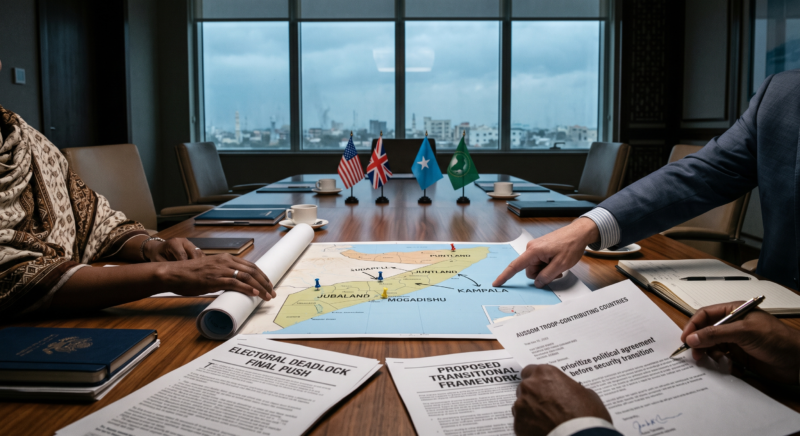
MOGADISHU – The United States and Britain are planning a renewed diplomatic effort to bring together Somalia’s feuding political leaders for what sources describe as a final push to break the country’s prolonged electoral deadlock, even as the opposition coalition shows signs of fracturing over competing visions for the country’s political future.
The proposed meeting would include President Hassan Sheikh Mohamud, whose four-year mandate expired on May 15, alongside the leaders of Puntland and Jubaland regional administrations and senior figures from the Somali Future Council opposition coalition based in Mogadishu, according to officials familiar with the discussions. Diplomatic sources cautioned that expectations for a breakthrough remain low, warning that continued political divisions risk undermining progress on governance reforms, security institutions and international support for Somalia.
International Community Losing Patience
The renewed diplomatic push comes after months of failed negotiations between the federal government and the opposition. A coalition of Western embassies and the UN mission has repeatedly urged Somali leaders to return to negotiations and quickly establish an electoral plan.
According to the sources, one Western government has argued that if Somali leaders fail to reach a political settlement, broader changes to the country’s state-building framework could be considered. Among the options under discussion is convening Somali political leaders in Uganda’s capital, Kampala, if negotiations inside Somalia fail to produce an agreement. Discussions have also included reviewing how the international community engages with Somalia’s federal government and considering a return to a transitional-style political framework.
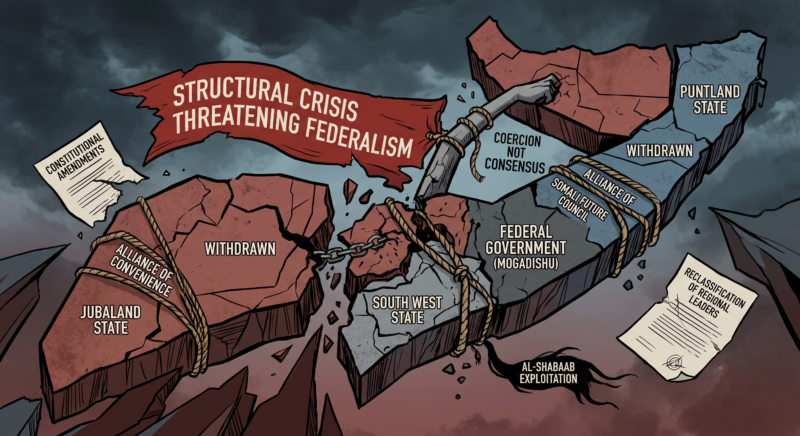
The federal parliament’s mandate expired on April 14, 2026, while President Mohamud’s term ended on May 15. The president’s efforts to amend the provisional constitution and create a new electoral framework have been interpreted as an attempt to consolidate executive authority and prolong his tenure, intensifying rifts between the central government and key federal member states, particularly Puntland and Jubaland.
Opposition Letter to AUSSOM Troop-Contributing Countries
Amid the diplomatic maneuvering, opposition leaders have sent an open letter to African countries contributing troops to the African Union Support and Stabilization Mission in Somalia (AUSSOM), urging them to prioritize a comprehensive political agreement before advancing Somalia’s security transition.
The Somali Future Council has called on troop-contributing countries to keep their forces in the country, arguing that Somalia’s current political situation, uncertainty surrounding the electoral process and security challenges require the continued presence of the African Union mission. The appeal comes amid discussions over the future of the African Union’s security role and the financial pressures facing the mission, including the US decision to end its support for the UN Support Office in Somalia (UNSOS) from 2027.
A Coalition Under Strain
The opposition’s letter to AUSSOM, however, has exposed deep divisions within the Somali Future Council itself. Following the collapse of negotiations, the opposition-led Future Forum proposed the establishment of an inclusive transitional governing authority, arguing that such an arrangement is now the only viable mechanism to restore political legitimacy and steer the country toward agreed constitutional and electoral reforms. The council had previously proposed a transitional direct elections model that sought to bridge the gap between the federal government and regional states.
The proposal immediately drew criticism from two opposition politicians: former Security Minister Mohamed Abukar Islow and former Mogadishu Mayor Thabit Mohamed, who argued that replacing existing institutions with an unelected transitional body could weaken Somalia’s fragile statehood and reverse years of institutional progress.
Yet their response triggered an equally sharp backlash from sections of the opposition and a sizeable number of politically engaged Somalis, who questioned both the timing and substance of their objections. Within opposition circles, Islow and Thabit are increasingly viewed as voices that consistently defend President Mohamud’s administration rather than acting as independent opposition figures. Their detractors argue that their public interventions frequently mirror the government’s position while rarely challenging policies that have generated widespread political controversy.
The Strongest Government Reaction
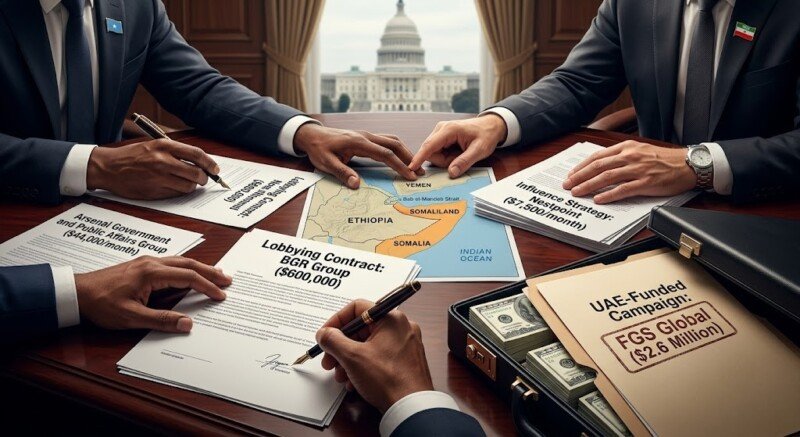
The strongest government reaction came from Defence Minister Ahmed Moallim Fiqi, who forcefully rejected the proposal and accused the Future Forum of seeking to dismantle Somalia’s constitutional order. Fiqi also alleged that foreign interests were attempting to exploit Somalia’s political divisions, though he presented no public evidence to substantiate the claim. His remarks have heightened concerns among political observers, who warn that increasingly confrontational rhetoric from senior officials risks further polarizing an already fragile political environment.
A Crisis of Governance, Not Just Elections
The political deadlock is not merely a dispute over electoral timelines; it is a fundamental crisis of governance. The federal government’s push for centralization, combined with regional states’ resistance, has created a governance vacuum that Al-Shabaab has been quick to exploit. The opposition’s proposal for a transitional authority, while controversial, reflects a recognition that the current political framework has failed to deliver stability or democratic legitimacy.
The Federal Government and the Somali Future Council have agreed to resume political dialogue, with both sides confirming the constructive nature of the talks and their commitment to reaching a comprehensive political agreement. However, Turkey’s efforts to position itself as the sole mediator have been met with resistance from key regional states, which have questioned Ankara’s neutrality in the conflict. A new round of talks has opened with international mediators stepping in to break the impasse.
Way Forward
The US-UK diplomatic initiative represents a last-ditch effort to prevent Somalia’s political crisis from spiraling into a full-blown constitutional collapse. But the opposition’s internal divisions, the federal government’s refusal to compromise, and the international community’s declining patience suggest that the window for a negotiated settlement is closing rapidly.
The Somali Future Council’s letter to AUSSOM is a recognition that the country’s security gains are inseparable from its political stability. But the coalition’s inability to present a unified front undermines its credibility and weakens its negotiating position. For the Somali people, who have endured decades of conflict and instability, the failure of their leaders to reach a political consensus is yet another betrayal of their hopes for a stable and democratic future.
Recommended Reading On ftlsomalia.com
- International Community Calls for Somalia to Resume Dialogue Amid Political Standoff
- Opposition Confirms Deal with FGS to Resume Dialogue as Ankara’s Neutrality Questioned
- New Round of Talks Opens Between Somali Government and Opposition as International Mediators Step In
- Opposition Seeks Wider Role in Election Talks
- Somali Future Council Unveils Transitional Direct Elections Model for 2026
- Puntland Leader Slams Federal Government’s Election Plans as Predetermined and Undemocratic